33 km separates Athens International Airport from central Athens, so “athina athens” is more than a spelling detail when you plan your arrival. You may see Athina on Greek signs, tickets, maps, or transport listings, while booking sites usually use Athens. They refer to the same city.
Use both names during your search, then focus on the neighborhood, airport transfer, and daily route. That simple approach prevents wrong searches, saves time at the airport, and puts the Acropolis, Plaka, Monastiraki, museums, and the coast within a workable holiday plan.
Key Takeaways
Athina and Athens are the same city
Athens Airport is about 33 km from the center
Metro Line 3 links the airport with central Athens
Plaka and Monastiraki suit first-time visitors
Syntagma works best for transport connections
The Athens Riviera needs a separate half-day
Athina and Athens Mean the Same Destination
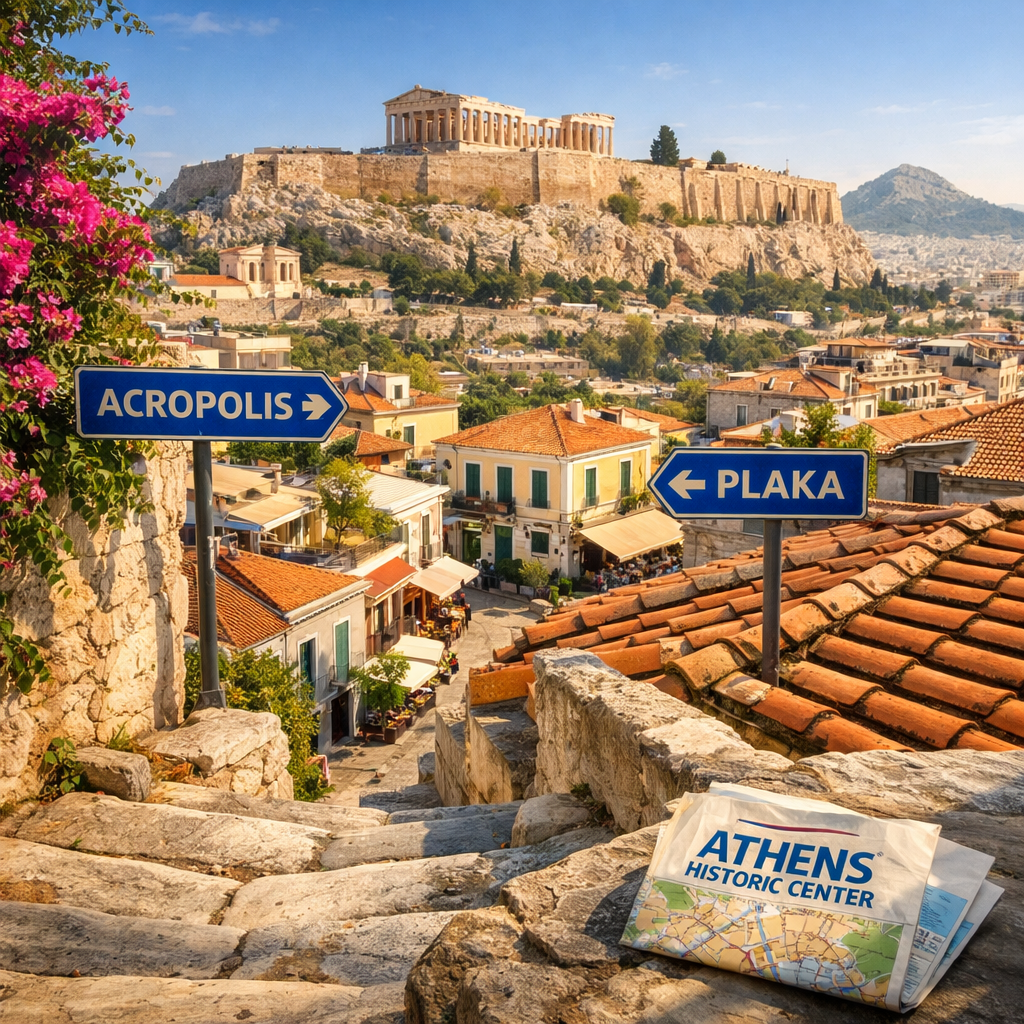
Athina is the Greek name for Athens. Athens is the English form used by airlines, international booking sites, guidebooks, and most foreign travel services. You are not choosing between two destinations, and Athina is not a separate Greek island or city.
The Greek spelling is Αθήνα. On a ticket or Greek-language website, you may see Αθήνα, Athina, or a longer phrase such as “Athens International Airport.” These labels point to the same capital, though an airport listing and a city-center listing are different places within the wider Athens area.
This matters when you search transport. A Greek bus display may use Αθήνα, while a hotel website uses Athens. Search for both “Athens” and “Athina” when checking routes, but confirm the address before paying.
The clearest practical clue is the airport code. Athens International Airport uses ATH, whether your booking says Athens, Athina, or Αθήνα. If your flight arrives at ATH, you are landing in the airport at Spata, east of the city center, not beside the Acropolis.
Do not assume a listing with “Athina” is automatically central. A property can use the city name while sitting in the wider metropolitan area, near the airport, or on the coast. Check its map position, nearest metro station, and travel time to Syntagma Square.
The name difference is easy once you connect it to place. Use Athina for Greek signs and local transport searches; use Athens for international bookings and English-language planning.
Where You Will See Each Name During a Trip
The name changes depending on who provides the information. Greek public signs, local businesses, and domestic travel pages often use Αθήνα or Athina. International systems usually display Athens, but both versions may appear during one journey.
Tickets and airport information
Your flight confirmation normally says Athens or ATH. On arrival, airport signs may show Αθήνα alongside English directions, especially on public transport information. Follow the destination, line number, and station name rather than relying on the spelling alone.
Athens International Airport is officially at Spata, about 33 km from central Athens. That explains why “Athina” on an airport transfer listing does not mean you have already reached the historic center.
Maps and street signs
Google Maps commonly displays Athens in English mode and Αθήνα in Greek mode. Metro stations use clear names such as Syntagma, Monastiraki, and Acropoli, but Greek text can appear beside the Latin alphabet.
Save your hotel address in both scripts if possible. A screenshot showing the street name and nearby landmark helps when you speak with a taxi driver or check a route on a local transport app.
Booking platforms
Hotels, flights, car rentals, and activities often use Athens as the searchable destination. Greek suppliers may describe the same destination as Athina. This is normal, not a warning sign.
When comparing hotels through a travel guide such as mygreekpath.com, open the property map and inspect the exact area. “Athens” in a title can cover central districts, suburbs, airport hotels, and coastal resorts.
How to Reach Central Athens from the Airport
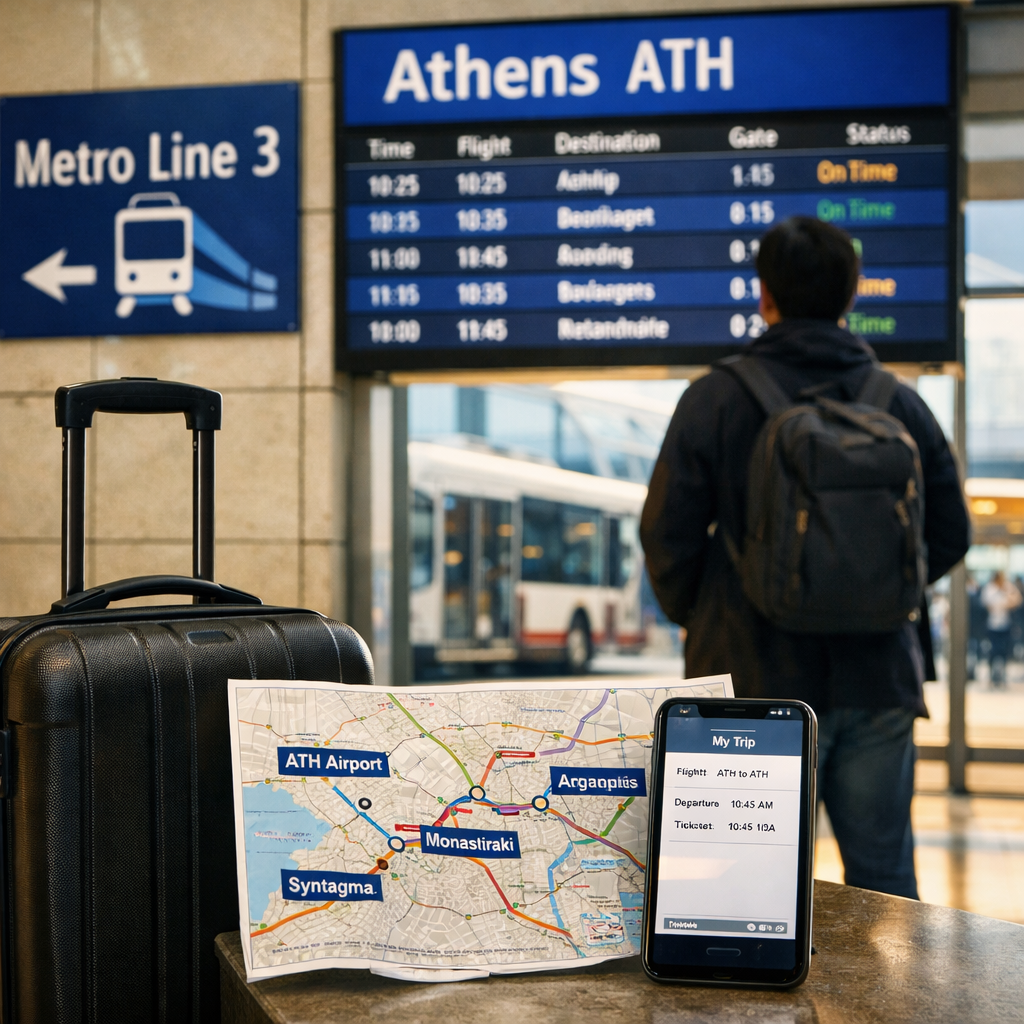
The best default choice for most visitors is Metro Line 3 to central Athens. It gives you a clear route to Syntagma and Monastiraki, avoids road traffic, and is easier to budget than a private transfer. A taxi is the better choice for heavy luggage, a late arrival, or several passengers sharing the ride.
The airport sits outside the center, so plan the transfer as part of your first day. Depending on the service and destination, the journey commonly takes around 40 minutes by metro, while a taxi can take longer during busy road periods.
Metro Line 3
Airport trains use Line 3, shown in blue on Athens metro maps. Direct airport services run toward central stations including Syntagma and Monastiraki, although not every Line 3 train goes all the way to the airport. Check the platform display before boarding.
Buy the correct airport ticket before entering the metro area. Standard urban tickets are not the same as airport fares, and ticket machines offer English instructions. Keep the ticket until you complete the journey.
Bus and taxi choices
Airport express buses operate around the clock on routes serving central Athens and Piraeus. They are useful when metro service is closed, but road traffic makes the journey less predictable. Ask where the stop is located before leaving the terminal.
A licensed taxi is the simplest door-to-door option. Confirm the destination address and fare conditions before departure, especially if your accommodation is outside the central districts. A private transfer costs more, but it removes the luggage and navigation problem after a long flight.
A practical arrival sequence
Check whether your hotel is near Syntagma, Monastiraki, or another metro station.
Compare the metro, express bus, and taxi based on arrival time.
Buy the correct airport ticket or arrange a licensed transfer.
Keep your accommodation address in Greek and Latin characters.
Leave extra time if you have a ferry, tour, or timed museum entry.
Do not book a tight same-day connection from the airport to a ferry at Piraeus. A delayed flight, passport control, luggage collection, or traffic can remove the margin you thought you had.
Which Athens Area Should You Choose?
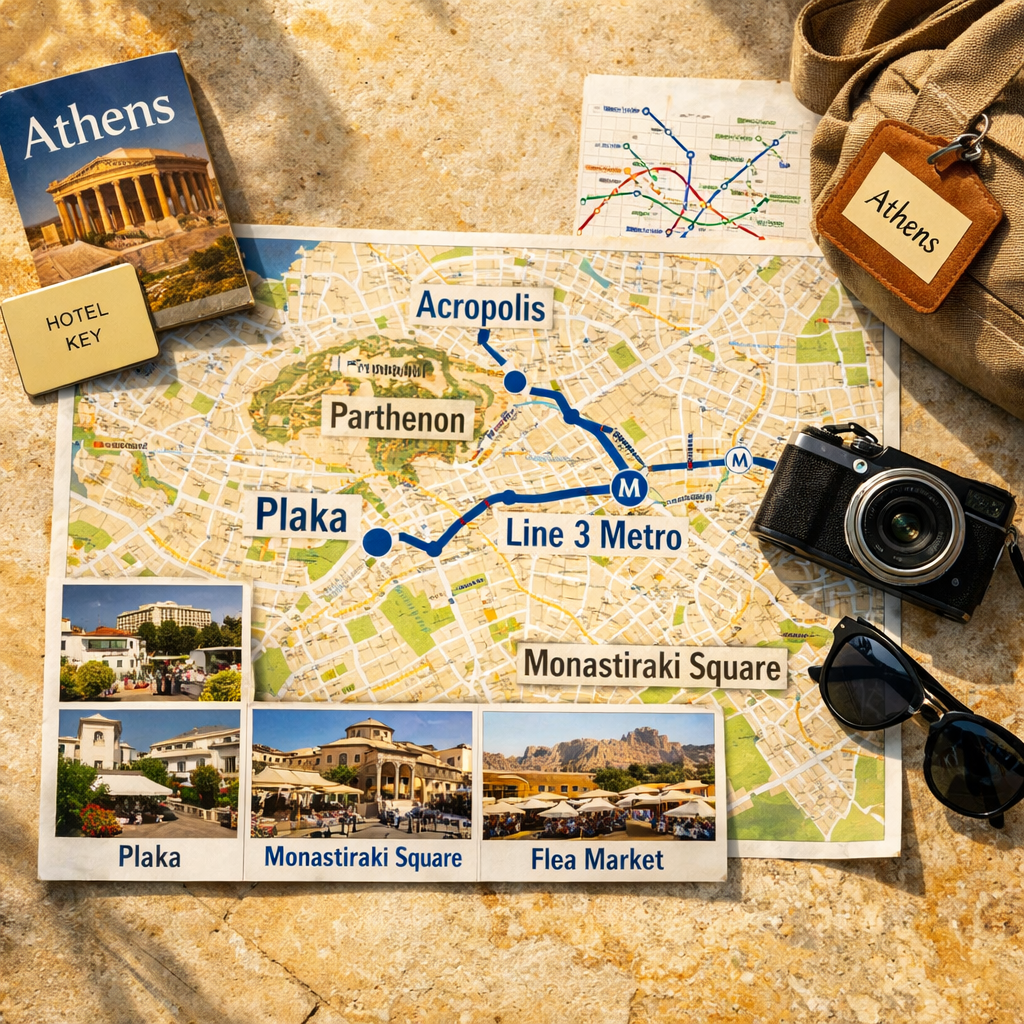
Choose Plaka or Monastiraki for a first visit focused on walking to major sights. Choose Syntagma for the strongest transport position. Choose Koukaki for a quieter base near the Acropolis, and choose the Athens Riviera only when the coast is part of your main plan.
Plaka and Monastiraki
Plaka sits below the Acropolis and gives you immediate access to the Acropolis Museum, Anafiotika, Roman Agora, and the old streets around the hill. It is the easiest choice for a short city break where you want to walk from breakfast to sightseeing.
Monastiraki works well for food, markets, metro connections, and evening movement. It is lively, especially around Monastiraki Square, so check bedroom-facing streets if you need quiet at night.
Syntagma and Koukaki
Syntagma is the best base for transport links. From the square, you can use Metro Line 3, walk toward Plaka, or connect with routes heading to other districts. It suits travelers who plan several museums or day trips.
Koukaki lies south of the Acropolis and feels more residential. You still reach the Acropolis area on foot, while cafés and everyday shops are close by. Its streets rise in places, so inspect the route if you carry large luggage.
Kolonaki, Exarchia, and the coast
Kolonaki fits visitors who want galleries, polished cafés, and a central setting away from the busiest tourist lanes. Exarchia has a distinct local character and nightlife, but accommodation there requires more attention to the immediate street.
The coast is a different holiday style. Glyfada offers shops, restaurants, and access to beaches, while Vouliagmeni is known for swimming areas and the lake. Staying there adds travel time to the Acropolis, so do not choose it for a two-day sightseeing schedule.
Read accommodation reviews for noise, lift access, late check-in, and the walk to transit. A low room rate loses its value if every major route begins with a long uphill walk or a taxi.
What Should You See Beyond the Acropolis?
The Acropolis is the central sight, but Athens rewards a wider plan. Add the Acropolis Museum, Ancient Agora, National Archaeological Museum, and a neighborhood walk so your days do not depend on one monument or one viewpoint.
Historic Athens
Start early at the Acropolis, especially from June through August when midday heat is strong. Reserve an official timed entry when required, wear shoes with a firm sole, and carry water.
The Acropolis Museum adds context through its sculptures, galleries, and views toward the hill. Ancient Agora shows where civic, commercial, and political life developed below the Acropolis, giving you a fuller picture than the summit alone.
Museums and viewpoints
The National Archaeological Museum near Victoria holds major works from Greek antiquity and deserves a separate visit. It is a better choice for a hot afternoon than another long outdoor walk.
For a city view, Lycabettus Hill rises above central Athens. You can walk up or use the funicular from Kolonaki. The view changes the way you understand the city, especially when you see the dense urban area stretching toward the coast.
Neighborhood activities
Walk from Syntagma through the National Garden, then continue toward Plaka and Monastiraki. This route combines open space, central streets, historic sites, shopping, and food without requiring a complicated ticket.
A food tour, Greek cooking class, or evening walk gives your Athens trip a different rhythm. Book activities with a clear meeting point, cancellation policy, and end location, because traffic and heat affect how much ground you cover.
Plan fewer major sights per day. Two timed attractions plus one flexible neighborhood usually works better than crossing Athens for five separate stops.
Are Athens Beaches Worth Adding to Your Trip?
Yes, Athens beaches are worth adding when you have at least half a free day, warm weather, and no need to remain near the historic center. For a short first visit, keep the Acropolis and central districts ahead of the coast; for a longer stay, head toward the Athens Riviera.
The coast begins south of central Athens and continues through areas such as Palaio Faliro, Alimos, Glyfada, Voula, and Vouliagmeni. The experience changes from urban waterfront walks to organized beach clubs and swimming spots.
Choosing the right coastal area
Palaio Faliro and Alimos are practical for a quick waterfront escape from the city. Glyfada offers a lively mix of shops, restaurants, and beach access. Vouliagmeni is the stronger choice when swimming and a more relaxed coastal setting matter most.
Beach conditions and entry rules differ. Some beaches have facilities or admission charges, while other waterfront areas are open public spaces. Check current local information before assuming sunbeds, showers, or changing rooms are available.
Getting there
Tram routes connect central areas with parts of the southern coast, though the journey is slower than a direct taxi during light traffic. Buses also serve the Riviera, but route changes and traffic can affect timing.
Leave central Athens earlier in summer. A beach trip that looks simple on a map can take much of the day once you include walking, waiting, swimming, lunch, and the return journey.
When to skip the coast
Skip the beach if your visit lasts only 48 hours and you have never seen the Acropolis, Ancient Agora, or Acropolis Museum. The city center offers more concentrated value for a first trip.
Choose the coast instead when you are staying four nights or more, traveling with children who need a slower day, or building a wider holiday around Athens and the Saronic Gulf. Your hotel location then matters more than the word Athens in the listing title.
How to Build a Reliable Athens Travel Plan
Build your plan around location, opening times, and transport rather than collecting the largest possible list of sights. Put outdoor monuments early, museums during the hottest hours, and flexible food or shopping time near your accommodation.
A workable three-day structure starts with the Acropolis and Plaka on day one, museums and central neighborhoods on day two, and the coast or a day trip on day three. Keep one open block each day for delays, weather, or a place you want to revisit.
Search and booking checks
Search “Athens” first on international flight and hotel platforms, then try “Athina” when checking Greek-language transport pages. Compare the exact address, not only the headline location.
Check these details before booking:
Distance to the nearest metro or tram station
Airport transfer method and estimated journey time
Air-conditioning and lift availability
Late check-in arrangements
Cancellation terms and tourist taxes
A hotel listed as “near Athens” might be in the airport area or on the Riviera. Those locations serve different trips, so map the route to Syntagma before confirming payment.
Tickets and timing
Reserve the Acropolis around your preferred morning slot, then avoid placing another timed booking across town immediately afterward. Allow walking time, security queues, and the heat of exposed archaeological sites.
Keep digital copies of tickets and your accommodation details. A charged phone, a small power bank, and offline map access are practical safeguards when you move between Greek and English signs.
Common mistakes to avoid
Do not use only the English name when a Greek transport page is showing different results. Do not treat ATH as a city-center airport. Do not assume every Acropolis-area hotel is quiet or step-free.
Also avoid planning a beach visit and an airport departure on the same tight afternoon. Athens traffic, luggage storage, and airport security need room, especially during July and August.
Conclusion
Use “Athina” to read Greek signs and local transport information, and “Athens” for international bookings. For a first visit, stay near Plaka, Monastiraki, Syntagma, or Koukaki, then reserve the Acropolis and plan your airport transfer before arrival. Add the Riviera only when your schedule has enough space for the journey.
Frequently Asked Questions
Is Athina a different place from Athens?
No. Athina is the Greek name for Athens, and Αθήνα is its Greek-script form. A booking may use Athens while a Greek metro sign or local website uses Αθήνα, but both identify the same capital city.
Why does my hotel listing say Athina instead of Athens?
The listing probably uses a Greek-language location field or supplier database. Check the street address, postal code, and map pin because “Athina” can describe the wider Athens area rather than a specific central neighborhood.
How far is Athens Airport from the city center?
Athens International Airport is about 33 km from central Athens. Metro Line 3, an airport express bus, taxi, and private transfer are the main options, with journey time affected by the destination and road traffic.
Can I visit Athens beaches without renting a car?
Yes. Tram, bus, and taxi services reach sections of the Athens Riviera, including areas around Alimos, Glyfada, and Vouliagmeni. Public transport is practical for a daytime visit, but allow extra time because coastal routes are slower than they look on a map.