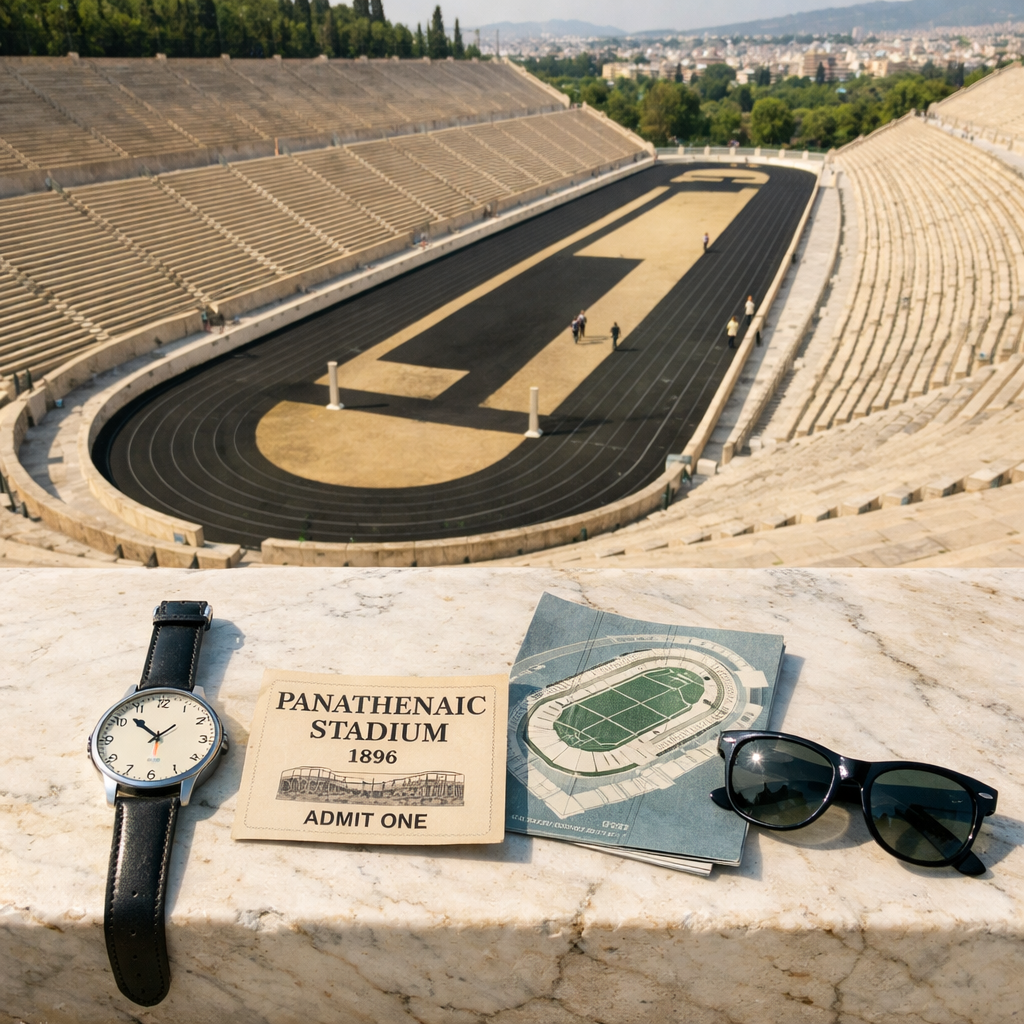
1896 changed Athens forever. That year, the Panathenaic Stadium hosted the first modern Olympic Games, making the panathenaic stadium one of central Athens’s most meaningful historic stops. You can see it in less than an hour, then walk to the Acropolis, the National Garden, or the Temple of Olympian Zeus.
The stadium is worth entering when you want its marble seating, tunnel, track, and Olympic story. If your time is short or your group includes visitors with limited mobility, the exterior viewpoint still gives you a strong impression without forcing a difficult visit.
Key Takeaways
1896 marked the first modern Olympic Games here
Kallimarmaro means “beautifully marbled”
Allow 45–75 minutes inside
Check seasonal hours and event closures
Combine it with the National Garden
Steep seating limits access for some visitors
Why the Panathenaic Stadium Matters in Athens
The Panathenaic Stadium is a marble stadium in central Athens, beside Ardittou Hill and the National Garden. It is also called Kallimarmaro, a Greek name meaning “beautifully marbled,” because its visible structure is covered in white marble.
The site began as an ancient stadium connected with the Panathenaic Games, festivals held in honor of the goddess Athena. It was not the site of the first ancient Olympic Games, which took place at Olympia in the western Peloponnese. That distinction matters when you plan a Greece history itinerary.
The modern stadium is closely linked to the 1896 Olympic Games. Those games were the first international Olympic Games of the modern era, and the stadium gave Athens a powerful setting for their return. The marble arena you see today reflects both ancient traditions and modern reconstruction.
It is a compact attraction rather than a full-day experience. Most visitors need about 45 to 75 minutes for the entrance route, track, seating areas, tunnel, photographs, and small displays.
You do not need to be a sports enthusiast to enjoy it. The strongest experience comes from standing inside a structure where ancient Athens, 19th-century reconstruction, and the modern Olympic movement meet in one location.
What You See Inside the Stadium
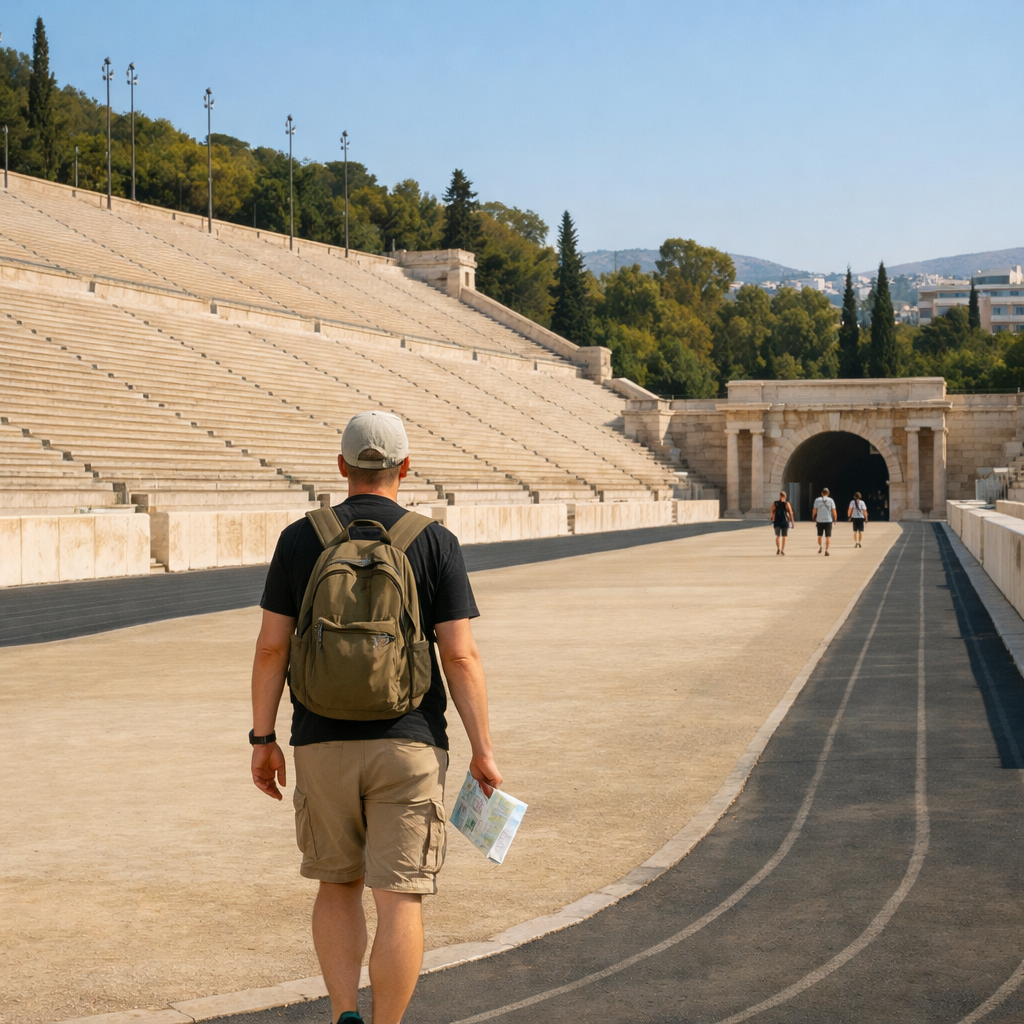
The entrance takes you into a long, enclosed stadium with a running track and steep rows of marble seats. From the lower level, the shape is easy to understand. From higher seats, you see how tightly the stadium fits between the surrounding streets and wooded hill.
The Panathenaic Stadium does not offer a large museum collection. Expect a historic venue, a few interpretive displays, Olympic-related objects, and a strong architectural experience rather than a long indoor exhibition.
The marble seating and track
The most memorable view is often from the track level, looking toward the curved end of the stadium. The pale marble changes appearance through the day, especially under strong Attica sunlight. Bring water in summer and avoid the middle of the afternoon if you dislike heat.
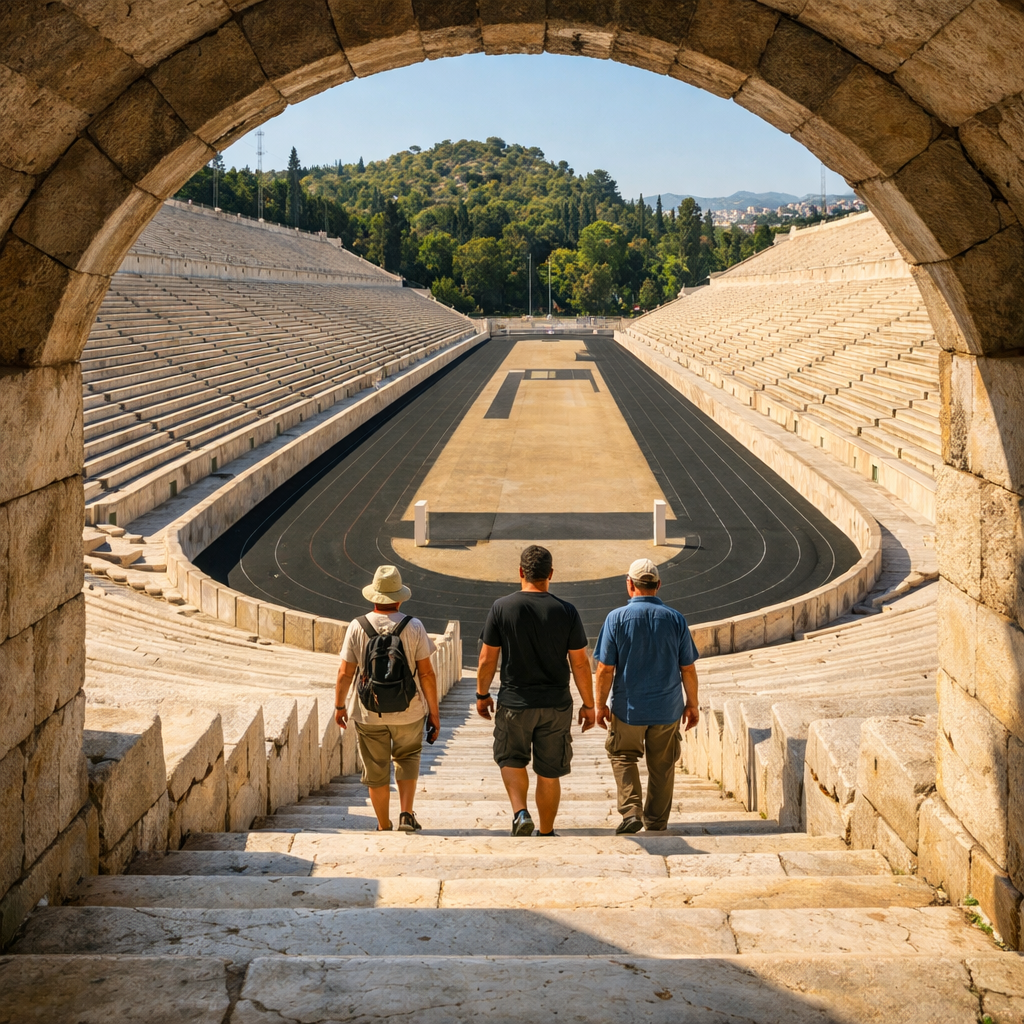
The upper seating is steep. It gives you a better sense of the stadium’s size, but the steps are uneven in places and can feel demanding after a full morning of walking around Athens.
The vaulted passage
A tunnel beneath the seating leads toward the stadium interior. It helps you understand how spectators and competitors reached the arena, while also providing shade during hot weather.
The route is straightforward, but the tunnel and steps are not a substitute for a fully accessible museum route. Visitors using wheelchairs should confirm the current accessible path before paying for entry.
Olympic memories
The stadium’s modern Olympic identity is visible through displays connected with the 1896 games and later Olympic ceremonies. It also has a strong connection with the modern Olympic torch tradition, which adds meaning for visitors who have watched the Olympic Games on television.
Leave time for photographs, but do not judge the stadium only from one angle. The track, tunnel, front seating, and high rows each show a different part of its design.
When Should You Buy a Ticket?
Buy a ticket when you want to walk inside the marble seating, see the track at close range, and understand how the 1896 Olympic Games used the site. Choose the exterior visit when your priority is a quick photo, your schedule is full, or steep seating would make the interior uncomfortable.
Admission fees change, so check the official Panathenaic Stadium information before your visit. Do not rely on an old Athens travel post, especially if you are traveling during a new season or around a major event.
What the admission gives you
An interior ticket normally gives access to the stadium, the track area, the seating sections, the passage beneath the stands, and the available exhibition material. It does not turn the visit into a guided historical tour, so read the signs or arrange a guide if detailed interpretation matters to you.
The value is strongest for first-time visitors who want a physical sense of the venue. You are paying for access to the historic structure itself, not for a large collection of artifacts.
When the outside is enough
The exterior is a sensible choice if you have only 15 minutes between Syntagma Square and the Acropolis Museum. The long white façade and curved entrance are easy to photograph from Vasileos Konstantinou Avenue, while the surrounding streets offer useful views of the stadium’s scale.
Families with tired children often make the same practical choice. A quick outside stop keeps the day moving, especially after the Acropolis or the Ancient Agora.
A simple decision rule
Use this order:
Check the official opening hours for your date.
Check whether an event or ceremony affects access.
Allow at least 45 minutes inside.
Buy a ticket if the track and seating matter to you.
Choose the exterior if you need a short photo stop.
Pair the visit with one nearby attraction.
A ticket is worthwhile when the stadium is a planned historic stop. It is less useful when you are already rushing between several central Athens sites.
Opening Hours, Tickets, and Best Visiting Time
Opening hours vary by season, and event-related closures can change the normal schedule. Check the current official timetable on the day before you go, then check again on the morning of your visit if your itinerary is tight.
Athens has long, hot summers. Visiting early in the morning gives you cooler conditions and softer light on the marble. Late afternoon can also work well, but confirm closing time because seasonal schedules are not identical throughout the year.
Build a realistic visit window
Set aside 45 to 75 minutes for the stadium itself. Add walking time from your previous stop, plus another 15 minutes if you want relaxed photographs from several levels.
From Syntagma Square, the walk takes roughly 15 to 20 minutes depending on your route and pace. From the Acropolis Museum, expect around 20 to 25 minutes on foot, with traffic crossings and uphill or downhill sections.
Avoid the busiest heat
The seating absorbs sunlight, and shade is limited in much of the open arena. In July or August, a morning visit is the firm choice for comfort. Wear shoes with secure soles because the steps are harder to manage in loose sandals.
Carry water, sunscreen, and a hat. This sounds basic, but the stadium offers less shade than many visitors expect.
Check for special access
Ceremonies, athletic events, official visits, and Olympic-related activities can affect entry. A closure may be posted near the entrance, but discovering it after walking from Plaka is a poor use of your day.
When planning several Athens attractions, leave a flexible 30-minute buffer. That protects your schedule if the ticket line, security check, or walking route takes longer than expected.
How to Reach the Panathenaic Stadium
The Panathenaic Stadium is at Vasileos Konstantinou Avenue, near the National Garden and the Zappeion area. Its position makes it easy to combine with central Athens sights, but the entrance is not directly on a pedestrian square like Monastiraki.
The most convenient approach for many visitors is on foot. From Syntagma Square, walk through the National Garden toward the Zappeion and then continue toward the stadium. This route is more pleasant than following busy traffic for the entire distance.
Walking routes
From the National Garden, allow about 10 minutes after reaching the garden’s southern side. From the Acropolis Museum, follow the broad central streets toward Ardittou Hill. Google Maps is useful for the final turns, especially because large roads and entrances can make the stadium appear closer than it is.
A taxi or ride-hailing car works well for visitors with limited walking ability. Ask the driver for the Panathenaic Stadium, not simply “the Olympic stadium,” because Athens has other sports venues.
Public transport
The closest practical metro area is around Syntagma, followed by a walk. Tram and bus routes also run through central Athens, but routes and stops change more often than the landmark itself, so check the OASA app or current Google Maps directions before leaving.
Avoid driving unless you have a specific reason. Parking around the stadium is limited, and finding a legal space can take longer than the walk from Syntagma.
Combine the route intelligently
A strong route begins at Syntagma Square, crosses the National Garden, visits the Panathenaic Stadium, and continues toward the Acropolis Museum or Plaka. This keeps the stadium as a compact stop instead of making you cross central Athens repeatedly.
For a morning plan, allow roughly four hours for Syntagma, the garden, the stadium, lunch, and the Acropolis Museum. The exact time depends on museum queues and your walking pace.
Accessibility and Practical Comfort
The Panathenaic Stadium has accessibility limits because it is a historic open-air structure with steep seating, stairs, and uneven sections. Do not expect every part of the arena to be reachable by wheelchair or easy for visitors with balance problems.
The lower areas are more manageable than the highest seating rows, but the full experience still involves movement across hard surfaces. Contact the venue before visiting if you need step-free access, a companion arrangement, or a specific route.
Mobility and seating
Visitors with knee problems should avoid treating the upper rows as a must-see section. The best choice is to enjoy the track and lower viewpoints, where the stadium’s shape remains clear without the extra climb.
A folding cane or walking stick can help on the steps, but it does not remove the need for care. There are no long indoor galleries where you can rest in cool conditions.
Families and children
Children usually respond well to the open track and tunnel. Keep young children close near stair edges, especially when the stadium is busy and visitors stop for photographs.
A stroller may be awkward on the seating route. If you are visiting with a baby, use a carrier where practical and confirm the current entrance conditions before arrival.
Weather and facilities
The stadium is exposed to sun, wind, and occasional rain. In January, a wet marble surface can feel slippery; in August, the heat can become the main challenge.
Restrooms and visitor facilities may be limited compared with a large museum. Use facilities before entering at a nearby café, hotel, or museum, particularly when traveling with children.
Nearby Athens Attractions That Fit the Visit
The Panathenaic Stadium works best as one stop in a central Athens walking route. You do not need a separate full day for it. Pair it with the National Garden for a relaxed visit, or connect it with the Acropolis Museum when you want a stronger history-focused morning.
The National Garden is the easiest companion. It provides shade, benches, and a calmer setting before or after the bright marble stadium. The Zappeion Hall is also nearby and adds a graceful neoclassical landmark to the walk.
A history-focused route
Start at the Acropolis Museum, walk through central Athens, visit the stadium, and finish in the National Garden. This order works well because the museum offers detailed exhibits, while the stadium gives you a large, physical historic space.
Do not confuse the stadium with the Ancient Agora or the original Olympic sanctuary at Olympia. They belong to different places and periods, even though each helps explain Greek public life and sporting traditions.
A shorter central route
If you have two hours, begin at Syntagma Square, walk through the National Garden, visit the stadium, and return through the Zappeion. This plan includes the exterior of several landmarks without forcing a long museum visit.
If you are staying in Plaka, add the stadium before lunch and return through the garden. The route is simple, but summer heat can slow you down.
Planning the whole day
The Panathenaic Stadium fits naturally before an afternoon at the Acropolis Museum or after a morning around Syntagma. Add a café break rather than stacking another major ticketed site immediately afterward.
For flights, hotels, transport, and Athens activities, My Greek Path can help you compare travel options while you keep the stadium inside a realistic city itinerary. The practical gain is seeing travel times and attractions together instead of planning each booking in isolation.
Conclusion
Choose the Panathenaic Stadium interior when you want the marble track, steep seating, and 1896 Olympic setting. Choose the exterior when you need a fast central Athens stop. Check the official hours before leaving, visit early in summer, and pair the stadium with the National Garden or Acropolis Museum rather than giving it an entire day.
Frequently Asked Questions
Is the Panathenaic Stadium worth visiting?
Yes, it is worth visiting if you value historic architecture and want to stand inside the 1896 Olympic venue. Allow 45 to 75 minutes, and skip the interior only when your schedule is too tight or stairs create a serious problem.
Is the Panathenaic Stadium the site of the first ancient Olympics?
No. The first ancient Olympic Games were held at Olympia in the Peloponnese. The Panathenaic Stadium is linked to Athens’s Panathenaic Games and hosted the first modern Olympic Games in 1896.
Can wheelchair users visit the stadium?
Access is limited by steep seating, steps, and the historic design. Contact the stadium before arrival to confirm the current step-free route and available assistance, rather than assuming the standard visitor path will work.
How long should I stay at the stadium?
Plan 45 to 75 minutes inside, or about 15 minutes for an exterior photo stop. Add walking time from Syntagma Square, the Acropolis Museum, or your Athens hotel.