About 140 kilometres from Athens, Nafplio in Greece gives you a historic centre, two beaches, and major ancient sites within easy reach. That distance makes it a smart Peloponnese break, but only if you plan your days around steep steps, summer heat, and parking.
You can walk through most of the old town, then use a car for Mycenae, Epidaurus, or Karathona Beach. Stay in the right area and Nafplio becomes an easy base rather than a beautiful town where every outing starts with a parking problem.
Key Takeaways
Walk the Old Town and waterfront first
Visit Palamidi early, before heat builds
Use a car for Mycenae and Epidaurus
Choose hotels with confirmed parking
Allow time for Karathona and Arvanitia beaches
Nafplio is a mainland coastal town, not an island
1. Start with Nafplio Old Town and Syntagma Square
Nafplio Old Town is the best place to begin because the main streets, squares, churches, shops, and waterfront sit close together. Walk without a fixed route for at least two hours, starting from Syntagma Square and moving toward the sea.
The square is surrounded by neoclassical buildings and busy cafés. The Archaeological Museum of Nafplio occupies a former Venetian barracks on the square, with objects from the Argolid, including finds from the Mycenaean period. Check current opening hours before visiting because museum schedules change by season.
1. Wander the narrow streets
Follow Staikopoulou Street for small shops, restaurants, and traditional buildings. The old centre is compact, but its stone paving can be uncomfortable in thin sandals. Wear shoes with a firm sole, especially if you plan to continue uphill toward Palamidi.
Look for the Venetian and neoclassical details above street level. Nafplio’s charm comes from these ordinary moments: shutters, balconies, old doorways, and small lanes opening toward the harbour.
2. See the first Greek capital
Nafplio was the first capital of the modern Greek state from 1828 until 1834. The Vouleftikon, where the first Greek parliament met, is near Syntagma Square, while the nearby Agios Spyridon Church is linked with the assassination of Ioannis Kapodistrias in 1831.
These places take little time to visit, but they give the town more depth than a simple seaside stop. If you enjoy Greek history, add the National Gallery branch in Nafplio, which focuses on works connected with the Greek War of Independence.
3. Plan a proper café stop
Nafplio is made for a slow coffee or lunch in the old centre. Choose a table in Syntagma Square or along the waterfront, then continue walking once the strongest midday heat has passed. This rhythm works better than trying to pack every sight into one morning.
Reserve dinner during July and August if you want a popular restaurant at a particular time. The busiest streets fill quickly after 20:30, especially on Friday and Saturday nights.
2. See Palamidi Fortress before the heat
Palamidi Fortress is Nafplio’s major viewpoint and the attraction that deserves the strongest planning. Visit early in the morning, carry water, and expect steep steps if you climb from town. The fortress sits above Nafplio, so the views are rewarding, but the ascent is demanding in July and August.
You can reach the entrance by car or taxi, then explore the fortress on foot. The famous staircase from town is often described as having 999 steps, although the exact count varies by route and tradition. Treat the climb as a serious walk rather than a casual shortcut.
4. Take the historic staircase
Start from the area near the eastern side of the Old Town and follow the path toward Palamidi. The climb is exposed, with limited shade. Allow roughly 30 to 45 minutes for the ascent at a steady pace, longer if you stop for photographs.
Do not schedule this walk after a heavy lunch. A small breakfast, water, a hat, and closed shoes will make the difference between an enjoyable visit and an exhausting one.
5. Explore the fortress walls
Inside Palamidi, walk between the bastions and look across the Argolic Gulf. The fortress was built by the Venetians in the early 18th century and later became a prison. Its scale is easy to underestimate from below.
The site has uneven ground, steps, and exposed surfaces. Keep children close to you and avoid rushing near walls. A visit usually takes 60 to 90 minutes once you reach the entrance.
6. Choose the easier return
If you climb up from Nafplio, return by taxi or arrange a car pickup from the entrance. Walking down is easier than walking up, but the stone steps still put pressure on knees, especially in hot weather.
This is one of the few places where paying for a short transfer adds real value. You save energy for the Old Town, Bourtzi, or an evening meal instead of using your legs on a second steep route.
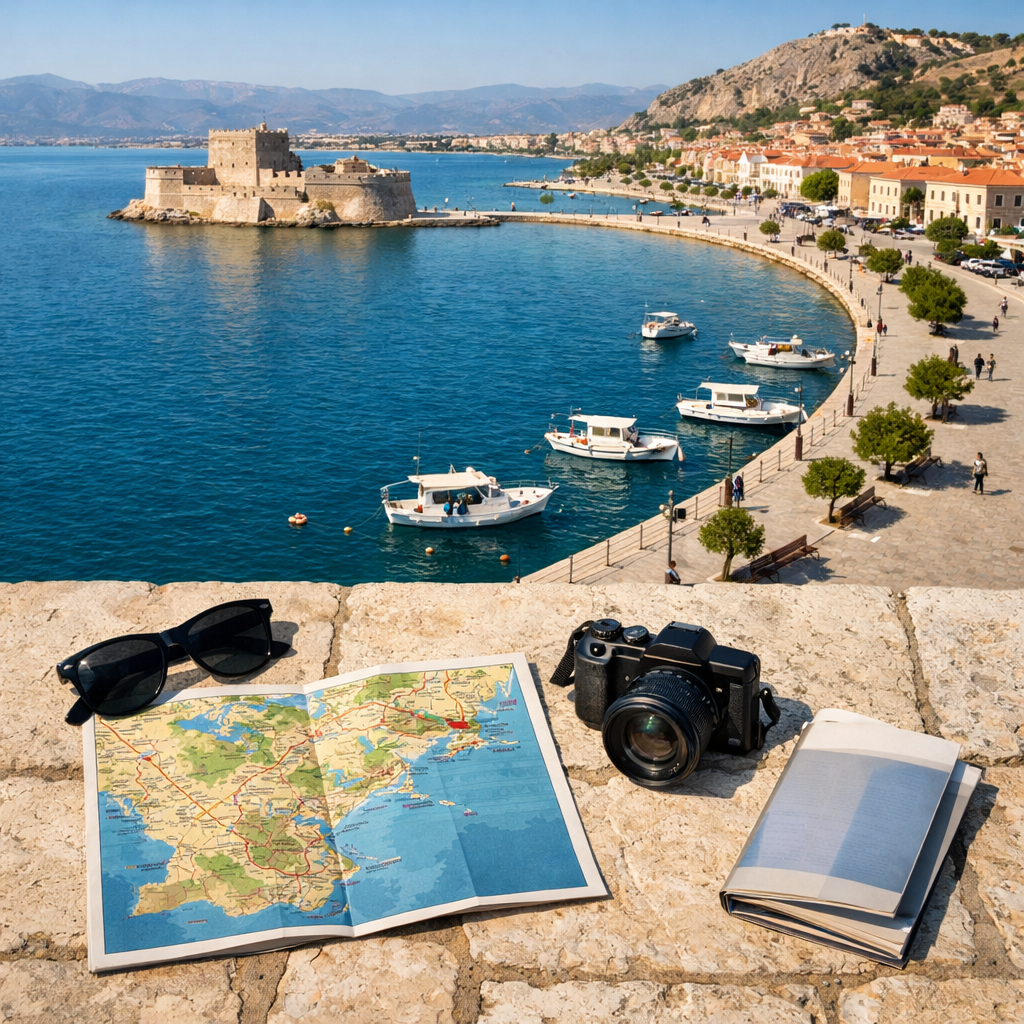
3. See Bourtzi Castle and the Nafplio waterfront
Bourtzi Castle sits on the small islet in Nafplio’s harbour and is one of the town’s most recognisable sights. Take a boat from the waterfront when services are operating, but do not treat Bourtzi as the whole Nafplio experience. The Old Town and Palamidi offer more history and a better sense of place.
The waterfront itself deserves a separate walk. Begin near the harbour and continue along the broad promenade toward the Arvanitia side of town. The route is especially attractive around sunset, when the light reaches the fortress above the rooftops.
7. Take the boat to Bourtzi
Boat departures and ticket arrangements change with the season and weather, so check on the waterfront on the day you want to go. The crossing is short, and the visit is usually easy to combine with lunch or an evening walk.
The castle’s compact size means you do not need half a day. Plan around 30 to 60 minutes for the boat trip and visit, then keep time for the waterfront and Old Town.
8. Walk the Arvanitia Promenade
The Arvanitia Promenade follows the coast below the rocky slopes of Nafplio. It is a scenic walk with open views, but some sections are uneven and exposed. Carry water and avoid the hottest part of the afternoon.
You can walk from the Old Town toward Arvanitia Beach and return the same way. The route gives you a different view of Nafplio, with the sea on one side and the fortress slopes on the other.
9. Visit the Lion of the Bavarians
On the edge of Nafplio, the Lion of the Bavarians is a carved monument created in the 19th century for Bavarian soldiers who died during the reign of King Otto. It is close enough to reach by a short taxi ride or a longer walk from the centre.
The monument takes only a few minutes, so pair it with another stop rather than making a separate long outing. It is a useful addition for travellers interested in the town’s early modern history.
4. Choose the right beach near Nafplio
Arvanitia Beach is the easiest beach to combine with a town stay. Karathona Beach is the better choice when you want more space and a longer swim. Both are close to Nafplio, but they suit different days and travel styles.
Do not expect every beach to offer the same facilities in every month. Summer beach bars and food options are more reliable than in the shoulder seasons, while September often gives you warm water with fewer visitors.
10. Swim at Arvanitia Beach
Arvanitia Beach is a small, rocky swimming spot just beyond the Old Town. It works well for a quick dip after sightseeing because you can reach it on foot via the coastal route.
Bring water shoes if you dislike pebbles. The area is more about swimming and views than a wide sandy shoreline, so choose Karathona if you want to spend several hours lying on the beach.
11. Spend the afternoon at Karathona Beach
Karathona Beach is a broad sandy beach south of Nafplio, reached by road from town. The drive is short, but a car or taxi makes the visit easier, particularly when carrying umbrellas, towels, or food.
Arrive before late morning in July and August if you want a comfortable place near the water. Check the return plan before settling in, since taxis may be less convenient later in the day than during the afternoon.
12. Add a swim to your sightseeing day
A practical summer plan is Palamidi early, Old Town at midday, and Karathona later. This avoids the worst heat during the fortress climb and gives the beach a clear purpose instead of squeezing it between two rushed visits.
In spring or autumn, reverse the order if the sea feels cool. Start with the town and archaeological sights, then use the beach for a short walk and a coffee rather than planning the whole day around swimming.
5. Visit Mycenae and Epidaurus from Nafplio
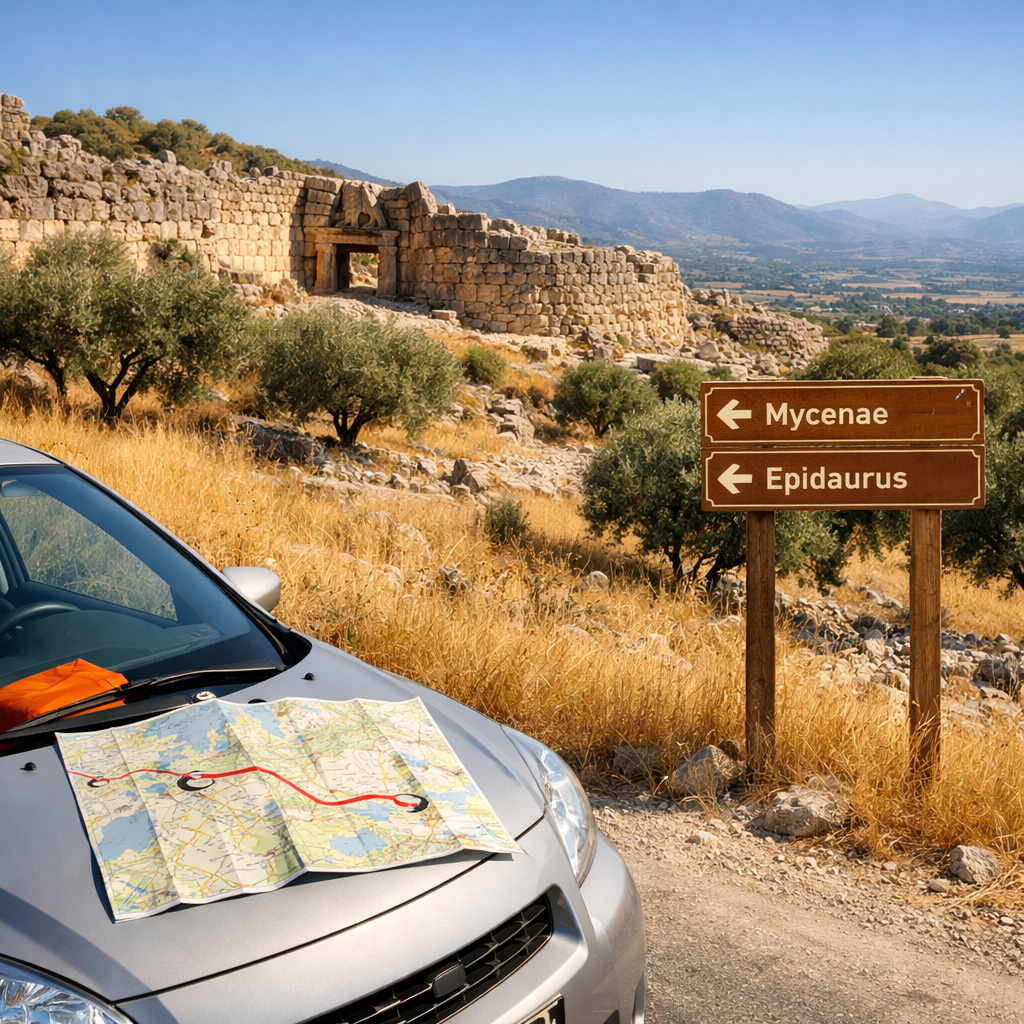
Mycenae and Epidaurus are the two strongest day trips from Nafplio. They are close enough for a car-based day, but not so close that you should underestimate driving, parking, and visit time. Plan one long archaeological day, or visit them separately if history is your main reason for coming.
Mycenae is roughly 25 kilometres from Nafplio by road, while Epidaurus is roughly 30 kilometres away. Road conditions, summer traffic, and stops can stretch each journey, so allow more time than a map’s fastest estimate.
Mycenae: walk through the Bronze Age citadel
Mycenae includes the Lion Gate, massive Cyclopean walls, the palace area, and the Treasury of Atreus. The site is exposed, with uneven paths and little shade. Go early, especially from June through August.
Wear proper walking shoes and carry water. The museum adds context, but the citadel itself is the main reason to visit. Allow at least 90 minutes for a focused visit, longer if you want to read the displays and explore without rushing.
Epidaurus: see the ancient theatre
The Ancient Theatre of Epidaurus is famous for its design and acoustics, but the wider sanctuary also includes temples, baths, and other remains. Do not arrive, take one photograph, and leave. The surrounding site explains how theatre fitted into ancient religious life.
The theatre is often connected with the Athens Epidaurus Festival, whose programme changes each year. If you attend a performance, arrange your return transport before the show, since leaving after a late event is less straightforward than a daytime visit.
A workable archaeological route
Use this order for a full driving day:
Leave Nafplio after breakfast.
Visit Mycenae before the hottest hours.
Stop for lunch near the route rather than inside the busiest site area.
Continue to Epidaurus if your energy and opening hours allow.
Return to Nafplio before relying on late public transport.
A rental car gives you control over timing and luggage, but it also adds fuel, parking, and navigation. For one archaeological day, a guided excursion or private transfer can be better value if you do not want to drive unfamiliar roads.
6. Decide when a car helps and when it becomes a burden
You do not need a car to enjoy central Nafplio. The Old Town, Syntagma Square, waterfront, Arvanitia Beach, and many restaurants are walkable. Public buses connect Nafplio with other towns, but schedules are less flexible than a private vehicle for beaches and archaeological sites.
A car becomes useful when you want Mycenae, Epidaurus, Karathona, and nearby villages in the same stay. It is less useful after you arrive in the historic centre, where narrow streets and limited spaces turn a simple errand into a parking search.
Driving from Athens
The trip from Athens to Nafplio takes roughly two hours by car in normal conditions, covering about 140 kilometres. Traffic leaving Athens, roadworks, and summer weekend movement can add time, so do not book a tightly timed activity immediately after arrival.
Intercity buses from Athens serve Nafplio, with departures from Kifisos Bus Terminal. Check the current KTEL Argolidas timetable before travelling because departure times and ticket details change.
Parking in the centre
Ask your hotel for a specific parking answer, not a general promise that parking is available. Confirm whether the space is private, reserved, paid, or located several streets away.
Nafplio hotels inside the Old Town often trade parking convenience for immediate access to cafés and historic streets. Accommodation outside the centre may give you easier parking and quieter nights, but you will walk or take a taxi into town.
When to rent
Rent a car for the days when you need it. If you are staying three nights and want one archaeological excursion, renting for the full stay may create more hassle than value.
My Greek Path can help you compare Nafplio hotels, car rentals, transfers, and excursions in one planning process. That is useful when the lowest room price becomes less attractive after adding parking, taxis, or a separate day trip.
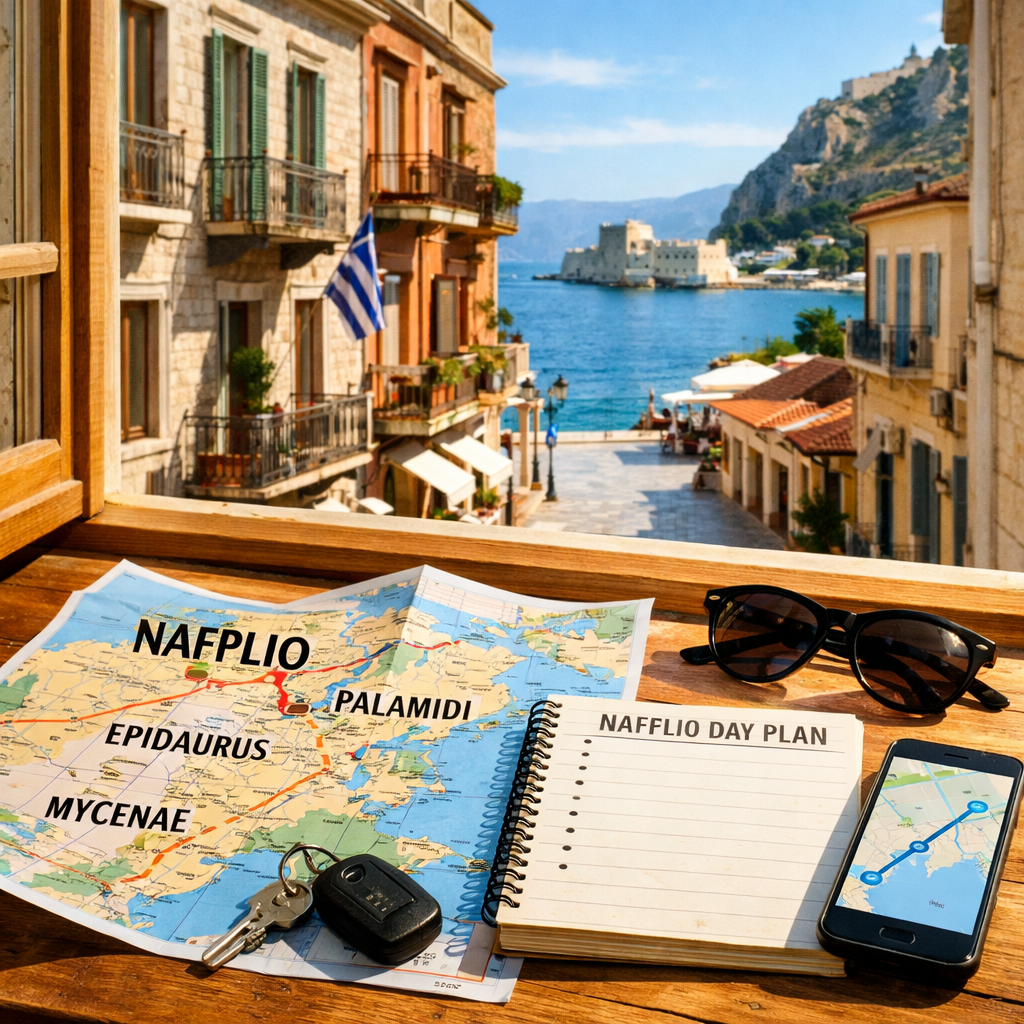
7. Build a practical Nafplio itinerary
The best itinerary balances walking, history, and open-air time. Do not put Palamidi, Mycenae, and Epidaurus into one hot afternoon. Each place deserves enough time for you to look around without treating the trip like a checklist.
One day in Nafplio
Start early at Palamidi, then return to the Old Town for the Archaeological Museum and Syntagma Square. Have lunch near the centre, walk the waterfront, and visit Arvanitia Beach before dinner.
Skip Mycenae and Epidaurus on a one-day visit unless you are travelling by organised tour. Adding both usually leaves too little time for Nafplio itself and creates a long, tiring day on the road.
Two days in Nafplio
On day one, focus on Palamidi, the Old Town, Bourtzi, and the waterfront. On day two, choose either Mycenae and Epidaurus by car or Karathona Beach with a slower town evening.
This is the minimum stay I recommend for first-time visitors who want both the town and one major excursion. You get one flexible block for weather, opening hours, or a longer meal.
Three or four days
Use the extra time for both archaeological sites, Karathona, and a relaxed evening in the Old Town. You can also add Tiryns, a UNESCO-listed archaeological site near Nafplio, if ancient fortifications interest you.
Keep one morning free. Strong winds, heat, a delayed car pickup, or an unexpected museum closure can change your plan, and a flexible morning prevents one problem from affecting the entire stay.
8. Choose Nafplio hotels by access, not photographs
The right Nafplio hotel depends on how you will move each day. Stay inside or beside the Old Town for evening walks and restaurant access. Choose a property farther out if parking, a pool, or a quieter setting matters more than stepping straight into the historic streets.
Room views can be attractive, but they do not solve practical problems. A sea-facing room may still leave you carrying bags over stone streets, while a cheaper property with confirmed parking can make a road trip far easier.
Stay in the Old Town
Old Town accommodation puts Syntagma Square, the waterfront, and most restaurants within a short walk. It suits travellers who plan to leave the car parked and enjoy Nafplio on foot.
Check access details before booking. Some streets are restricted to vehicles, and a hotel may require you to unload luggage at a nearby point before moving the car.
Stay near the harbour or outside the centre
The harbour area gives you quick access to the waterfront and often easier vehicle access than the narrowest Old Town streets. Accommodation farther from the centre can offer more space, but check the walking route at night and the availability of taxis.
For families or travellers with heavy luggage, a property with a lift and dedicated parking is often worth choosing over a more photogenic room in a pedestrian lane.
Confirm these details before paying
Send the hotel four questions: Is parking guaranteed? Is it free or paid? Can a car reach the entrance? How far is the walk from the parking space?
Also check whether breakfast begins early enough for a Mycenae visit. A 08:00 departure becomes much easier when you can collect food before leaving, rather than searching for an open café.
Conclusion
Choose Nafplio as a walkable historic base, then add one car-based day for Mycenae and Epidaurus. If you have only one day, stay in town and save the ancient sites for another visit. Book accommodation only after checking parking, vehicle access, and walking distance to the Old Town.
Frequently Asked Questions
Is Nafplio an island?
No. Nafplio is a mainland coastal town in the northeastern Peloponnese, on the Argolic Gulf. You reach it by road from Athens, usually in about two hours by car, or by intercity bus from Kifisos Bus Terminal.
How many days should I spend in Nafplio?
Plan two full days for the best balance: one for Nafplio’s centre, Palamidi, and the waterfront, and one for Mycenae, Epidaurus, or Karathona Beach. Three nights give you more flexibility in summer.
Can I visit Nafplio without renting a car?
Yes, if you mainly want the Old Town, Palamidi, Bourtzi, waterfront, and Arvanitia Beach. A car becomes more useful for Karathona, Mycenae, Epidaurus, and nearby villages, but parking in the historic centre is a genuine drawback.
What should I do in Nafplio when it rains?
Visit the Archaeological Museum of Nafplio, explore the National Gallery branch, spend time in the churches and historic buildings, and plan a long meal in the Old Town. Keep Palamidi for clearer weather because its paths are exposed and slippery when wet.