At 76 km², Santorini is small enough to cross in one day, but busy roads and sunset crowds can make that plan frustrating. Greece and Santorini work best when you treat the island as a place to explore strategically, not only as a viewpoint for Oia’s famous sunset.
You can stay outside Oia, visit ancient Akrotiri, taste wine in inland villages, and choose transport that fits your route. With the right base and travel dates, you get better value, shorter transfers, and a fuller experience of Thera.
Key Takeaways
Oia is beautiful, but it is not Santorini’s only worthwhile base.
Fira gives you central access and stronger transport connections.
Santorini beaches usually have volcanic sand, not white sand.
May, June, September, and October offer easier sightseeing.
Compare flights, ferries, hotels, and transfers before booking.
Reserve sunset dining and popular tours early.
Why Santorini Deserves More Than a Sunset Visit
Santorini is a volcanic island shaped by the eruption that created its caldera. The result is a dramatic cliffside view, dark volcanic beaches, whitewashed villages, vineyards, archaeological sites, and roads that connect very different parts of the island.
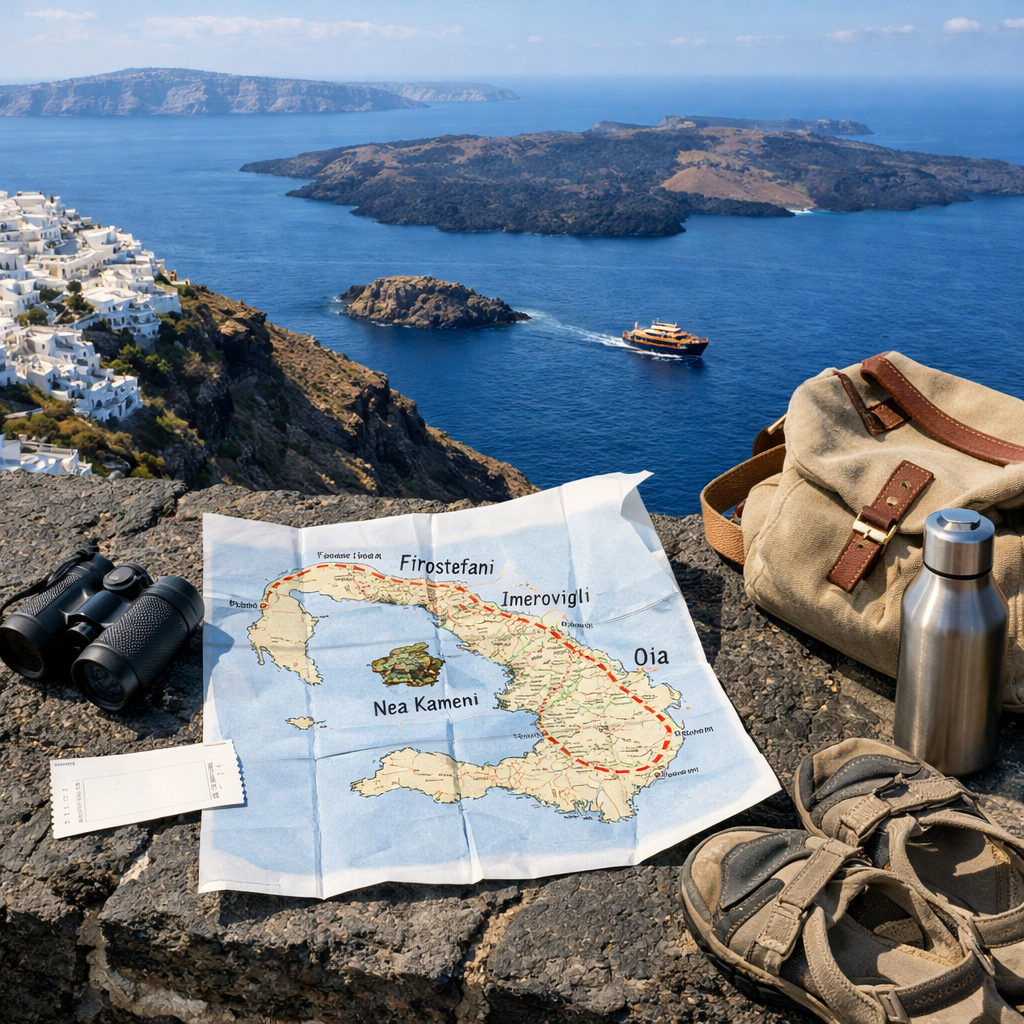
The Santorini caldera is the main attraction for first-time visitors. From Fira, Firostefani, Imerovigli, and Oia, you look across the flooded volcanic crater toward the smaller islands of Nea Kameni and Thirasia. The view changes with the light, so seeing it at midday and again in the evening gives you two distinct experiences.
Oia receives the most attention, especially around sunset. It is worth visiting, but it is also the place where narrow lanes fill quickly, restaurant tables sell out, and taxis become difficult to find after the sun goes down. Staying there is a choice, not a requirement.
The inland side of Santorini feels different. Pyrgos has a hilltop settlement, Megalochori has traditional lanes and wineries, and Emporio has one of the island’s older fortified village areas. These places give you quieter walks and a better sense of daily island life.
Santorini also rewards a slower schedule. Plan one major sight, one meal, and one flexible part of the day rather than trying to cross the island repeatedly. A route from Akrotiri to Perissa and then to Oia sounds manageable on a map, but summer traffic can turn it into a long day.
Where Should You Stay in Santorini?
Choose Fira for the best all-round base, Oia for premium caldera views, and the southern or eastern coast for better beach access and often lower accommodation costs. Your decision should follow your daily plans, because a beautiful room in the wrong location creates expensive transfers and lost time.
Fira and Firostefani
Fira is the practical choice for many travelers. It has restaurants, shops, travel offices, bus connections, and easy access to the caldera path toward Firostefani and Imerovigli. If you want to visit several parts of Santorini without renting a car, start your search here.
Firostefani sits just north of Fira and feels quieter while keeping you close to the same cliffside route. Imerovigli is farther north and known for caldera views, upscale hotels, and Skaros Rock. These areas suit travelers who care about views but do not need to stay in Oia.
Oia and the north
Oia is the strongest choice for a special stay built around caldera views, private terraces, and polished dining. It is also the most demanding area for budgets and logistics. Check whether your accommodation is near the main pedestrian lanes, because some properties require a walk with luggage from a vehicle-access point.
Oia’s sunset crowds affect even guests staying there. Reserve dinner early, arrive at your chosen viewpoint before the busiest period, and arrange your return plan before dark. Relying on a last-minute taxi in August is poor planning.
The south and east coast
Akrotiri, Perivolos, Perissa, Kamari, and Monolithos suit travelers who want beach time, easier parking, or a more relaxed setting. Perissa and Perivolos have long stretches of dark volcanic shore, beach bars, tavernas, and water activities. Kamari has a lively waterfront and direct views toward the airport area.
Megalochori and Pyrgos are better for travelers who want village atmosphere and wineries without paying mainly for a cliff view. In practice, booking outside Oia can reduce the pressure on your budget, but you must compare transfer prices and driving times before confirming.
Read the location details carefully.
A hotel listing may say “Santorini views” while sitting far from the caldera. Check the map, road access, distance to a bus stop, luggage arrangements, and whether breakfast is served on-site. These details matter more than a single impressive photograph.
What Are the Best Things to Do in Santorini?
Start with the Akrotiri Archaeological Site, walk part of the Fira-to-Oia path, visit a winery, and add a beach or boat trip. This combination gives you history, scenery, food, and time by the sea without making the entire holiday depend on one sunset.
Ancient Akrotiri
Akrotiri is a major Bronze Age settlement preserved after the volcanic eruption. Covered walkways protect the site, and the visit gives context to the island’s geology and ancient trade connections. It is one of the strongest reasons to travel beyond the caldera villages.
Go early in the day during July or August, when heat and tour groups make indoor and outdoor sightseeing harder. Pair Akrotiri with the nearby Red Beach viewpoint only if conditions and access are suitable; coastal paths can change, and you should follow local safety signs.
Villages and inland routes
Pyrgos is a good stop for a short climb, church views, and a meal away from the busiest caldera streets. Megalochori works well for a slower afternoon, especially if you combine village walking with a winery visit.
Santorini wineries focus on grapes suited to dry volcanic conditions, including Assyrtiko. Tastings often explain the island’s low, basket-shaped vine training, which protects vines from strong winds. Book ahead if you want a guided tasting rather than a quick glass.
The caldera path and boat trips
The walking route from Fira through Firostefani and Imerovigli toward Oia offers some of the island’s best views. It is not a flat promenade, so wear proper shoes, carry water, and avoid the hottest part of the day. The full route takes several hours for many visitors.
A caldera cruise can add a different view of the cliffs and volcanic islands. Compare departure times, boat size, swimming stops, and the return point before booking. A late cruise may sound ideal for sunset but can return when road traffic is at its worst.
Santorini beaches
Santorini beaches do not match the usual image of pale Caribbean sand. Expect black, red, brown, or mixed volcanic material, with striking cliffs and clear water in the right conditions.
Perissa and Perivolos are strong choices for a full beach day. Kamari has a developed waterfront, while Vlychada has unusual cliffs and a more distinctive setting. Red Beach is famous for its colors, but access and safety conditions deserve attention.
When Is the Best Time to Visit Santorini?
Visit Santorini in May, June, September, or October for the best balance of weather, open businesses, and manageable crowds. July and August deliver the classic summer atmosphere, but they also bring the strongest demand for hotels, ferries, rental vehicles, restaurants, and sunset viewpoints.
May and June
May usually brings warmer days without the full pressure of high summer. Sea temperatures may feel cool to some swimmers, but sightseeing, hiking, and village visits are comfortable. By June, beach businesses and boat excursions are operating more fully.
June is my preferred month for a first visit when your dates are flexible. You get long daylight, strong ferry and flight availability, and enough warmth for swimming without the most intense August congestion.
July and August
Peak season needs advance planning. Accommodation near Oia and the caldera sells quickly, popular restaurants fill early, and the main roads become crowded when buses, rental cars, ATVs, and taxis move between the same villages.
Do not plan a peak-season Santorini trip around spontaneous sunset dining. Reserve important meals, book airport or port transfers, and leave extra time for a journey that looks short on a map. The drawback is clear: August gives you the busiest version of the island.
September and October
September offers warm sea conditions and slightly calmer evenings, while October can be excellent for walks, villages, and food-focused trips. Some seasonal businesses reduce hours later in October, so check opening times before building a fixed itinerary.
Weather is less predictable in October than in July, but that does not make the month a poor choice. It simply favors travelers who value space and scenery more than guaranteed beach weather every day.
Winter planning
From November through March, Santorini becomes much quieter. Many seasonal hotels, restaurants, and tours close or reduce services, and transport schedules are less useful for a sightseeing-heavy trip. The caldera remains impressive, but the island feels like a local community rather than a full resort destination.
If you visit in winter, base yourself in Fira, check opening days in advance, and arrange a rental car or reliable transfer. This is a completely different trip from summer Santorini, with fewer crowds but fewer choices.
How Do You Get to Santorini and Move Around?
Fly to Santorini Airport for speed, or take a ferry from Piraeus, Crete, or another Cycladic island when the route fits your itinerary. On the island, use buses for central routes, rent a car for broad exploration, or book transfers when luggage and timing matter more than flexibility.
Flights and ferries
Santorini Airport receives domestic flights from Athens and seasonal international services. Flight time from Athens is short, but airport queues and summer demand still make early booking sensible. Compare baggage rules, because a low fare can change after luggage and seat charges.
Ferries connect Santorini with Piraeus and other islands such as Naxos, Paros, Mykonos, and Crete. Fast ferries shorten the crossing but often cost more and may feel rougher in strong winds. Check the port on your ticket, then arrange transport because Athinios Port is busy and has a steep approach.
Choosing island transport
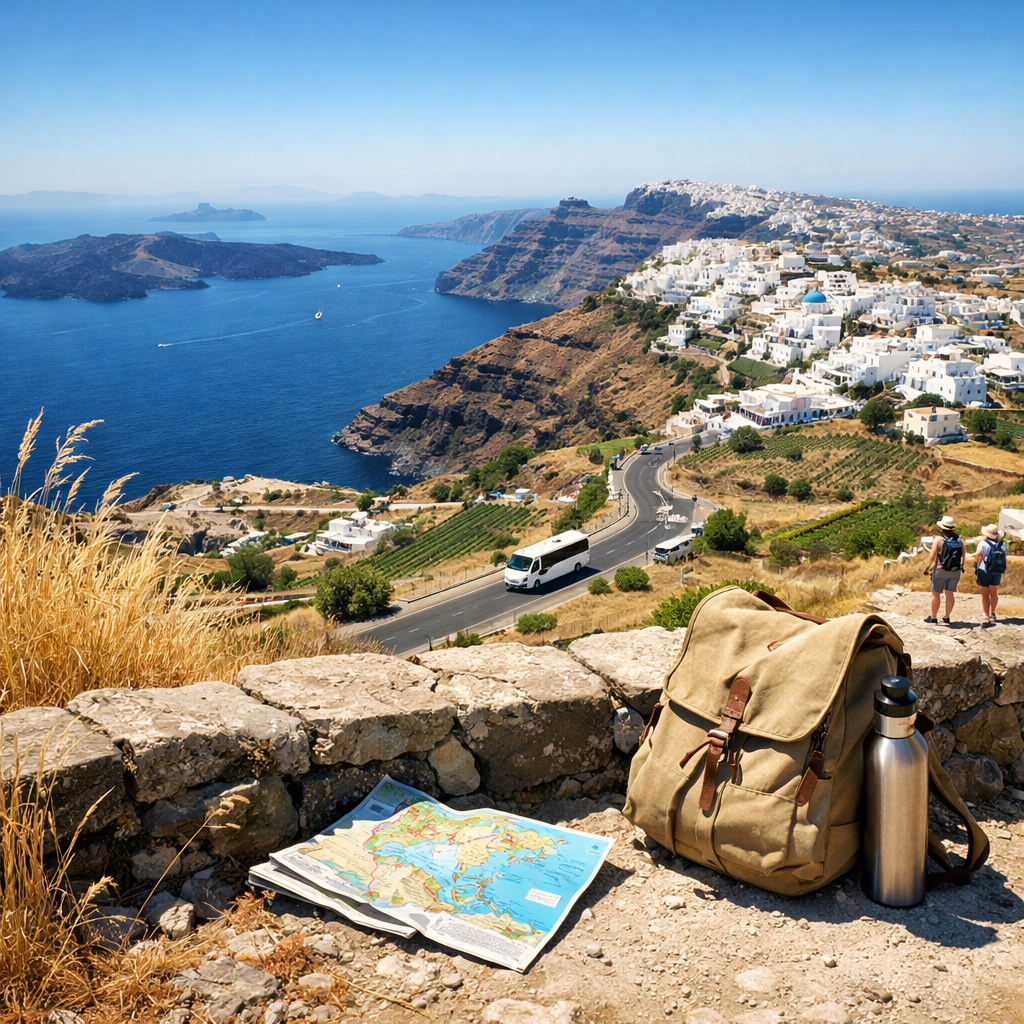
Use the local KTEL bus network when your plans focus on Fira, Oia, Kamari, Perissa, and other main routes. Buses are the simplest low-cost option, but schedules become crowded in summer and the last useful departure may be earlier than you expect.
A rental car gives you the most control for Akrotiri, Pyrgos, Megalochori, wineries, and beaches. It also brings parking problems in Oia and Fira. ATVs and scooters are popular, but they expose you to wind, heat, uneven roads, and traffic; choose one only if you are confident and properly licensed.
A practical booking sequence
Check flights and ferry times before choosing your hotel.
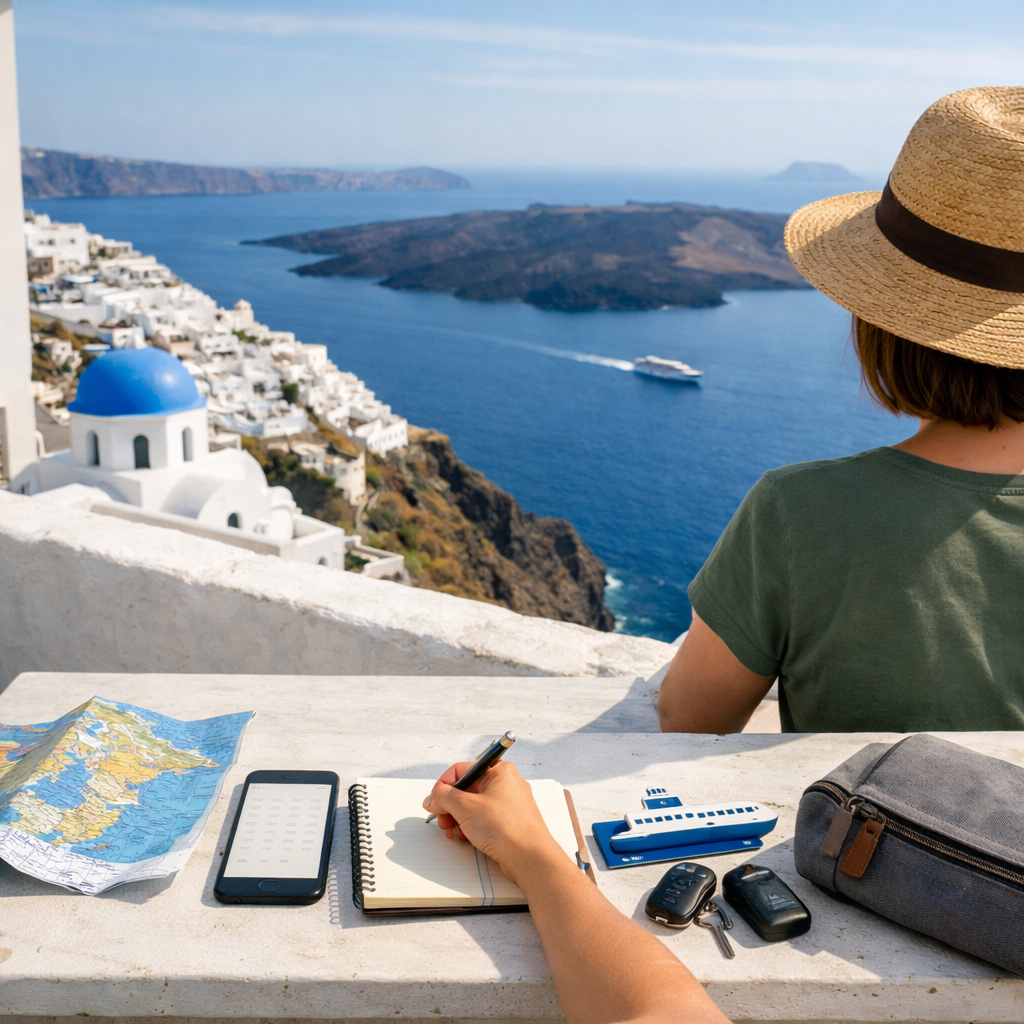
Mark your accommodation on a map, not only in a search result.
Price airport or port transfers alongside the room.
Reserve a car, scooter, or key tours for peak dates.
Build one flexible day for traffic, wind, or changing plans.
Comparing the full trip cost matters more than choosing the cheapest individual item. A lower hotel rate in a remote area may disappear after daily taxis, while a central room may save time and transport costs.
My Greek Path is useful for comparing flights, hotels, car rentals, transfers, and activities in one planning stage. Use comparison tools before committing, then confirm the final cancellation terms and pickup details directly in the booking information.
How Much Should You Budget for Santorini?
Santorini is not a budget destination by default, especially in July and August, but you can control the total by choosing the right area, dates, and transport. The largest price difference usually comes from accommodation and location, not from whether you buy one extra coffee.
A practical planning estimate for two people is around €120 to €180 per day for simple meals, local transport, and selected activities, excluding accommodation and international travel. Treat this as a working estimate, not a fixed rate; a caldera-view dinner or private cruise changes the total quickly.
Staying in Fira, Kamari, Perissa, or inland villages usually gives you more room choices than booking a cave-style suite in Oia. Compare the nightly price with the cost of transfers, parking, breakfast, and the time needed to reach your planned sights.
Food costs also vary by setting. A bakery breakfast and a casual taverna meal keep spending controlled, while a sunset table with a caldera view carries a clear location premium. You do not need to avoid special meals; choose one or two and keep the rest of the day simple.
Activities deserve the same comparison. A winery tasting, archaeological visit, and shared boat trip create a varied itinerary without booking a private experience every day. Check what each excursion includes, especially hotel pickup, food, drinks, and entry fees.
The main objection is that staying outside Oia might feel like missing the “real” Santorini. It does not. You can visit Oia at the right time, then sleep in a quieter area where your money buys better space and your mornings begin with less congestion.
What Should Your Santorini Itinerary Look Like?
Plan four full days for a well-rounded first visit: one day for Fira and the caldera path, one for Akrotiri and southern beaches, one for villages and wineries, and one for Oia or a boat trip. Three days works, but it requires tighter choices.
On day one, settle in and explore your local area instead of crossing the island immediately. Walk Fira, Firostefani, or your nearby beach, then use the evening to confirm bus times, restaurant bookings, and the next day’s transport.
Day two can combine Akrotiri Archaeological Site with Red Beach viewpoints, Vlychada, or Perissa. Keep the route geographically sensible. Moving from the far south to Oia at sunset creates unnecessary pressure, especially in August.
Use day three for Pyrgos, Megalochori, and a winery. A midday tasting works well when the weather is hot, while a late-afternoon village walk gives you softer light. If you do not drink alcohol, many wineries also offer food or non-alcoholic tasting options, but confirm before booking.
Keep Oia for a separate half-day or evening. Arrive early enough to walk beyond the main viewpoint, and do not assume every cliffside lane offers the same sunset view. If crowds are too heavy, return another morning when the village is quieter and the light still flatters the buildings.
Your fourth day should stay flexible. Choose a caldera cruise if the sea is calm, return to your favorite beach, or take a longer walk. A flexible day protects the trip when a ferry arrives late, strong wind changes a boat schedule, or a road transfer takes longer than expected.
Conclusion
Choose Fira for convenience, Oia for a special caldera stay, or the south and inland villages for stronger value and easier beach access. Book transport and popular experiences before peak season, then leave one day open. That single decision gives you room to enjoy Santorini instead of spending your holiday managing queues and traffic.
Frequently Asked Questions
Is Santorini suitable for a first trip to Greece?
Yes, Santorini works well for a first Greek island visit if you balance the caldera with villages, beaches, and archaeological sites. Pairing it with Naxos or Crete gives you a wider view of Greece beyond the island’s luxury-focused image.
How many nights should you spend in Santorini?
Four nights gives most first-time visitors enough time for the caldera, Oia, Akrotiri, a beach, and a village or winery visit. Two nights is possible, but ferry delays or a missed activity will affect a larger share of the trip.
Can I visit Santorini without renting a car?
Yes, use buses for Fira, Oia, Kamari, Perissa, and other main routes, then add a pre-booked transfer or taxi for less-connected stops. Without a car, stay near Fira or a major beach and avoid building an itinerary with several remote wineries.
Are Santorini beaches good for swimming?
Yes, Santorini beaches are good for swimming in suitable weather, especially Perissa, Perivolos, Kamari, and Vlychada. The shore is volcanic rather than pale and soft, so water shoes are useful on some beaches where the surface becomes hot or uneven.