Around 1600 BCE, a massive volcanic eruption buried Akrotiri under ash and protected its Bronze Age streets, homes, and paintings. That history makes santorini akrotiri one of Greece’s most rewarding specialist visits, but only if you want archaeology rather than a quick viewpoint or dramatic open-air ruins.
The site is covered, organized, and surprisingly well preserved. You need the right timing, current ticket information, and realistic transport plans to enjoy it without rushing. This guide gives you the practical details to decide whether Akrotiri belongs in your Santorini itinerary.
Key Takeaways
Akrotiri is a covered Bronze Age settlement, not an open-air ruin
Plan roughly 90 minutes to 2 hours inside
Check current opening hours before travelling
Original frescoes are displayed mainly in museums
Combine the site with Akrotiri village or a winery
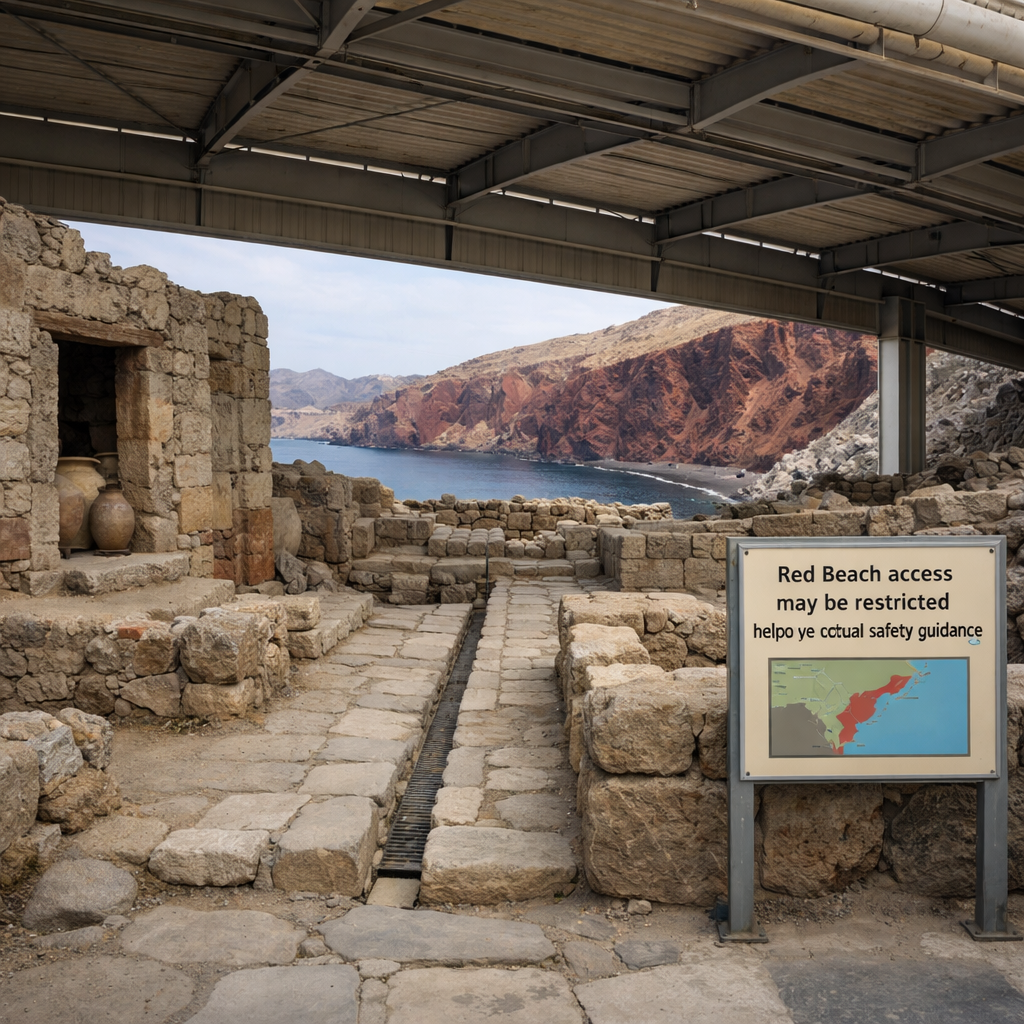
Red Beach access changes with safety conditions
Why Akrotiri Is Different From Other Santorini Sights
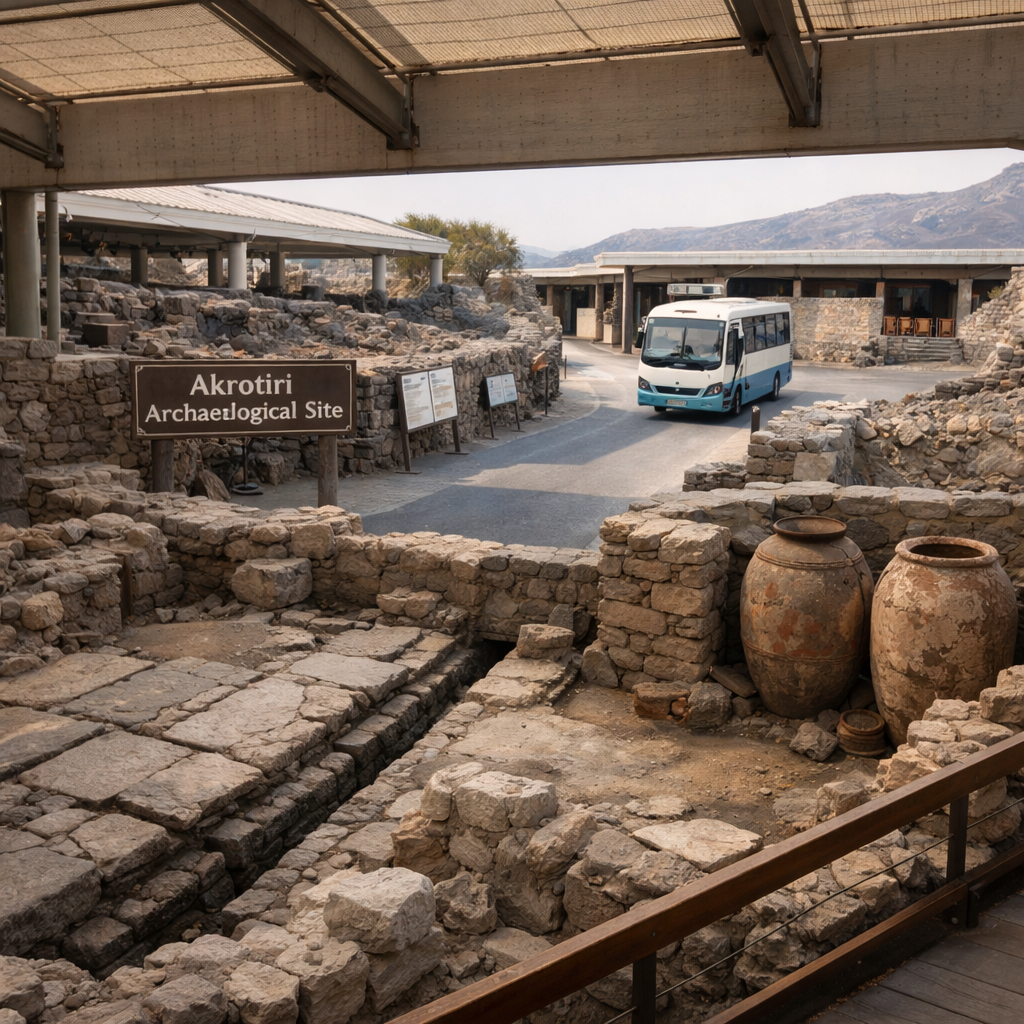
Akrotiri is a prehistoric settlement from the Bronze Age, linked to the wider Minoan world of the Aegean. The eruption covered buildings, streets, pottery, furniture, and food stores, giving archaeologists a detailed view of life before the disaster. You walk through a protected archaeological structure rather than across exposed stone ruins.
The settlement is often compared with Pompeii, but that comparison creates the wrong expectation. Pompeii offers broad Roman streets, large public buildings, and many dramatic open-air views. Akrotiri is more specialized, with multi-storey houses, narrow lanes, painted walls, and evidence of a sophisticated island society.
A city frozen before the eruption
Akrotiri was not a small village. Its buildings had several floors, drainage systems, storage areas, workshops, and carefully planned streets. The settlement’s architecture shows trade connections and strong building skills for its period.
The eruption did not preserve people in the same way as Pompeii. Many residents appear to have left before the main event, and the site does not offer the same human remains or sudden-death scenes. That makes Akrotiri quieter and more architectural.
What “Minoan” means here
Akrotiri is on Thera, the ancient name associated with Santorini, and its culture had close links with Crete and the Minoan civilization. The paintings, pottery, building methods, and trade evidence show contact across the Aegean rather than an isolated island community.
Calling the site simply “Minoan” can be too simple. Akrotiri developed its own local identity while sharing ideas and goods with Crete and other Aegean settlements. Look for that mixture when you examine the fresco subjects and imported objects.
The volcanic event
The Thera eruption was one of the major volcanic events of the ancient Mediterranean. Its exact date remains debated, with many researchers placing it in the late 17th or early 16th century BCE. Use “around 1600 BCE” as a practical historical reference, not as a completely settled date.
The eruption shaped Santorini’s caldera and changed the island’s coastline. At Akrotiri, layers of ash and volcanic material covered the settlement, which later made careful excavation possible. You are seeing a city protected by disaster, not a site abandoned after ordinary decline.
What You See Inside the Archaeological Site
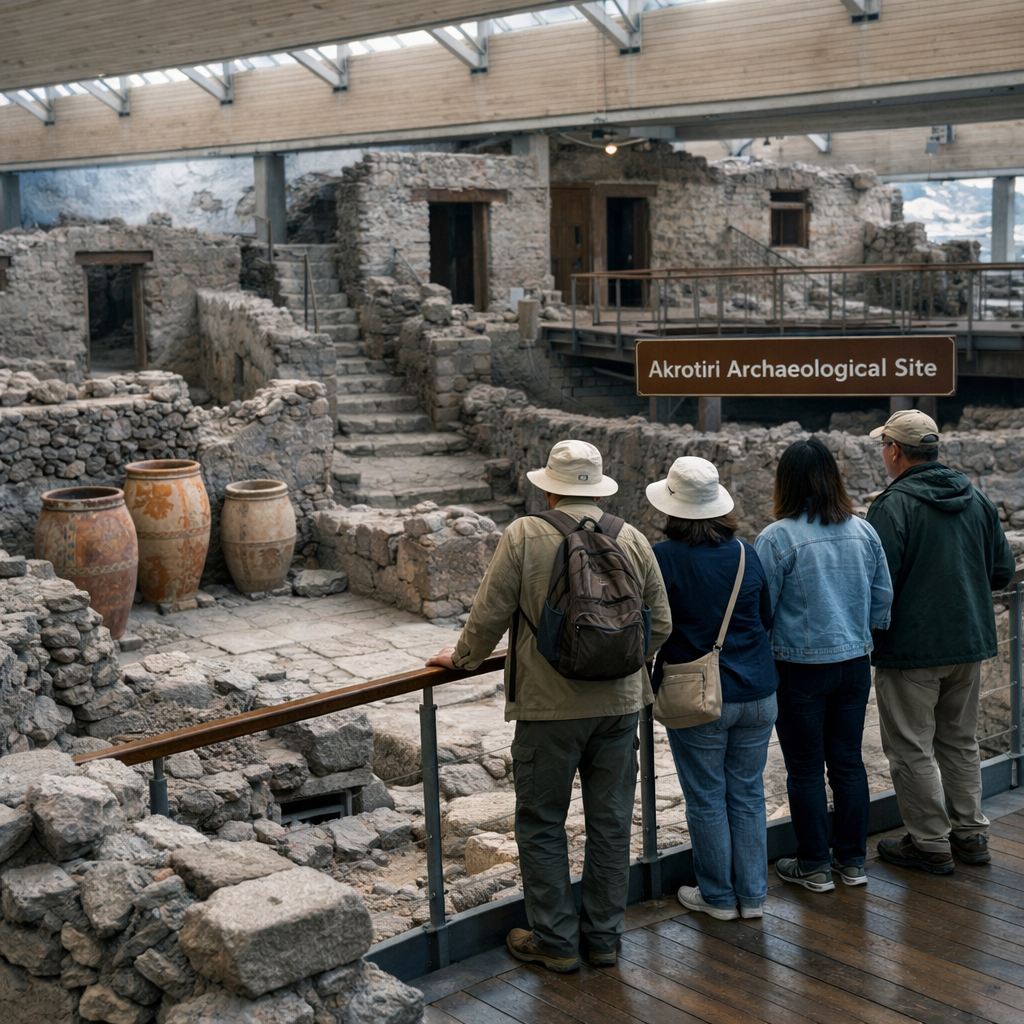
Give yourself at least 90 minutes inside Akrotiri, and allow closer to 2 hours if you read information panels or join a guided visit. The covered walkway takes you through sections of the settlement while keeping the ruins protected from sun and rain. Comfortable shoes make the visit easier.
The first impression is usually the scale of the protective roof. Akrotiri is not an open-air archaeological park under the strong Santorini sun. The modern shelter covers the excavation and controls the visitor route, so your experience feels closer to an archaeological building than to walking through a field of ruins.
Streets, houses, and building technology
You will see paved streets, doorways, staircases, storage rooms, and walls from substantial urban homes. Some structures had upper floors, balconies, and carefully arranged interior spaces. The surviving remains show planning that is easy to miss if you only look for monumental temples.
Drainage is one of the details worth slowing down for. The settlement had water-management features that show practical engineering, while storage jars and household spaces reveal how residents organized food and goods. These details make the visit more rewarding than a quick circuit for photographs.
Frescoes and their original locations
The frescoes are among Akrotiri’s most famous finds, but many of the best-known paintings are now displayed elsewhere, especially at the Museum of Prehistoric Thera in Fira and the National Archaeological Museum in Athens. Do not expect every celebrated fresco to remain on the wall where it was found.
At the site, you may see painted fragments, reconstructions, and information about the rooms where the frescoes were discovered. The original paintings are preserved under museum conditions, while the archaeological site shows their architectural setting. Visit both Akrotiri and the museum in Fira if art is a main reason for your trip.
How to read the site
Start with the overall street plan, then notice individual rooms and building levels. A guide or audio material adds useful context because many walls look similar without an explanation of their original function.
Allow extra time for the House of the Ladies and other named buildings when they are included in the visitor route. Access to specific areas can change during conservation work, so follow the current route instead of assuming older guidebooks describe every open section.
Tickets, Opening Hours, and the Best Time to Go
Check the official archaeological-site information shortly before your visit because opening hours, ticket rules, and access conditions can change by season. Do not rely on a blog post from a previous summer. Greek archaeological sites often use different winter and summer schedules, and last admission is normally earlier than closing time.
Admission prices also change, so confirm the current amount before building your budget. A practical planning figure for a major Greek archaeological site is often around €10–€20, but Akrotiri’s exact ticket should be checked through the official Ministry of Culture information or the on-site ticket office.
When to arrive
Arrive near opening time for the calmest visit and easier parking or bus access. From late June through August, the site can feel busy from mid-morning onward, especially when organized tours arrive from Fira, Kamari, or cruise excursions.
A late-afternoon visit can work well outside the busiest period, but only if the published closing time gives you enough room. Do not plan to arrive 20 minutes before closing for a first visit. The site deserves a steady walk through its streets, not a hurried final entry.
How long to combine with other sights
A strong half-day plan is Akrotiri first, followed by lunch in Akrotiri village, a coastal stop, or a winery visit. Santorini’s wineries around Pyrgos, Megalochori, and the central wine region offer a natural second activity for travelers who enjoy local wine and views.
Red Beach is close to Akrotiri, but do not treat it as a guaranteed second stop. Access paths and shoreline conditions can change, and warnings may close parts of the route. Keep a flexible alternative such as a winery, village walk, or museum visit.
Ticket and planning checks
Use this sequence before leaving your accommodation:
Check the current opening hours and last admission.
Confirm the ticket price and any combined-ticket conditions.
Review the day’s bus or transfer timetable.
Pack water, sun protection, and shoes with firm soles.
Check Red Beach access separately if you plan to go there.
The ticket is only one part of the cost. Transport, parking, a guide, and a second attraction can quickly turn a short archaeological visit into a full half-day outing.
How to Get to Akrotiri From Around Santorini
Akrotiri is in the island’s southwest, near the modern village of the same name. From Fira, the distance is roughly 12 kilometres by road, though your travel time depends on traffic and the season. From Oia, the journey is longer and usually requires more careful planning.
The KTEL Santorini bus network is the main public transport option. Routes and frequencies change, particularly outside the high season, so check the current timetable rather than assuming a frequent service. Buses generally connect Fira with Akrotiri, while some journeys require a change in Fira.
Bus travel
The bus is the most economical choice for many visitors staying in Fira or nearby areas. Arrive early at the Fira bus station during July and August because popular departures can fill, and a missed connection can affect your return plan.
Build extra time into the return journey. A site visit ending at 13:00 does not mean you will be back in Fira at 13:30, especially when buses are busy or roads near tourist areas slow down.
Car, scooter, and taxi
A rental car gives you the easiest access to Akrotiri, nearby villages, and wineries, especially for a group of two to four people. Parking conditions vary, and narrow roads require patient driving. A scooter is practical only for confident riders who are comfortable with wind, traffic, and uneven road surfaces.
Taxis offer convenience but are limited compared with larger cities. Agree on the destination and fare arrangement before the journey, particularly if you are travelling onward to a winery or beach rather than returning directly to Fira.
Organized tours and transfers
A guided excursion can make sense when you want transport, historical explanation, and a second stop in one booking. Compare the advertised time at Akrotiri carefully. Some tours allow only a short visit, which is poor value if archaeology is your main purpose.
My Greek Path can be useful when comparing Santorini transfers, tours, car rentals, and activities in one search. The practical advantage is seeing the transport format and schedule before you commit, rather than choosing a tour based only on its headline destination.
A workable day plan
If you stay in Fira, leave in the morning, visit Akrotiri for up to 2 hours, have lunch nearby, and choose one additional activity. If you stay in Oia, a direct rental car or pre-arranged transfer usually makes more sense than depending on several bus connections.
Do not combine Akrotiri, Red Beach, Fira, Oia, and a winery in one tight afternoon. Santorini roads become crowded, and a plan that looks efficient on a map can turn into long waits between stops.
Akrotiri Village, Red Beach, and Santorini Wineries
The modern village of Akrotiri is separate from the ancient settlement. It has a castle area, local tavernas, small shops, and roads leading toward the southern coast. This distinction matters because searching for “Akrotiri” can lead you to the village, the archaeological site, or nearby beaches.
The village works well for a relaxed meal after the excavation. Choose it when you want a slower break from the tour-bus route, but check restaurant hours outside the main summer period because some businesses operate seasonally.
Red Beach: beautiful but conditional
Red Beach is famous for its dark volcanic cliffs and red-colored terrain. It is close to the archaeological site, which makes it a popular combination, but access is not always safe or open. Rockfall risk, sea conditions, and official warnings can change the situation.
Treat the beach as an optional stop, not the foundation of your day. Wear proper footwear, follow barriers and local signs, and do not continue along a closed path for a better photograph. Boat access does not automatically make every landing or swimming area safe.
Wineries near the south
Santorini’s volcanic soil supports distinctive local grape varieties, including Assyrtiko. Wineries near Pyrgos, Megalochori, and other central areas are easier to enjoy with a designated driver, taxi, or organized tasting tour.
A tasting usually needs more time than visitors expect. Allow around 60–90 minutes for a seated experience, then add driving time. If you are visiting several wineries, book ahead during the high season and confirm whether transport is included.
Choosing the right combination
Select Akrotiri plus a winery if history and food are your priorities. Select Akrotiri plus the village if you want a simple, low-stress afternoon. Add Red Beach only after confirming access conditions on the day.
The southern part of Santorini rewards slower planning. A single archaeological site, a good lunch, and one well-chosen second stop create a stronger day than five rushed pins on a map.
Accessibility, Facilities, and Common Planning Mistakes
Akrotiri has a modern protective structure, defined visitor paths, and facilities designed to make the excavation easier to view. Conditions inside are more manageable than at an exposed hillside ruin, but the route still includes archaeological surfaces, changes in level, and spaces where movement may feel restricted.
Visitors with mobility needs should check current accessibility details directly before travelling. The available route, entrance arrangements, toilets, parking, and assistance options can change during maintenance or conservation work. A companion and extra time are sensible for anyone who finds uneven surfaces difficult.
Heat, footwear, and comfort
Even though the excavation is covered, the journey outside, queues, and nearby roads can be hot from May through September. Carry water and wear shoes with stable soles. Sandals with smooth bottoms are a poor choice on dusty paths or uneven village streets.
The covered site protects the ruins, not every part of your day. You still need sun protection for transport, parking, and the walk between nearby attractions.
Mistakes that reduce the visit
The most common mistake is expecting a dramatic open-air ruin. The second is expecting the original frescoes to appear in their original rooms. Both assumptions lead visitors to leave disappointed even though the site itself is exceptional.
Another mistake is confusing the modern village with the excavation. Check the exact destination in your map app before leaving, especially if you are using a taxi or rental vehicle. “Akrotiri” alone may not be precise enough.
A realistic visitor profile
Akrotiri is a strong choice for travelers interested in Bronze Age history, architecture, conservation, and ancient trade. Families with older children often benefit from a guide because the building remains become easier to understand when linked to daily life.
Visitors seeking a quick photo stop, broad caldera views, or monumental exposed ruins should place Akrotiri lower on the list. Admission and transport take time, and the visual impact is quieter than Oia’s sunset or the cliffs above the caldera.
Photography and conduct
Photography rules can differ by area, so follow signs and staff instructions. Do not touch walls, lean on barriers, or use a flash where it is restricted. Conservation depends on thousands of visitors making small, careful choices.
The best photographs often show scale: a doorway, a street, and the roof structure together. That approach communicates what Akrotiri actually is, rather than making it look like an isolated pile of stones.
Is Santorini Akrotiri Worth Visiting?
Yes, Akrotiri is worth visiting when you want a serious archaeological experience and can give it 90 minutes to 2 hours. The covered settlement, Bronze Age architecture, and connection to the Thera eruption offer something Santorini’s beaches and viewpoints cannot. It is less suitable for a rushed itinerary built around photographs.
The strongest visit pairs Akrotiri with one nearby activity, such as lunch in the modern village or a wine tasting. This gives you time to absorb the site without turning the day into a chain of transfers and queues.
Choose Akrotiri if history drives your trip
Choose it if you enjoy museums, ancient buildings, and details such as drainage channels, storage rooms, and painted plaster. Read the displays, use a guide, or visit the Museum of Prehistoric Thera in Fira afterward to see key frescoes and objects.
The site becomes more meaningful when you understand that residents had connections across the Aegean. Akrotiri was part of a trading and cultural network, not an isolated settlement buried in place.
Skip it if you need a fast highlight
Skip Akrotiri if you have only a few hours on Santorini and your priority is the caldera, a beach, or a village walk. Travel time and admission are harder to justify when you cannot give the excavation a proper visit.
Do not add it because every itinerary lists it. Add it because its history matches your interests.
My practical recommendation
Book or plan Akrotiri for the first half of the day, check official conditions the evening before, and leave one flexible hour around your transport. That simple buffer protects you from bus delays, parking problems, or a closed coastal path.
For most travelers, the best version is Akrotiri, lunch in the south, and either a winery or a quiet village stop. Red Beach stays optional until local conditions confirm it is sensible.
Conclusion
Choose Akrotiri when Bronze Age history matters more to you than a quick viewpoint. Check the official hours, reserve at least 90 minutes, and pair the covered settlement with one southern Santorini stop. If your day is already crowded, skip Red Beach rather than rushing the excavation. Your next move is simple: verify today’s access and transport, then build the visit around the archaeological site.
Frequently Asked Questions
How far is Akrotiri from Fira?
Akrotiri is roughly 12 kilometres from Fira by road. The KTEL bus is usually the budget option, while a rental car, taxi, or transfer gives you more control when combining the site with a winery or village visit.
Are the frescoes still inside the Akrotiri buildings?
Many of the most famous original frescoes are displayed in museums, especially the Museum of Prehistoric Thera in Fira and the National Archaeological Museum in Athens. The site provides architectural context, fragments, and reconstructions.
Can I visit Akrotiri and Red Beach on the same day?
Yes, but treat Red Beach as conditional because paths and shoreline access can close due to rockfall or sea conditions. Check local warnings first, wear firm shoes, and keep a winery or village visit as your backup.
Is Akrotiri suitable for children?
Akrotiri suits children who enjoy stories about ancient cities, volcanoes, and daily life. A guided explanation helps younger visitors understand the rooms and streets, while the covered route offers more comfort than an exposed archaeological site in summer.