17 km from Kissamos, Balos Crete still demands a real access decision: boat or rough road, easy arrival or more control. The lagoon is famous for clear water and white sand, but the route shapes your whole day. Choose badly, and the return becomes tiring before sunset.
You can reach Balos Lagoon by boat excursion from Kissamos, by car along the Gramvousa Peninsula, or by combining transport with a long walk. This guide helps you pick the right option, plan around sea conditions, and arrive with enough water, shade, and time.
Key Takeaways
Boat trips are easier physically but follow a fixed schedule.
The access road is rough, unpaved, and slow.
The return hike is exposed and uphill.
Kissamos is the practical base for Balos.
Check weather, sea conditions, and access rules first.
Where Is Balos Lagoon and Why Is Access Difficult?
Balos Lagoon lies at the northwestern tip of Crete, on the Gramvousa Peninsula, about 17 km west of Kissamos. The final approach is remote and partly unpaved, so Balos is not a normal beach stop reached by a smooth paved road. The setting rewards planning, but it punishes rushed decisions.
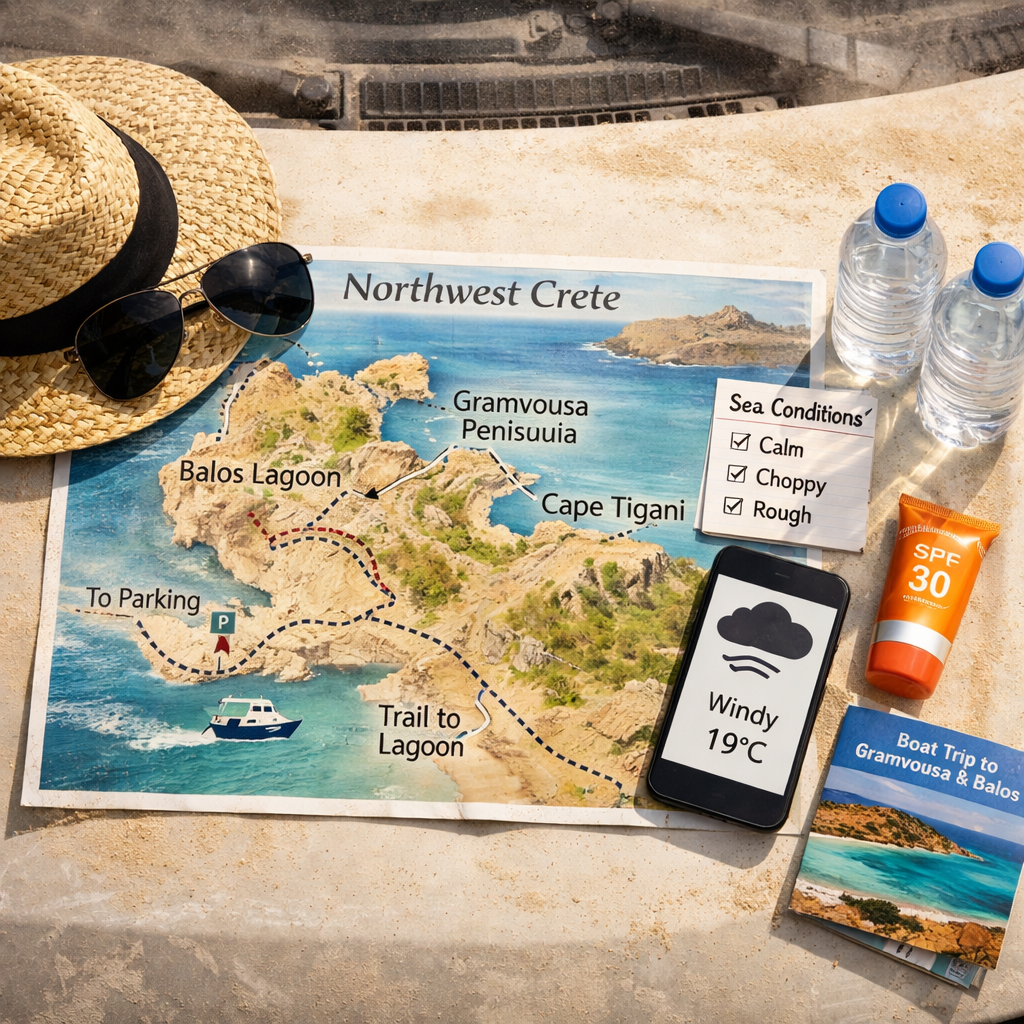
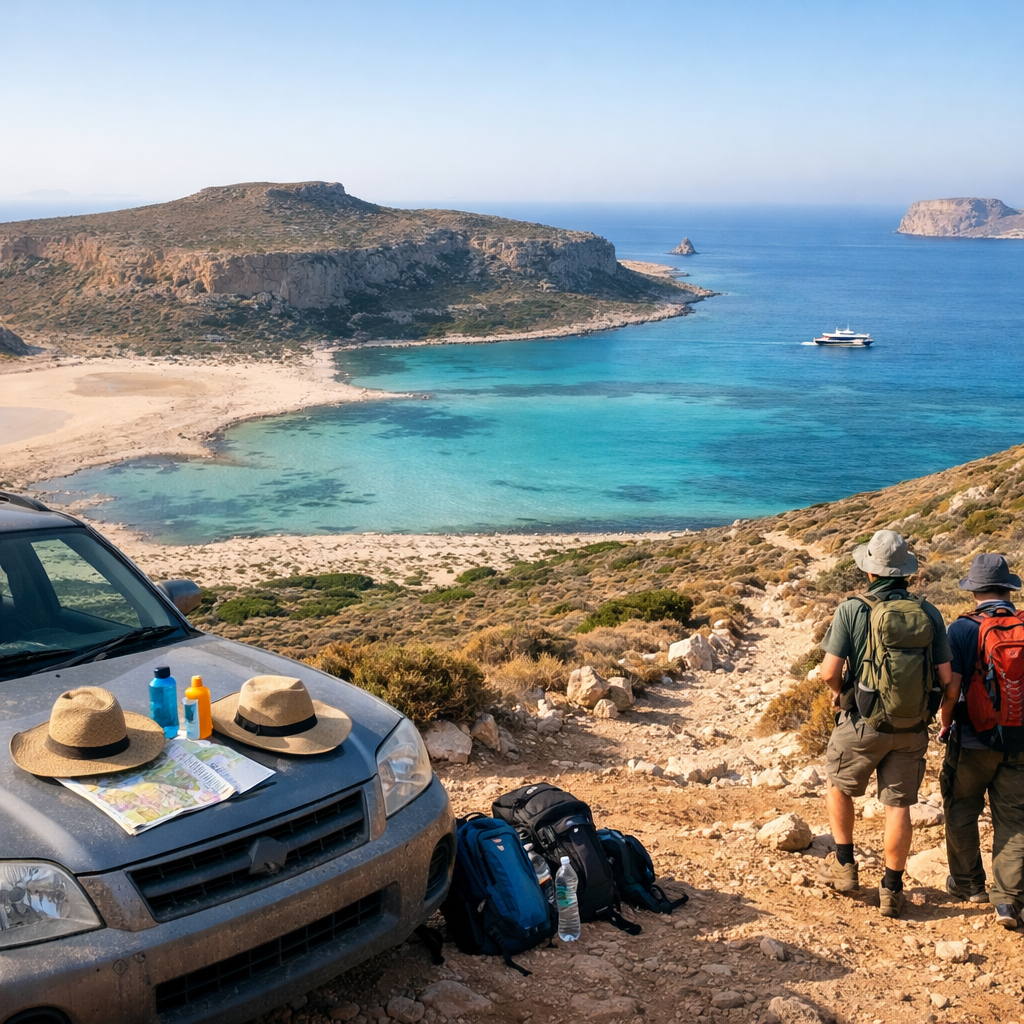
The lagoon sits between the Gramvousa Peninsula and Cape Tigani. From above, the water forms pale blue and turquoise bands around a shallow sandbar. That view is the main reason visitors accept the difficult route.
Kissamos is the best base for most travellers. It has hotels, supermarkets, restaurants, car rental options, and the port used by many boat excursions. Staying there also lets you reach the port early without adding a long drive from Chania on the same morning.
Balos is often grouped with Gramvousa Island on organised boat trips. The two stops create a fuller day, but they also mean less time at the lagoon than an independent car visit. Your choice depends on what matters more: physical ease, flexibility, or a planned island excursion.
The biggest mistake is treating the beach as the destination and the route as a detail. The access road, parking area, downhill trail, heat, and uphill return all affect whether Balos feels relaxing.
The access road is not a normal rental-car route
The road from the main area near Kissamos becomes rough and unpaved as it approaches the lagoon. Expect rocks, dust, narrow sections, and slow driving rather than a quick coastal transfer. A standard rental car may also be restricted by the rental agreement from using unsuitable roads.
Ask your Crete car rental company for written confirmation before choosing this option. Insurance exclusions matter more than a small saving on transport, especially if a tyre, wheel, or underside is damaged.
The final walk changes the day
After parking, you still walk downhill to the lagoon. The trail is exposed, with little shade, and the return includes a demanding uphill section. The descent feels easy at first; the climb back is where poor footwear, heat, and low water supplies become serious problems.
How Can You Reach Balos from Kissamos?
The simplest answer is a boat excursion from Kissamos if you want to avoid the access road and steep return hike. Driving gives you more control over arrival and departure, but it adds rough-road risk, parking uncertainty, and a demanding walk. There is no single best route for every visitor.
Boat departures usually leave from Kissamos port during the main summer season. Operators commonly combine Balos Lagoon with Gramvousa Island, giving you a full sea day rather than a short beach visit. Exact departure times, stops, and return schedules change, so confirm them before paying.
Driving starts with the road toward the Gramvousa Peninsula, followed by the unpaved Balos access road and a walk from the parking area. This option works well for travellers who want an early viewpoint, more time on the beach, or the ability to leave when they choose.
A third option is to use a transfer or organised land excursion. This removes the stress of driving and lets you focus on the trail, but it still does not remove the hike unless the service uses a suitable boat or another authorised access arrangement.
Boat excursion: easier on your body
The boat is the better choice for older travellers, families carrying beach gear, and anyone who does not want to climb back from the lagoon in direct sun. You spend more time sitting or standing on deck, and the approach gives you wide views of the peninsula.
The trade-off is fixed timing. If the boat arrives while many other passengers are there, you cannot simply stay another hour. Sea conditions can also change the route or schedule, and a windy day may make the crossing uncomfortable for passengers prone to motion sickness.
Book through a licensed excursion operator and check what the fare includes. Ask about port fees, food, drinks, beach time, Gramvousa Island, and cancellation terms before departure.
Driving: more control, more responsibility
Driving makes sense when you want to choose your own arrival time and accept the road and trail. Leave early, carry supplies, and avoid planning a late return. Parking spaces are limited, and arriving after the main morning flow can mean parking farther from the trailhead.
A normal passenger car is not automatically suitable for the final road. A four-wheel-drive vehicle does not remove every risk, either. Road conditions, rental restrictions, loose stones, and other traffic still demand slow driving and attention.
Bus, taxi, and private transfer limits
A taxi or private transfer can solve the driving problem, but ask where the vehicle will stop. A road transfer may leave you at the same parking area, meaning you still face the exposed trail. A boat-based service changes the physical effort more significantly.
Public transport from Chania is not a direct beach solution. You normally need to reach Kissamos first, then arrange a boat, transfer, or rental car. This makes an overnight stay in Kissamos more practical than trying to force Balos into a rushed day trip.
Boat or Car: Which Balos Route Should You Choose?
Choose the boat if physical effort and road risk are your main concerns. Choose the car if you value flexible timing and accept the rough access road plus the uphill return. For a first visit, I recommend the boat for most travellers, especially during the busy summer months.
The boat has a genuine drawback: you lose independence. A fixed itinerary may give you only a set period at Balos before the vessel moves to Gramvousa or returns to Kissamos. If you want quiet photography or a long swim, that schedule may feel restrictive.
Driving has the opposite profile. You control your pace, can stop at viewpoints, and avoid being tied to a large group. However, you must manage parking, road conditions, heat, water, and the return climb without support.
Use this decision rule:
Pick the boat if you want the least physical strain.
Pick the car only with rental-company approval.
Pick a private transfer if you dislike driving but want land access.
Avoid a late arrival when parking and heat are worse.
Cancel or change plans if sea or wind conditions look unsafe.
Families need to think beyond the distance. A child may handle the downhill trail well but struggle on the return, while a stroller is unsuitable for the rough path. For young children, a boat is usually the more manageable option, although the sea crossing brings its own motion and supervision needs.
The boat works best for a first visit
A boat excursion lets you see Balos from the water and often adds Gramvousa Island without separate planning. It also avoids disputes about whether your rental agreement covers the access road. That convenience is worth the fixed timetable for most first-time visitors.
Arrive at the port early enough to find the correct vessel and complete boarding without rushing. Bring a small day bag rather than a large suitcase, because deck space and beach transfers are practical concerns.
The car suits independent travellers
Choose the car when you want to reach the viewpoint before peak crowds, stay longer, or leave according to your own energy. Start with a full tank in Kissamos, because you should not depend on finding fuel near the peninsula.
Drive slowly and keep distance from vehicles ahead. Dust reduces visibility, and a stopped car on a narrow section can create a difficult passing situation. The final uphill drive and walk should be planned while daylight remains.
Weather can change the correct choice
Calm weather supports a boat day, but wind and swell can affect comfort or operations. On a hot, clear day, the trail becomes more demanding even when the sea looks perfect. Check the forecast and the operator’s update on the morning of travel.
Do not force the plan because you already booked accommodation or transport. A cancelled boat is frustrating; an exposed hike without enough water is a safety problem.
What Should You Know About the Balos Road, Parking, and Hike?
The Balos access road is rough and unpaved, and the final trail is a real hike rather than a short path from a car park. The route descends toward the lagoon and requires an exposed uphill return. Wear closed footwear, carry water, and allow more time for the climb than for the descent.
The road begins after the easier paved approach from Kissamos. Loose stones and uneven surfaces make low speeds sensible. Avoid driving close to the edge, particularly when meeting another vehicle on a narrow section.
Parking is limited and can become uncertain during the busiest part of the day. Arriving early improves your position, but it does not guarantee a place directly beside the trail. Park legally and never block access for emergency or service vehicles.
The hike provides the famous high viewpoint before the beach. That first view can make the walk appear shorter than it is. The return is warmer, steeper, and more tiring, so keep energy and water in reserve.
There is no comfortable way to improvise the walk in beach sandals. Use sturdy walking shoes or supportive sports footwear with a reliable grip, then pack lighter sandals for the lagoon if you want them.
What to pack for the trail
Carry at least one large bottle of water per person and add more for children, hot days, or a slow pace. Pack a hat, high-factor sunscreen, sunglasses, and a small snack because shade and services are limited near the beach.
A dry bag protects phones and documents during a boat trip. If you drive, keep valuables out of sight and do not leave food exposed in a hot vehicle.
How to handle the return climb
Start back before your group feels exhausted. Rest in safe shaded or stable areas, drink regularly, and do not race the final section. The climb is easier when you leave the sand with enough daylight and water.
If anyone in your group has heart, breathing, balance, or heat-related concerns, choose the boat. The view is not worth turning a holiday day into an emergency evacuation.
Why the viewpoint deserves time
The viewpoint shows the lagoon’s shape, the pale sandbar, and the contrast between shallow water and deeper sea. Stop before descending, because the return route will not offer the same relaxed viewing conditions.
Keep clear of exposed edges and supervise children closely. A photograph should never require stepping onto unstable ground.
When Should You Visit Balos Crete?
The best practical period is late spring through early autumn, with the strongest demand in July and August. For fewer crowds and more comfortable walking temperatures, target May, June, September, or early October, while checking current boat operations and access rules.
July and August bring long daylight and warm swimming conditions, but they also bring heavier demand at Kissamos port, on the road, and around the lagoon. Start early if driving, or reserve a boat excursion well ahead during those months.
May and October can offer a calmer atmosphere, but sea conditions and excursion availability are less predictable than in the central summer season. The water may also feel cooler, especially on a windy day.
September is a strong compromise. Sea temperatures usually remain pleasant, daylight still supports a full visit, and the intense August pressure often eases. It is still a popular month, so do not assume you can arrange everything at the last minute.
Weather matters more than a perfect calendar date. A clear morning can turn windy, and sea conditions can affect boat comfort or departure. Check the local forecast and the operator’s same-day message.
Early morning beats late afternoon
An early visit gives you cooler walking conditions and a better chance of finding parking. It also leaves a buffer if the road is slower than expected or someone needs frequent breaks.
Late afternoon may look appealing for softer light, but the uphill return and reduced daylight create unnecessary pressure. Choose late timing only when your transport and walking ability are fully suited to it.
Watch wind and sea conditions
Boat passengers should check wind forecasts and ask about the expected sea state. If you suffer from motion sickness, sit in a stable central area when possible, avoid a heavy meal before sailing, and carry suitable personal medication.
Drivers must watch heat and dust rather than waves alone. A calm sea does not make the access road easier, and a mild forecast does not remove the need for water.
Seasonal rules can change the plan
Access arrangements, road controls, parking rules, and boat schedules can change by season or under local safety decisions. Confirm current details with the excursion operator, local authorities, or your accommodation shortly before departure.
Do not rely on a social media post from a previous year. A rule that applied in August 2024 may not apply during your visit in 2026.
What Facilities and Safety Conditions Should You Expect?
Balos is a remote beach, not a fully serviced resort. Facilities can be limited and seasonal, so arrive prepared with water, food, sun protection, and anything needed for children or medical needs. Do not plan on finding a pharmacy, large shop, or reliable shade beside the lagoon.
The beach may have seasonal services, but availability and opening dates can change. Bring enough drinking water for the complete outing, including the return walk or boat transfer. A single small bottle is not a sensible plan for a hot day.
Sun exposure is intense around the pale sand and shallow water. Reapply sunscreen, use a hat, and take breaks away from direct sun. A lightweight cover-up helps when natural shade is unavailable.
Swimming conditions can vary across the lagoon and open sea. Watch children closely, stay within your ability, and avoid entering rough water simply because the beach looks calm from above. Wind can push floating items away quickly.
Toilets, food service, showers, and rubbish facilities may be limited, seasonal, or located away from the exact spot you expect. Carry waste back to an appropriate bin or disposal point and leave the beach clean.
Water and food planning
For a full land visit, pack water for the downhill walk, beach time, and uphill return. A practical day bag should include water, fruit or sandwiches, a small first-aid kit, tissues, and a power bank.
Boat excursions may include food or drinks, but check the booking details rather than assuming. If the vessel does not include lunch, buying supplies in Kissamos before departure is easier than searching for options later.
Footwear and sun protection
Closed shoes with grip are the right choice for the access trail. Flip-flops increase slipping risk on loose stones and make the uphill walk harder. Keep beach footwear in your bag instead of wearing it for the whole route.
Sunscreen alone is not enough. Use a hat and sunglasses, especially between late morning and mid-afternoon when the trail and sand offer little relief.
Keep your group together
Mobile coverage can be uneven in remote sections, and groups can spread out on the trail. Set a meeting point, carry charged phones, and tell someone at your accommodation where you are going if travelling independently.
Never leave an exhausted person alone while another group member continues. Slow down early, before heat and dehydration remove your options.
How Do You Build a Stress-Free Balos Day?
Build Balos around the access choice, not around a long list of nearby stops. A boat day from Kissamos needs an early port arrival; a driving day needs daylight, supplies, legal parking, and enough strength for the return hike.
The night before, check the weather, sea conditions, operator message, road information, and your rental-car agreement. Pack your bag before breakfast so you are not searching for water or suitable shoes after departure.
If you stay in Chania, allow extra road time to reach Kissamos. Traffic, stops, and port boarding make a same-day plan tighter than the map suggests. An overnight stay in Kissamos removes much of that pressure.
Kissamos also works well for comparing hotels, boat excursions, rental cars, and transfers in one area. My Greek Path can help you compare these travel options while you organise a wider Crete itinerary.
Do not combine Balos with too many distant attractions on the same day. Gramvousa Island fits naturally into a boat excursion, while a land visit pairs better with a relaxed evening in Kissamos or another nearby stop.
A practical planning sequence
Choose boat, car, or transfer based on your group.
Book the main transport before peak summer dates.
Confirm weather, sea conditions, and access rules.
Buy water, food, sunscreen, and suitable footwear.
Leave enough daylight for the complete return.
Keep your booking details and emergency contacts available offline. Remote areas are less forgiving when phone battery, signal, or time runs out.
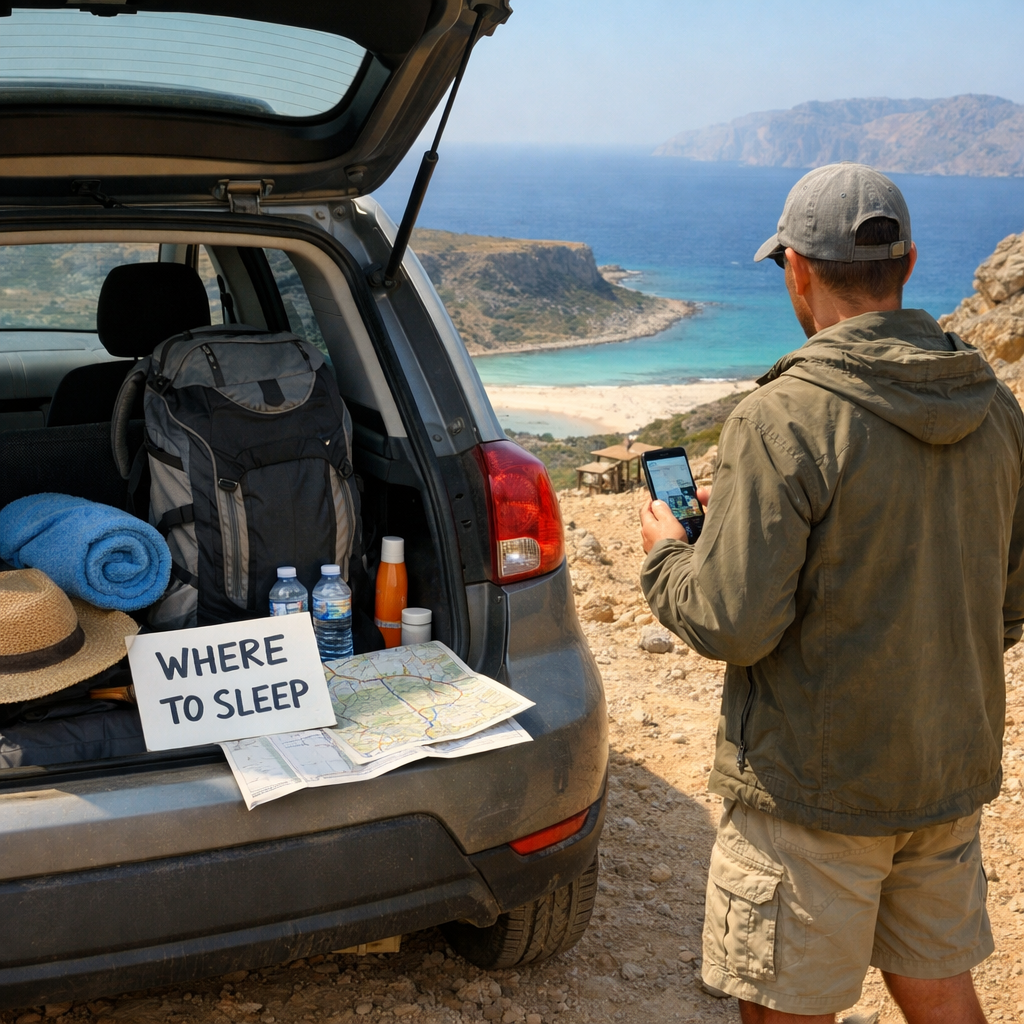
Where to sleep
Kissamos is the strongest base for an early Balos start because the port and western routes are nearby. Chania gives you more city life and restaurant choice, but it adds driving time on the day.
Choose accommodation with practical parking and an early breakfast option if you plan to drive. For a boat day, confirm the port location and departure time rather than assuming every excursion leaves from the same point.
What to do if plans change
If the boat cancels because of sea conditions, switch to a land visit only if the road, heat, and trail suit your group. If driving conditions look poor, do not treat a non-refundable booking as a reason to take unnecessary risks.
Keep one flexible day in a longer Crete trip. That buffer lets you move Balos after a windy forecast instead of forcing the wrong access option.
Conclusion
Book a boat from Kissamos if you want the easiest physical day and accept fixed timing. Choose the land route only if you want flexibility, have suitable footwear and water, and your rental agreement allows the road. Check conditions the day before, then leave early. That single decision prevents most Balos access problems.
Frequently Asked Questions
Is Balos Lagoon worth visiting without a boat?
Yes, Balos Lagoon is worth visiting by land if you want control over your schedule and can manage the rough road and exposed return hike. The boat is the better choice for travellers who want less walking or dislike uncertain parking.
Can you drive a normal rental car to Balos?
A normal rental car may reach the access road, but the rental agreement may exclude unpaved or rough roads. Get written permission from the rental company before driving there, and check whether roadside assistance covers that area.
How long should you allow for Balos?
Allow most of a day, especially if you drive from Kissamos and include the trail, swimming, rest breaks, and return. A boat excursion commonly occupies a full day because it may also stop at Gramvousa Island.
Is there shade and food at Balos?
Shade and food services are limited and seasonal, so bring water, snacks, a hat, and sunscreen. Never depend on a beach kiosk being open, particularly in May, October, or during unusual weather conditions.