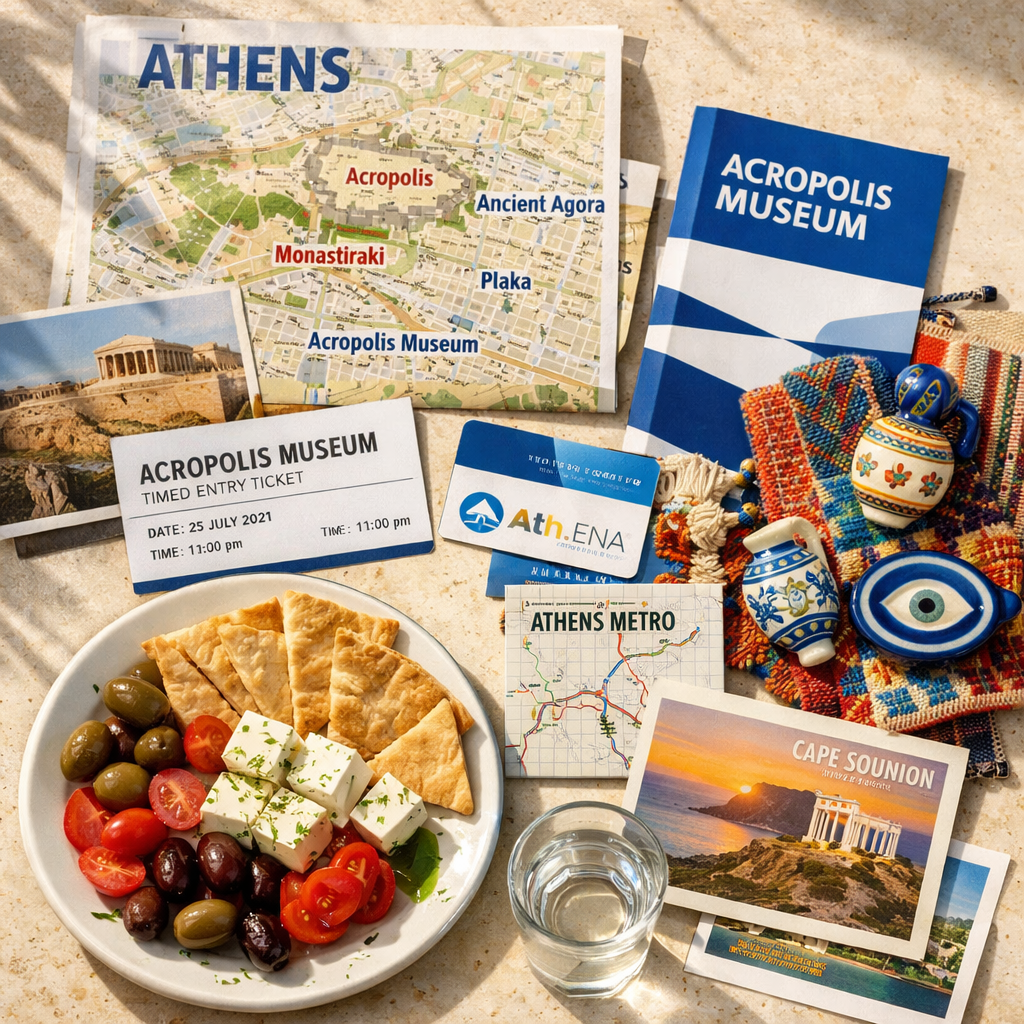
Three metro lines make Athens easier to explore than it first appears, but the best stuff to do in athens is not packed into one walkable center. You’ll enjoy more, spend less time backtracking, and avoid the worst heat by grouping nearby sights and booking the Acropolis for an early time slot.
Athens rewards a smart rhythm: ancient monuments in the morning, museums or a long lunch at midday, and neighborhoods, food, and viewpoints after sunset. The Acropolis matters, but it is only the first chapter of your city break.
Key Takeaways
Book the Acropolis early, especially from June through September
Pair nearby sights to reduce walking and wasted travel time
Use museums and long lunches during the hottest hours
Visit Monastiraki Market before evening crowds build
Add Cape Sounion when you have one extra day
Leave room for dinner, wine, and live music
Start with the Acropolis Before the Heat
The Acropolis and Parthenon deserve your first major morning in Athens. Go as early as your ticket allows, carry water, and wear shoes with firm grip because the ancient paths and polished stone become tiring under direct sun. Timed entry is part of the planning, not a minor detail.
1. Walk the Acropolis and Parthenon
Begin at the Acropolis entrance and follow the route toward the Propylaia before reaching the Parthenon. The hill gives you wide views across Athens, toward the sea, and over landmarks such as the Ancient Agora. Allow around 90 minutes to 2 hours for the site without rushing.
The Parthenon is the main attraction, but do not spend the whole visit looking only at its columns. Notice the scale of the hill, the marble work, and how the monument dominates the modern city below. The contrast explains why Athens feels both ancient and intensely urban.
The Acropolis is exposed. In July and August, a late-morning visit can feel punishing, especially when temperatures rise above 35°C. Put this experience first, then move indoors or into shade rather than trying to continue with another large outdoor site immediately.
2. See the Acropolis Museum
The Acropolis Museum is the natural second stop because it sits near the hill and gives context to what you have just seen. Its glass galleries, sculptures, and Parthenon Gallery make the visit worthwhile even if you are usually selective about museums.
Spend about 2 hours there, then take a break at a nearby café or restaurant. The museum is also a strong choice when the weather turns hot, when children need quieter time, or when you want to understand the missing pieces and original details of the Acropolis.
Check the official opening hours and ticket conditions before travelling. Museum and archaeological-site schedules change by season, and online information can lag behind holiday adjustments. Arriving with a timed Acropolis ticket but no plan for the museum often creates an avoidable gap.
Build an Ancient Athens Cluster Around the Agora
Once you have visited the Acropolis, walk downhill toward the Ancient Agora rather than crossing the city for another attraction. This area gives you a second view of classical Athens, with more space, fewer dramatic queues, and a different sense of how people lived and met.
3. Explore the Ancient Agora
The Ancient Agora was the civic heart of Athens, and the restored Stoa of Attalos helps you picture its public life. The Temple of Hephaestus is another highlight, with columns that remain remarkably complete compared with many other ancient structures.
Allow roughly 60 to 90 minutes. The site is outdoors, so it fits best in the morning or later afternoon. If you visit after the Acropolis, bring water and pause in the shade instead of treating the Agora as a quick photo stop.
This is one of the best places to slow down. The Acropolis gives you the famous view; the Agora gives you scale, pathways, buildings, and a clearer feeling for how the ancient city functioned.
4. Wander Plaka and Anafiotika
From the Agora, continue toward Plaka, the old neighborhood beneath the Acropolis. Its narrow streets hold tavernas, small shops, neoclassical buildings, and busy corners, while Anafiotika has tiny whitewashed lanes that feel closer to a Cycladic village than central Athens.
Visit Plaka in the late afternoon, when the light softens and the temperature drops. Anafiotika is compact, so keep your voice low and avoid blocking doorways. Residents live in these small houses, and respectful behavior makes the visit better for everyone.
Choose a table away from the most crowded main lane if you want a calmer meal. Greek classics such as grilled fish, moussaka, village salad, and small shared plates are easy to find, but the best choice depends on the restaurant’s current quality rather than its most photographed façade.
5. Follow the pedestrian streets at your own pace
Athens is more enjoyable when you stop measuring every sight by minutes. Walk from the Acropolis area through Plaka, then toward Monastiraki, using the pedestrian streets where possible. This route connects major sights without requiring another ticket or reservation.
Keep your phone and wallet secure in dense crowds around Monastiraki. Pickpocketing risk rises in busy transport areas, particularly when passengers board or leave trains, so use a zipped bag and avoid keeping valuables in an open back pocket.
Use Markets, Museums, and Food to Change the Pace
A good Athens itinerary needs indoor stops and meals with enough time to sit down. Trying to visit every major monument in one day leaves you hot, hungry, and less able to enjoy the city’s smaller details.
6. Visit Monastiraki and the Central Market
Monastiraki is ideal for a late-morning or early-evening stop. Browse the flea-market streets, look across at the Acropolis, and continue toward Varvakios Agora, Athens’ central food market. The market is a working place, not a decorative attraction, so expect noise, movement, and strong smells.
Go before lunch if you want to see the widest range of activity. You will find meat stalls, fish sellers, produce, spices, and small food businesses serving the city’s daily rhythm. It is a better way to understand Athens than spending the entire day among souvenir shops.
For food, order something simple and local: a koulouri, a souvlaki, a plate of beans, or meze to share. Prices vary by location, but a quick snack costs less than a full restaurant meal, making the market area useful for travellers watching their budget.
7. Choose the National Archaeological Museum
The National Archaeological Museum near Victoria has one of Greece’s richest collections, including Mycenaean objects, classical sculpture, and finds linked to ancient life across the country. It is not beside the Acropolis, so plan it as its own stop rather than forcing it between two southern-center attractions.
Give the museum at least 2 hours if you want more than a quick look. The bronze statue known as the Artemision Bronze and the Mask of Agamemnon are familiar highlights, but the galleries reward visitors who follow one period at a time.
Take the metro or a taxi if your legs are tired. Athens attractions are not all within easy walking distance, and the apparent distance on a map can feel different after a sunny morning on stone pavements.
8. Make lunch part of the experience
Athens food is one of the city’s strongest reasons to stay out after the headline sights. Build in a proper lunch, preferably in a shaded dining room or under a covered terrace, instead of surviving on a pastry until dinner.
A practical order for two people is one salad, two shared starters, and one main dish each, with bread and water. Add local wine or beer if you want, but ask about the price of bottled water and extras before ordering in a tourist-heavy area.
The midday pause also protects your energy. A 90-minute lunch between the Acropolis and an evening neighborhood walk is more useful than squeezing in one more museum while tired.
Add Views, Neighborhoods, and Athens After Dark
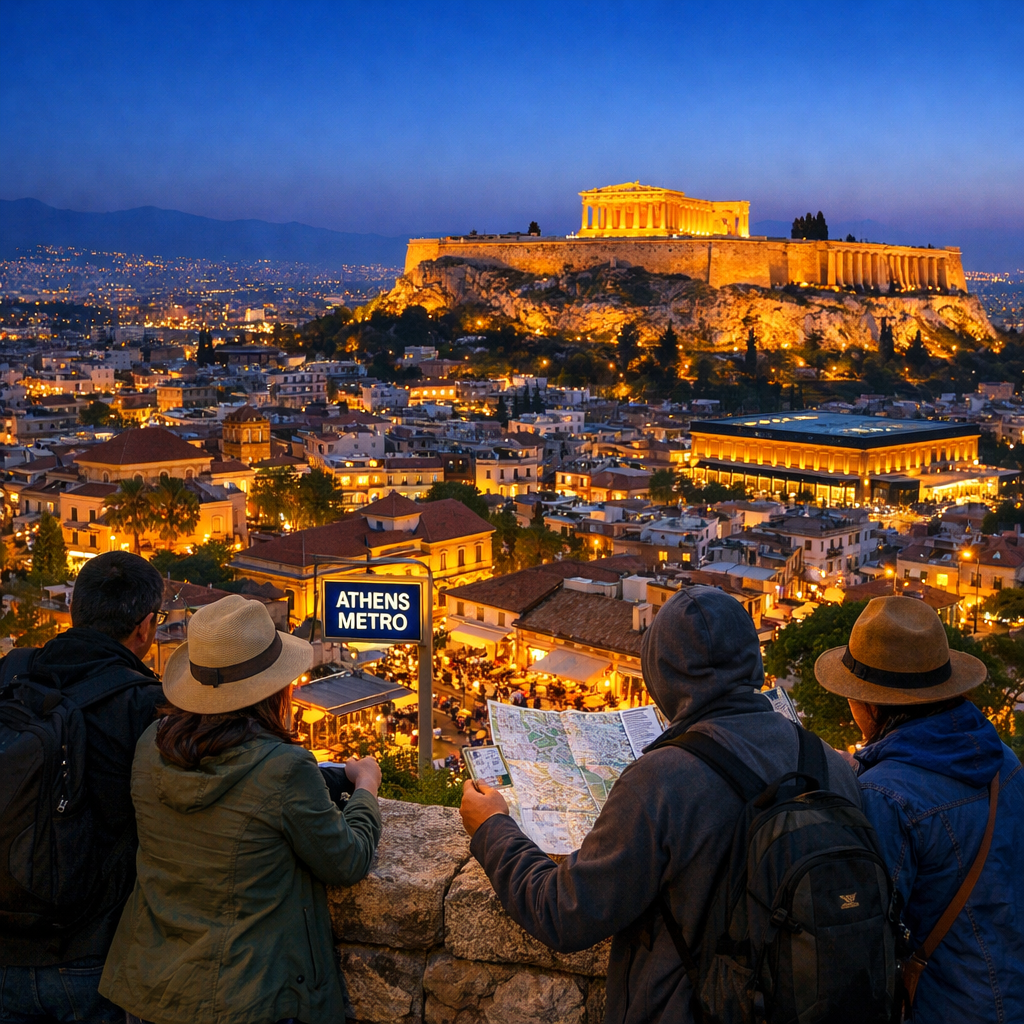
Athens changes after sunset. Traffic remains active, but the harsh light disappears, rooftop views become more comfortable, and neighborhoods that felt crowded during the day develop a more relaxed pace.
9. Climb Lycabettus Hill
Lycabettus Hill is the city’s clearest high viewpoint, rising above central Athens with views toward the Acropolis and the Saronic Gulf. You can walk up or use the funicular from the Kolonaki side, then continue to the summit and the small white Chapel of St. George.
Go close to sunset, but arrive early enough to find your way and choose a viewing spot. The summit gets busy, and the final light disappears quickly. Bring water if you walk, since the climb is harder than the distance suggests.
Lycabettus is not a replacement for the Acropolis. The Acropolis puts you inside the ancient story; Lycabettus shows you the full spread of modern Athens, from dense apartment blocks to the distant coastline.
10. Spend an evening in Psyrri or Koukaki
Psyrri works well for bars, small restaurants, and lively streets near Monastiraki. Koukaki offers a more neighborhood feel close to the Acropolis Museum, with cafés and tavernas that suit a slower dinner.
Athens nightlife starts late by many visitors’ standards. Dinner at 20:00 is comfortable, while bars often become livelier later. Do not rush through your meal to match a schedule designed for another city.
Choose your area based on your hotel and final transport. If you stay near Syntagma, Monastiraki, or Koukaki, you can usually walk back from dinner, but check the route and keep a licensed taxi or a ride app as a backup after midnight.
11. See the city through a rooftop or music venue
A rooftop bar gives you a memorable Acropolis view, but the view alone does not guarantee a good evening. Check the menu and table policy first, then choose a place where you would still enjoy sitting if clouds or wind reduce the view.
For live music, look for a current venue schedule rather than relying on an old travel list. Athens has rebetiko performances, jazz rooms, DJ bars, and small cultural venues, and programs change regularly.
This is where a guided evening walk or food tour can make sense, especially if you have limited time or want help choosing between neighborhoods. My Greek Path can help you compare Athens activities and transfers alongside other Greek travel bookings, keeping the evening plan connected to the rest of your trip.
Plan Transport and Timing Without Losing Hours
Athens rewards grouping, but transport still matters. Use the metro for longer crossings, walk between nearby central sights, and avoid assuming that every place on a tourist map is five minutes away.
What is the simplest transport plan?
For most visitors, use the metro for airport and cross-city travel, then walk through the historic center. Athens International Airport is connected to the city by Metro Line 3, and the journey takes roughly 40 minutes to Syntagma under normal service conditions.
Buy the correct ticket for your route and keep it available during your journey. Airport fares differ from ordinary urban trips, while buses and trams follow separate routes that may be slower during busy road periods.
The Athens public transportation network is affordable and practical, but service hours, strikes, maintenance, and special holiday arrangements can change. Check current information on the OASA system before an early airport departure or a late return.
A useful four-step daily sequence
Book the Acropolis for the first available comfortable slot.
Walk downhill to the Acropolis Museum or Ancient Agora.
Take a long lunch and indoor break during peak heat.
Return to a neighborhood, viewpoint, or food venue after 17:00.
This sequence works because it follows energy and temperature rather than a random attraction list. It also gives you a clear point to stop if the day feels full.
Taxis make sense for Lycabettus, late-night returns, heavy luggage, or travellers with limited mobility. A short ride may save time, but traffic around central Athens can turn a small map distance into a slow crossing during rush hour.
Take a Day Trip to Cape Sounion
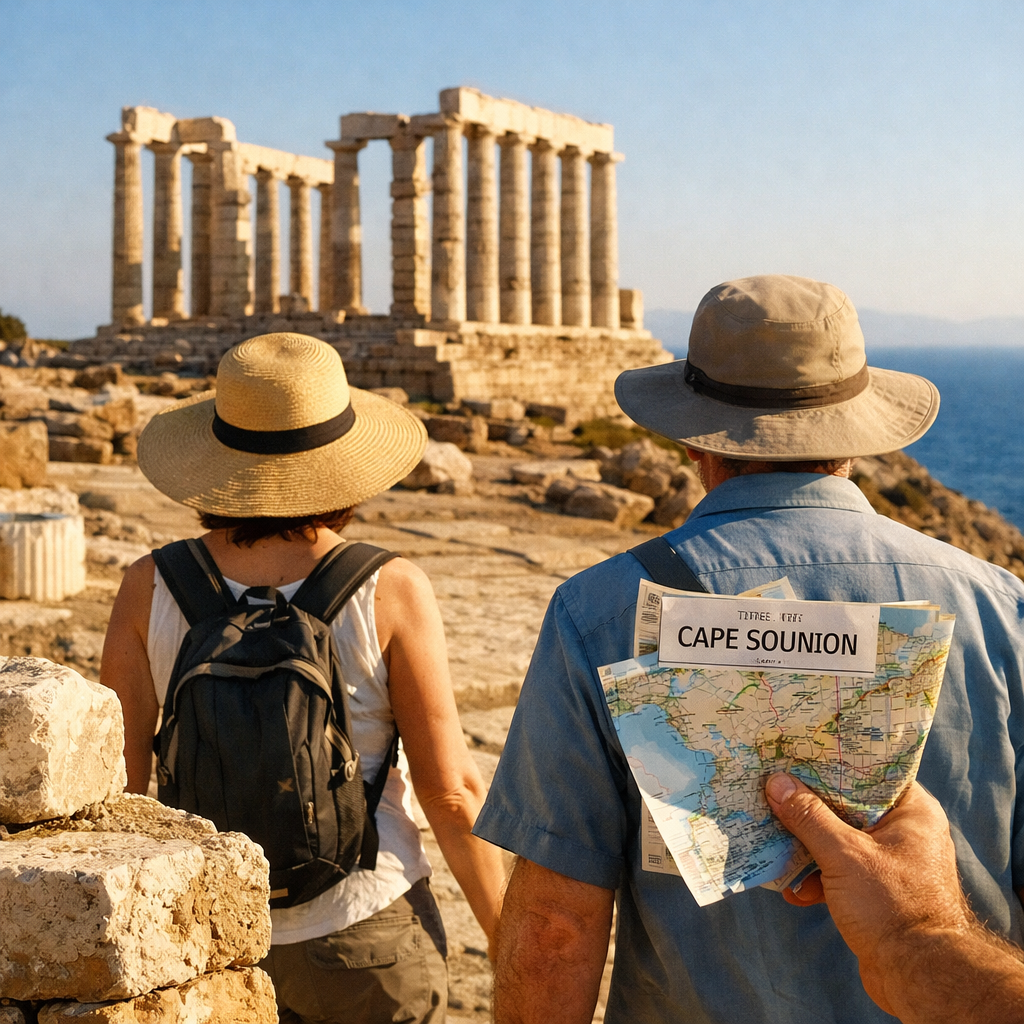
Cape Sounion is the strongest extra-day choice when you want ancient scenery beside the sea. The Temple of Poseidon sits on the southern tip of Attica, around 70 kilometres from central Athens by road, so it needs a half-day or full-day commitment rather than a quick add-on.
12. Watch sunset at the Temple of Poseidon
The temple is best known for its coastal position and sunset views over the Aegean. Check the sunset time for your travel date, then allow extra road time because the coastal route can slow near beaches and summer resorts.
A private transfer is the easiest option for families, groups, or travellers with limited time. A scheduled excursion removes driving and parking decisions, while a rental car gives you more control over stops but adds responsibility on winding roads and busy holiday dates.
The site is exposed, just like the Acropolis, so carry water and sun protection. Comfortable shoes matter, and a light layer helps after sunset when the sea breeze picks up.
Is Sounion worth the extra travel?
Yes, if you have at least 3 nights in Athens and want a coastal experience beyond the city center. Skip it on a short 1-night stay, when the Acropolis, museum, food, and neighborhoods offer better use of your limited time.
The Temple of Poseidon also works as a transition day before island travel if your departure schedule allows it. Do not book a late return immediately before an early flight; road delays can turn a beautiful evening into a stressful airport transfer.
Check seasonal opening details before leaving. Archaeological sites may use different hours in winter, and sunset is not a reason to ignore the official closing time.
Choose the Right Athens Plan for Your Time
The best stuff to do in athens depends on your available hours, walking tolerance, and interest in ancient history. A visitor with 24 hours needs a different order from someone staying five nights.
One day in Athens
Start with the Acropolis and Parthenon, then visit the Acropolis Museum. After lunch, walk through Plaka and Anafiotika toward Monastiraki, and finish with dinner nearby.
Do not add the National Archaeological Museum or Cape Sounion to this schedule. The city will feel rushed, and you will lose the relaxed evening that makes Athens memorable.
Two to three days
Add the Ancient Agora, the National Archaeological Museum, and Lycabettus Hill. Use one evening for Psyrri or Koukaki, then choose a second evening for a rooftop drink, live music, or a food-focused walk.
This length gives you room to adapt. If the Acropolis is closed or the weather changes, the museums and markets protect your day instead of leaving you with no plan.
Four or more days
Add Cape Sounion, but keep one flexible half-day. Use it for a return to a favorite neighborhood, shopping in central Athens, a longer meal, or a beach trip if the season suits you.
You do not need to see every major site. Two strong ancient sites, one serious museum, a market, a viewpoint, and several good meals create a fuller Athens visit than ten rushed check-ins.
Book timed attractions first, then arrange meals and optional tours around them. This order protects the experiences with fixed entry times while keeping the rest of the trip flexible.
Conclusion
Choose the Acropolis and Acropolis Museum for a first day, add the Agora and National Archaeological Museum for history, then reserve your evenings for food, neighborhoods, and views. If you have a fourth day, book Cape Sounion. Check official schedules before each visit, and build your route by area so Athens feels open rather than exhausting.
Frequently Asked Questions
How many days do you need in Athens?
Three full days give you enough time for the Acropolis, Acropolis Museum, Ancient Agora, a major museum, neighborhood walks, and relaxed dinners. Add a fourth day if Cape Sounion is on your list or you want time for a flexible local experience.
What should you book first in Athens?
Book the Acropolis first because entry is timed and popular periods fill quickly, especially from June through September. After that, check the Acropolis Museum, Cape Sounion transport, and any guided tour with a fixed departure time.
Can you walk between the main Athens attractions?
You can walk between the Acropolis, Ancient Agora, Plaka, Anafiotika, and Monastiraki, but the National Archaeological Museum and Lycabettus Hill need more planning. Use the metro or a taxi when heat, distance, luggage, or steep streets make walking inefficient.
Is Cape Sounion suitable without a car?
Yes. A scheduled tour or private transfer is the simplest choice without a car, particularly for sunset. Public bus travel is possible, but return times and seasonal schedules require checking carefully before you commit to the trip.