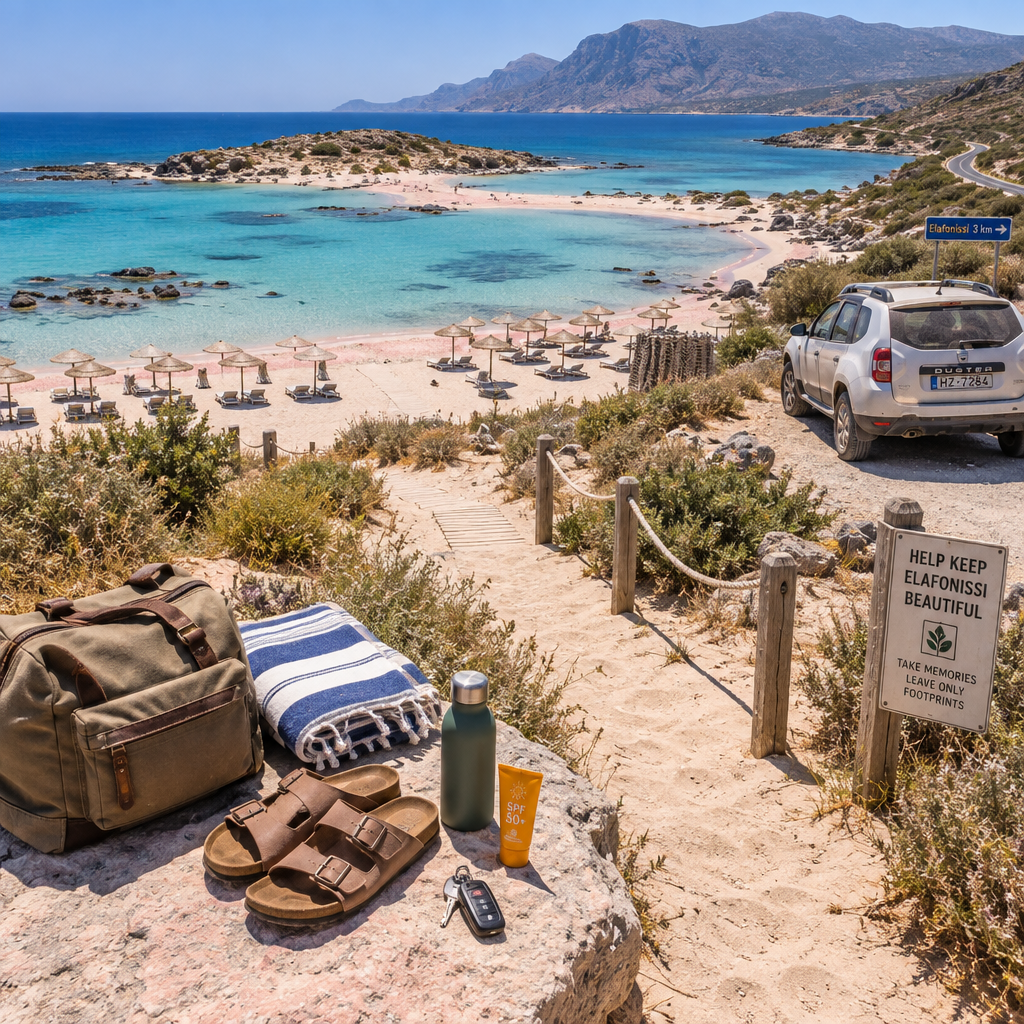
76 km separates Chania from elafonissi beach, turning this famous shore into a full-day travel decision rather than a quick swim. The reward is a shallow turquoise lagoon, pale sand with pink tones, and one of Crete’s most memorable coastal views.
The famous color is real, but it is not spread across every metre of the beach. Your experience depends on arrival time, wind, water conditions, parking, and the return drive through western Crete.
Key Takeaways
Allow a full day from Chania.
Pink sand appears in patches, not everywhere.
Arrive before 10:00 in peak summer.
Never collect sand from the protected area.
Check lagoon conditions before crossing.
Kedrodasos offers a quieter nearby alternative.
Why Elafonissi Beach Takes a Full Day
Elafonissi Beach is about 76 km southwest of Chania, and the drive usually takes around 1 hour 45 minutes to 2 hours 30 minutes each way, depending on traffic, stops, and your route. Add parking, beach time, lunch, and the return journey, and you have a demanding day.
That distance matters most for travelers staying in eastern Crete. From Heraklion, the trip is roughly 200 km one way, so visiting Elafonissi as a casual afternoon stop makes little sense. Stay overnight in western Crete if the beach is a main reason for your holiday.
The road is scenic but tiring. Curving sections near the coast and mountain villages require attention, especially after a long day in the sun. Drivers should plan fuel, water, and a proper break before leaving the beach.
The real travel commitment
A strong plan starts with the return journey, not the arrival photo. If you leave Chania at 09:00, reach the coast around 11:00, spend four hours there, and depart at 15:00, you may still be driving back during busy afternoon traffic.
Peak-season weekends create the greatest pressure. Coaches, rental cars, taxis, and private transfers all use the same limited approach roads, while parking fills early near the beach.
Elafonissi is worth the effort when you want a complete west Crete day and accept the logistics. It is the wrong choice when you want a relaxed two-hour swim between other plans.
Best bases for the visit
Chania is the practical base for a day trip. Kissamos is better for travelers combining Elafonissi with Balos, Falassarna, or the western coast. Paleochora also works well if you want a slower southern Crete route.
Book accommodation according to your route, not only your room preference. A hotel near Chania saves planning for a single visit, while a stay in Kissamos or Paleochora reduces driving if you want several western beaches.
My Greek Path’s destination and accommodation guides are useful when you need to compare where to stay, how to get there, and which transport option fits your schedule.
What Makes the Sand and Lagoon Special?
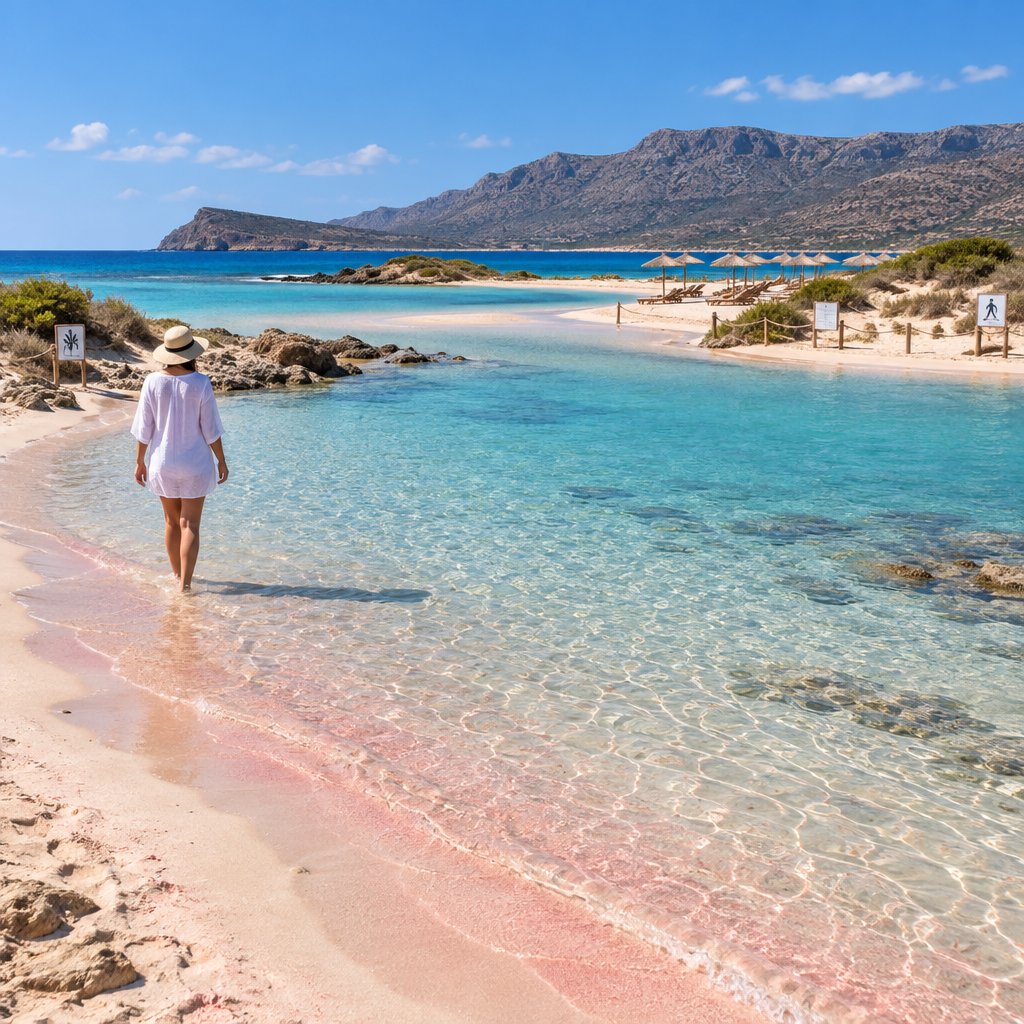
Elafonissi Beach is famous for pale sand mixed with crushed shells that create pink or rose-colored patches, especially near the waterline and smaller sandbars. The shade changes with sunlight, tide, moisture, and the amount of shell material on the surface.
Do not expect a solid pink carpet. Some sections look almost white, while others show a clear blush under bright midday light. Social media photos often focus on the most colorful areas and may use strong light or editing.
The lagoon is shallow across much of the protected coastal area. On calm days, you can walk through water between the mainland shore and Elafonissi Island, but depth and current change with wind and sea conditions.
Elafonissi Island and the lagoon
The island sits opposite the main beach and gives the coast its distinctive shape. The walk across the shallow water can be easy for adults when conditions are calm, but it is not a fixed route with guaranteed depth.
Wind can push water into the lagoon, create small waves, or make the crossing uncomfortable for children. Wear secure sandals or water shoes because stones and shells can hurt bare feet.
Do not cross simply because other visitors are doing it. Watch the water first, keep young children close, and turn back if the surface becomes rough or the channel feels deeper than expected.
Protecting the pink sand
Elafonissi is part of a protected natural area, and removing sand, shells, or plants damages the coast. The responsible choice is simple: take photographs, leave natural material in place, and carry your rubbish away.
The pink color depends on tiny shell fragments and the wider beach system. A handful taken by each visitor may seem harmless, but thousands of visitors create a serious problem over a summer season.
Use marked paths and avoid walking through dunes or fenced areas. These zones protect fragile plants that help hold the sand in place during strong winds.
Why the view changes during the day
Morning light gives the water a softer blue and usually makes the beach feel calmer. Around midday, the sun shows the strongest contrast between the lagoon, pale sand, and pink-tinted patches, but this is also when heat and crowds become hardest.
Late afternoon can produce warmer colors and fewer visitors, although the drive back takes place with less daylight. Choose the timing that matches your safety and comfort rather than chasing one perfect photograph.
How Should You Reach Elafonissi Beach?
For most visitors, a rental car gives the best control over arrival time, beach duration, and stops along the route. A scheduled bus or organized excursion removes driving stress but fixes your timetable. Private transfer is the most comfortable option and usually costs more.
From Chania, check the route and travel time on Google Maps before departure, then add extra time for summer traffic and short stops. A practical estimate is to allow at least 2 hours 30 minutes each way when your schedule cannot absorb delays.
Do not treat the final kilometres as a race. The road narrows in places, and tired drivers face the greatest risk on the return journey.
Rental cars
A small or mid-size rental car is enough for the normal road route. Choose a vehicle you can drive confidently on bends, especially if you are unfamiliar with Crete’s mountain roads.
Before leaving Chania, fill the tank, download offline directions, and bring water. Mobile coverage can vary in remote sections, so relying only on live navigation is poor planning.
Inspect the rental agreement for restrictions on unpaved roads. Some beach routes around Crete are unsuitable for standard rental vehicles, even when navigation applications suggest them.
Buses and organized day trips
Seasonal buses from Chania and nearby areas may operate toward Elafonissi, but schedules change by date and season. Confirm the current timetable with the local bus operator before relying on public transport.
An organized day trip is the better choice if you do not want to drive. You pay with less flexibility: departure and return times are fixed, and popular stops may leave limited time for swimming.
Choose a coach excursion when convenience matters more than privacy. Choose a rental car when you want to arrive early, leave after the crowds, or add a quiet stop such as Kedrodasos.
A practical departure sequence
Check the weather, wind, and transport schedule the evening before.
Leave Chania early, preferably before 08:00 during July or August.
Pack water, food, sun protection, and secure footwear.
Park only in marked or permitted areas.
Check the lagoon before entering or crossing.
Start the return drive while you still have energy and daylight.
This sequence prevents the most common mistake: arriving late with no clear parking plan and then facing a tiring drive home.
When Is the Best Time to Visit?
May, June, September, and early October offer the best balance for Elafonissi Beach. You get warm weather and a better chance of comfortable swimming without the full pressure of July and August crowds.
July and August bring the strongest demand. Arrive before 10:00 if you want a better chance of finding a convenient parking space and choosing a spot near the organized beach area.
There is no guaranteed quiet time in summer. Even an early arrival can become busy by late morning, particularly on Saturdays, Sundays, and public holidays.
Summer timing
The busiest period usually falls between late June and the end of August. Heat builds quickly on exposed sand, and shade becomes limited once umbrellas fill.
If July or August is your only option, leave early, bring breakfast, and plan to depart before the worst afternoon traffic. This approach gives you better beach time than arriving at noon and spending the first hour looking for parking.
A sun umbrella, hat, high-factor sunscreen, and several litres of drinking water for the car are sensible basics. Shops and facilities may be busy when demand is highest.
Shoulder seasons
In May and October, the lagoon may feel cooler, and windy days can change the swimming experience. The trade-off is more space, easier parking, and a calmer overall visit.
September is particularly attractive for travelers who want warm sea temperatures after the peak August rush. Always check the forecast close to the day because western Crete weather can shift quickly.
Cloud cover also affects the sand color. On a bright day, pink tones show more clearly; on a grey day, the beach may look mostly pale.
Wind and water safety
The lagoon is not automatically safe because it is shallow. Strong wind can create waves, move sand, and make a crossing difficult. Children should stay within arm’s reach when water conditions change.
Do not enter the sea if you see rough water, strong currents, or warning signs. Lifeguard coverage and conditions vary, so ask locally when you arrive rather than assuming the lagoon is calm.
What Facilities and Parking Should You Expect?
Elafonissi Beach has organized areas with sunbeds, umbrellas, toilets, and seasonal food or drink services, but facilities are limited compared with a large resort beach. Bring what you need for several hours, especially water and snacks.
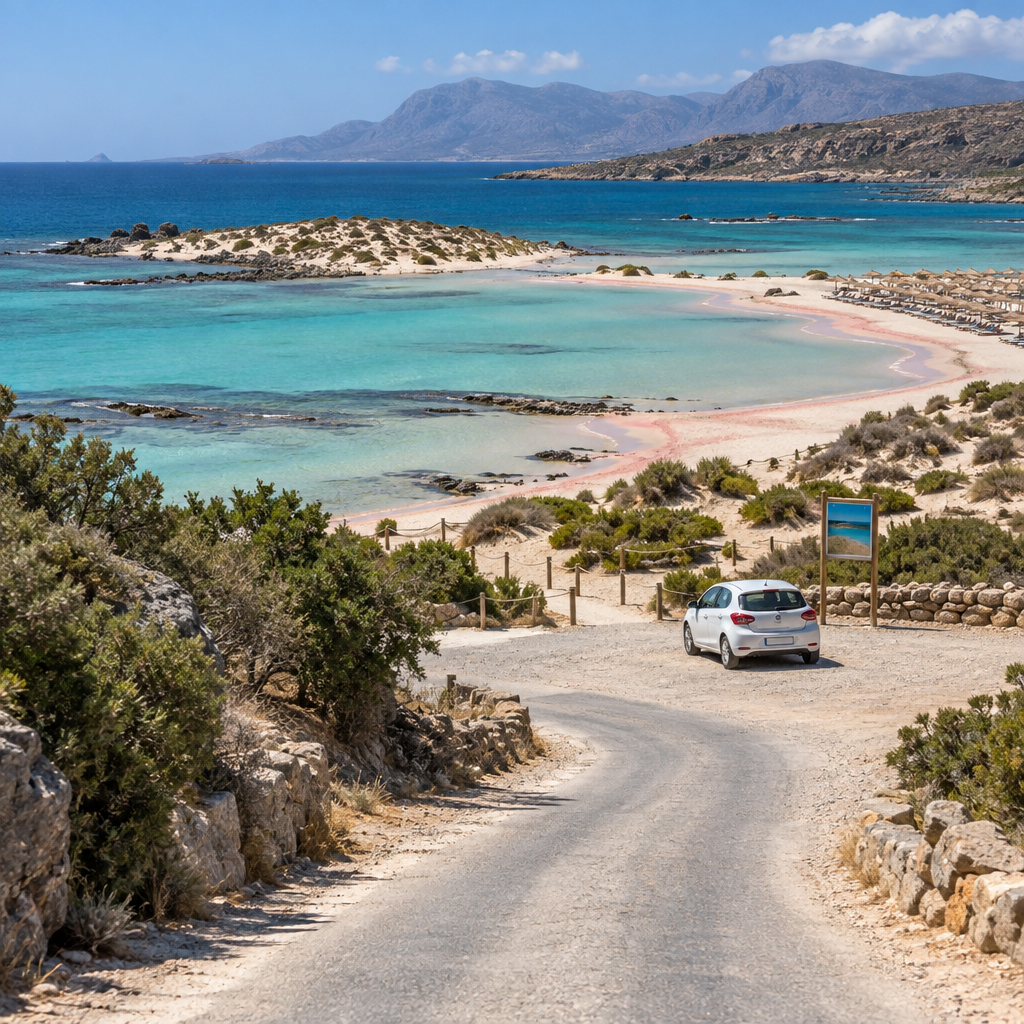
Parking is the main operational problem. In peak season, late arrivals may find distant spaces, crowded access roads, or a long walk under strong sun. Treat parking as part of the journey, not an afterthought.
The beach is exposed, and natural shade is limited. Families should bring a beach tent or umbrella where permitted, along with dry clothing for the return drive.
Parking strategy
Arrive early and follow signs, staff directions, and marked parking areas. Do not block access lanes, leave the car on fragile dunes, or create a dangerous roadside stop because the nearest space is full.
Keep valuables out of sight and lock the vehicle. A cooler, towels, and footwear should be packed so you can leave the car quickly without repeated trips.
If the main parking area is full, do not keep circling indefinitely. Consider a later visit in the season, an organized transfer, or accommodation closer to the beach.
Food, water, and comfort
Seasonal beach services may sell drinks, simple food, and refreshments, but queues grow during the central hours. Carry enough water for the drive and beach stay rather than assuming a kiosk will always be convenient.
Pack a reusable bottle, fruit, sandwiches, and rubbish bags. Leave the area clean, especially around dunes and less developed edges.
The walking distance from parking to the shore may be short, but hot sand changes the experience. Water shoes protect your feet from shells and stones near the lagoon.
Accessibility and family planning
Families with small children should choose the firmest, most accessible path and avoid pushing a stroller across loose sand whenever possible. A lightweight carrier often works better for the final section.
The lagoon can look shallow enough for toddlers but still contain sudden dips or moving water. Keep children close, use flotation equipment only as extra support, and never rely on a toy or inflatable ring.
Plan toilet breaks before leaving the organized area. Once you walk toward the island or quieter shoreline, facilities become less convenient.
What Else Can You See Near Elafonissi?
Kedrodasos Beach is the strongest nearby alternative when you want a more natural, quieter setting. It is known for juniper trees, dunes, and a less organized feel, but access can involve walking and uneven ground.
Do not expect Kedrodasos to provide the same facilities as Elafonissi. There may be little shade, no convenient food service, and difficult access for visitors carrying heavy beach equipment.
The two beaches work well as separate choices rather than rushed stops. Spend the main part of the day at Elafonissi, or choose Kedrodasos when peace matters more than easy services.
Kedrodasos Beach
Kedrodasos is better for travelers who bring their own supplies and prefer a natural coastline. Wear closed shoes for the approach, carry water, and pack every item back out.
The juniper habitat is fragile. Avoid driving or parking on dunes, and do not tie hammocks to trees or damage vegetation for a better view.
Wind protection can be different from Elafonissi. Check conditions before committing to the walk, especially with young children or older travelers.
Combining western Crete beaches
A single day can include another stop, but only if you accept less time at each beach. Falassarna lies on a different route near Kissamos, while Balos usually needs its own planning because access and boat schedules add time.
Trying to combine Elafonissi, Balos, and Falassarna in one day is poor planning for most visitors. You will spend much of the day moving and reach the final stop tired.
A better two-day plan places Elafonissi with Kedrodasos on one day and reserves another day for Balos or Falassarna. This also gives you room to change plans if wind affects the lagoon.
Where to stay overnight
For a slower visit, stay in Kissamos, Paleochora, or a village near Elafonissi. An overnight stay lets you arrive early, enjoy the coast without rushing, and avoid driving back after a hot beach day.
Chania remains the best choice for travelers who want restaurants, airport access, and a wider accommodation range. It is less efficient for repeated trips to the far southwest.
Book early for July and August, particularly if you want a family room or a property with parking. Small western Crete accommodations have fewer rooms than large resort areas.
Is Elafonissi Beach Worth the Long Drive?
Yes, Elafonissi Beach is worth the drive when you value unusual scenery and can give it a full day. The shallow lagoon, island shape, pale-and-pink sand, and protected dunes create a setting unlike most easily reached beaches in Crete.
It is not the right choice for a quick stop from Heraklion or eastern Crete. The drive, traffic, parking, and return trip can outweigh the beach experience if your itinerary is already crowded.
Choose Elafonissi if you are staying in Chania, Kissamos, or Paleochora and want a major west Crete outing. Choose a closer beach if you have only half a day or dislike long drives on winding roads.
Your best visit has three parts: early departure, realistic expectations about the pink sand, and a safe return plan. Those choices matter more than arriving with the perfect camera.
Conclusion
Book Elafonissi Beach as a full-day experience, not a quick photo stop. From Chania, leave before 08:00 in peak summer, carry water and footwear, and check wind conditions before crossing the lagoon. If the journey feels too long, stay in western Crete for one night and enjoy Kedrodasos or another nearby coast at a calmer pace.
Frequently Asked Questions
Is the sand at Elafonissi Beach really pink?
Yes, some areas have pink tones from crushed shells, but the color is uneven and changes with light, tide, and moisture. Expect pale sand with pink patches rather than a uniformly bright pink beach.
How long does it take to drive from Chania to Elafonissi?
The drive usually takes around 1 hour 45 minutes to 2 hours 30 minutes each way, depending on traffic, stops, and road conditions. Allow more time in July and August, especially on weekends.
Can you walk across the lagoon to Elafonissi Island?
You can sometimes walk across shallow water when the lagoon is calm, but conditions change with wind and currents. Check the depth first, keep children close, and turn back if the crossing becomes uncomfortable.
Is Kedrodasos Beach easier to visit than Elafonissi?
Kedrodasos is usually quieter but less convenient. Expect a more natural setting, limited facilities, and an uneven approach, so bring water, food, footwear, and everything needed for your stay.