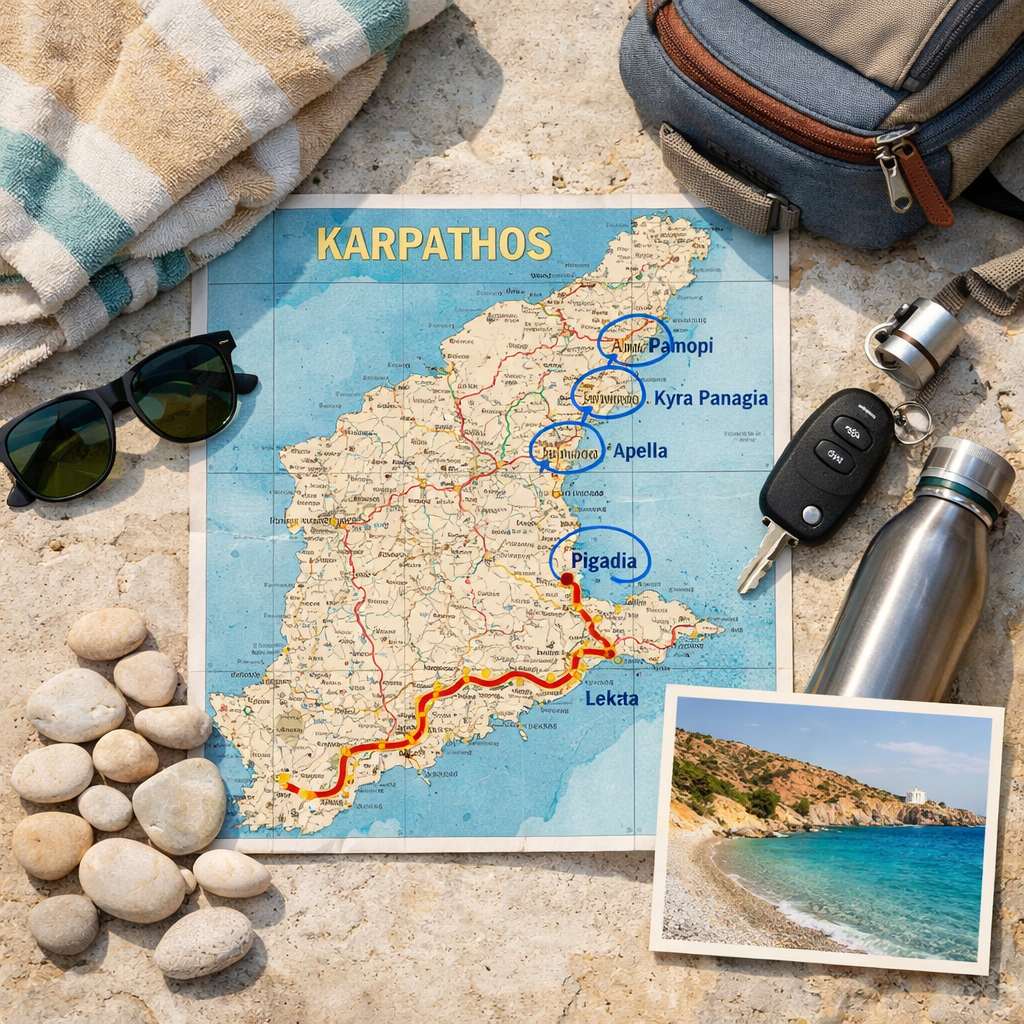
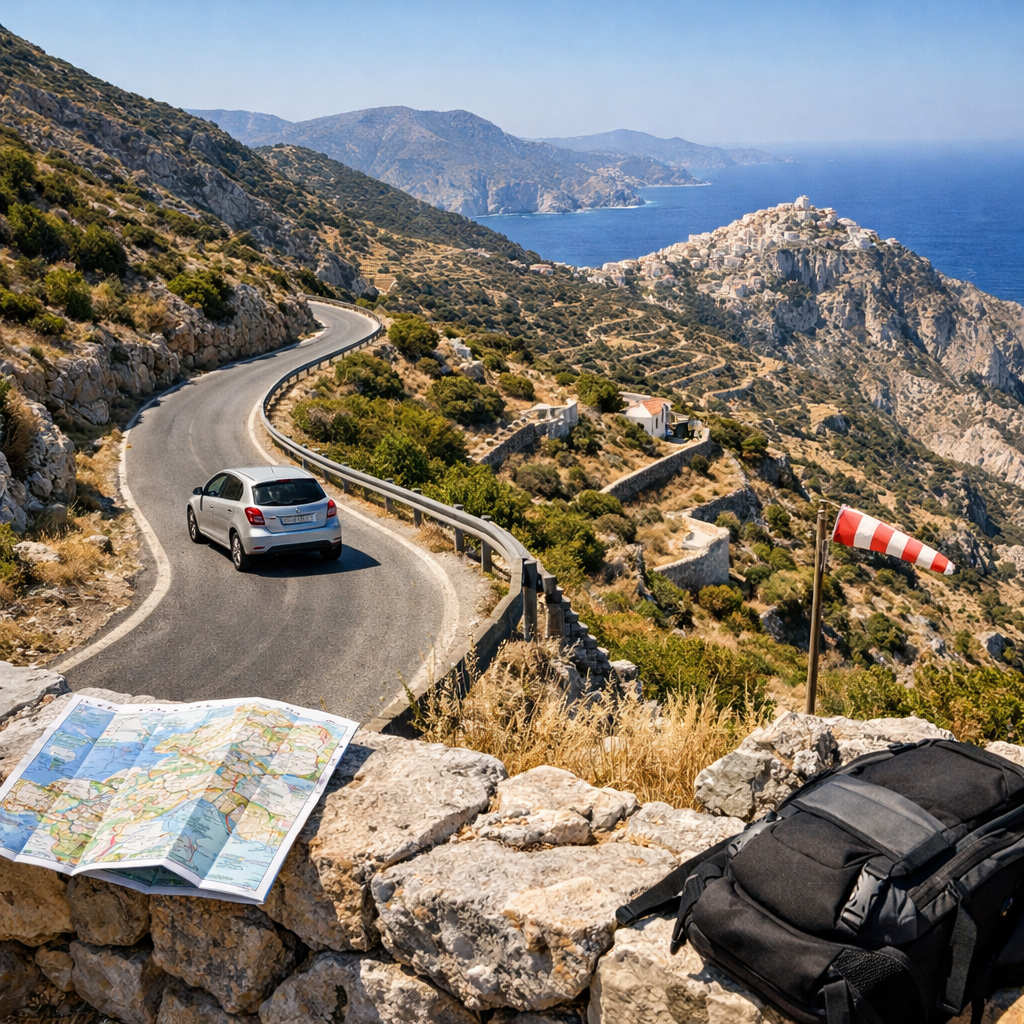
At about 50 kilometres from north to south, the island of karpathos greece rewards a planned route more than a last-minute beach escape. That distance separates Pigadia, the airport, remote coves, and northern villages by winding mountain roads, so your transport choice shapes the whole holiday.
Karpathos is the right Greek island for clear water, strong local traditions, uncrowded mountain villages, and active days outdoors. It is not the easiest island for spontaneous, car-free travel. Book your main transport early, choose your base carefully, and you will spend less time waiting and more time swimming, walking, and eating well.
Key Takeaways
Around 50 kilometres long, with scattered beaches and villages
Pigadia is the practical base for first-time visitors
A rental car gives the best access to remote beaches
Olympus is a priority, not an optional day trip
Meltemi winds shape beach and windsurfing conditions
June and September offer the best balance of comfort and access
Why Karpathos Is Worth Choosing in 2026
Karpathos sits in the southeastern Aegean, between Rhodes and Crete. Its position gives the island a more remote feel than popular destinations such as Santorini, Mykonos, or Rhodes, while its roads connect a wide mix of coast, hills, villages, and beaches.
The island is about 324 square kilometres, with a long, narrow shape and steep terrain across much of its interior. Pigadia, also called Karpathos Town, is on the east coast and works as the main hub for accommodation, restaurants, shops, boat trips, and everyday services.
You should choose Karpathos if your ideal holiday includes driving to a different beach each day, eating in family-run tavernas, and visiting villages where local customs remain visible. The island feels more rewarding when you slow down and leave space for a long lunch or an unplanned stop.
Karpathos is less suitable if you want frequent public transport, nightlife every evening, or a compact resort where everything is within a short walk. The bus network is useful on selected routes, but it does not give you the same freedom as a car, particularly for remote beaches and northern mountain villages.
That trade-off is the island’s main appeal.
The scenery changes quickly. Dry hills, pine-covered slopes, white chapels, rocky coastlines, and small bays appear along the same drive. Strong local identity also gives Karpathos more character than a holiday based only around a hotel pool.
How to Reach Karpathos and Move Around
The fastest route is usually a flight to Karpathos Airport, officially Karpathos Island National Airport, which is located near the southwestern part of the island. Seasonal flights from Athens and selected European cities make air travel the simplest option during the main summer period.
Ferry travel is useful when you are already in the Dodecanese or Crete, but schedules are less convenient than on the busiest Greek island routes. Services can connect Karpathos with places such as Rhodes, Kasos, Crete, and nearby islands, yet departure days and journey times change by season.
Check the exact sailing date before booking accommodation. A ferry that looks convenient on a route map might operate only once or twice during a week, and weather can affect smaller connections.
Flying from Athens
Athens is the most practical connection point for many travellers in Greece. The flight takes roughly one hour and 20 minutes, although schedules vary by airline and operating day. Summer seats sell faster around July and August, so compare flights before choosing a non-refundable hotel.
The airport is small, and most travellers reach their accommodation by rental car, taxi, or pre-arranged transfer. Pigadia is roughly 15 kilometres from the airport by road, while the northern villages require a much longer drive.
Taking the ferry
Ferries make sense when you want to combine Karpathos with Rhodes, Crete, or a smaller nearby island. They are also useful if you are travelling with more luggage or prefer not to fly, but you should allow extra time for connections and schedule changes.
Do not assume the frequency found on routes to Paros or Naxos applies here. Karpathos has fewer sailings, and a missed connection can affect several days of a trip.
Choosing a vehicle
A small rental car is my first choice for most visitors. It handles the island’s mountain roads better than a scooter, gives you shade and storage, and makes early beach departures much easier. Expect practical rental pricing to vary sharply by month, vehicle type, insurance, and booking date, so compare the complete total rather than the headline daily rate.
A scooter works well for confident riders visiting nearby beaches and Pigadia, but wind, steep roads, loose gravel, and long distances change the risk. Never choose a scooter simply because it appears cheaper online.
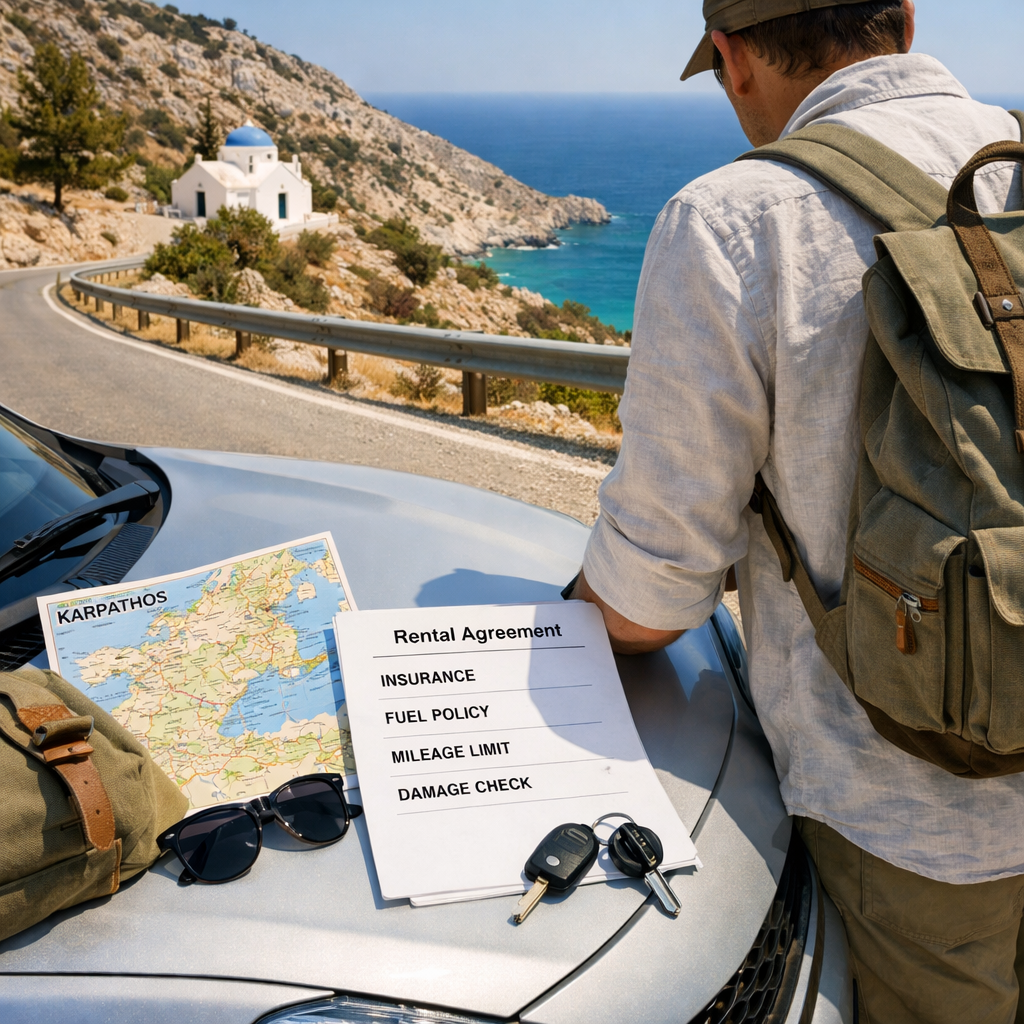
Book through a comparison service such as mygreekpath.com when you want to check flights, accommodation, and vehicle options together. Read the insurance terms, fuel policy, deposit, and road-access restrictions before paying.
Best Areas to Stay on Karpathos
Your accommodation area determines how much time you spend driving. For a first visit of five to seven nights, Pigadia is the safest base because it combines restaurants, shops, the port, boat excursions, and easier access to the southern and central parts of the island.
A quieter base works better if you already know your preferred beaches or want a more private holiday. Check the actual road distance, not only the straight-line distance shown on a booking map.
Pigadia for convenience
Pigadia has the widest range of hotels, apartments, studios, tavernas, cafés, and rental offices. It is the best choice without a car because you can walk to many services and arrange boat trips from the port.
The town is also practical for a late arrival from the airport or an early departure by ferry. Choose a property within walking distance of the waterfront if you want evening meals without driving.
Amoopi for beaches and families
Amoopi, south of Pigadia, has several swimming spots, accommodation, and tavernas. It suits travellers who want to stay close to clear water while remaining near the main town by car.
The area has less variety than Pigadia after dinner. If you plan to eat somewhere different each night, calculate the return drive before booking.
Arkasa and the west side
Arkasa offers a more local village feel and access to beaches on the western and southern coast. It is a good fit for travellers who want a quieter base and plan to explore by car.
The western side can feel more exposed to wind, especially during the summer meltemi. That makes conditions pleasant for some activities but less comfortable for a relaxed beach day.
Olympos and the north
Olympos, often written as Olympus, is the island’s most famous mountain village. Its traditional architecture, narrow lanes, craft shops, churches, and local food make it worth more than a rushed photo stop.
Staying in or near the north makes sense if village culture and northern beaches are your main priorities. For most first-time visitors, one night in the north plus several nights in Pigadia creates a better rhythm than driving there and back in a single packed day.
A booking pin beside the sea does not always mean an easy swimming beach. Confirm parking, road access, nearby restaurants, and the distance to a supermarket before committing.
The Best Beaches and Outdoor Activities
Karpathos has beaches for different moods, but they are spread across the island. Some are easy to reach from Pigadia, while others require a long drive, a boat trip, or a final walk over rough ground.
The best plan is to group beaches by area instead of crossing the island every day.
Visit Kyra Panagia for striking scenery and clear water.
Choose Apella for a classic beach day surrounded by green slopes.
Drive to Achata for a smaller cove and rocky coastline.
Explore Diakoftis near the airport for pale sand and shallow water.
Keep Lefkos for a west-coast day with several swimming options.
Add Damatria or nearby southern beaches when you want shorter driving.
Kyra Panagia and Apella are among the most photographed beaches on Karpathos. They are excellent choices, but their popularity means an earlier arrival gives you better parking and a calmer swim, especially in August.
Beaches near Pigadia
Amoopi is the easiest beach area for travellers staying in Pigadia without wanting a full-day drive. Several small bays sit close together, so you can change location if wind or crowds affect one cove.
Vrontis Beach is also close to Pigadia and offers a simple option when you want a swim without organising a route. The sea conditions still matter, and a beach that is comfortable in the morning may feel different after the wind rises.
Remote beaches
Diakoftis is close to the airport and has a wide, bright shoreline that looks unlike the darker, rockier coves found elsewhere. Check the road surface and wind before driving there, because the final approach may be less comfortable in a small scooter.
Lefkos gives you several beaches and a west-coast setting, making it a strong choice for a full day. Pair it with a village or taverna stop rather than trying to add a distant eastern beach on the same afternoon.
Windsurfing and walking
The island’s wind makes Karpathos a recognised destination for windsurfing, especially around Afiartis near the airport. Beginners should use a professional school and follow local advice instead of entering the water when conditions exceed their ability.
The same wind that attracts experienced surfers can make umbrellas, paddleboards, and small boats difficult. Check the forecast each morning and keep a sheltered beach as a backup.
Hiking is best in spring and autumn, when temperatures are more comfortable than the hottest part of July and August. Wear proper shoes, carry water, and avoid treating a shaded mountain path as a short, easy walk.
What to See in Pigadia, Olympos, and the Villages
Start in Pigadia for a practical introduction to the island. Walk along the waterfront, visit the port area, and choose a taverna for a slow dinner rather than trying to fit several attractions into one evening.
The Archaeological Museum of Karpathos in Pigadia gives useful context about the island’s past, while nearby churches and small local collections add detail to the modern town. Opening hours can change outside peak season, so check locally on the day.
Olympos is the cultural highlight. The village developed in a remote mountain setting, and its layout, clothing traditions, churches, and food reflect a strong local identity. Go during daylight, because the approach road is winding and a return drive after a long dinner can be tiring.
A practical northern route
Plan Olympos as a full-day trip from Pigadia, or stay overnight if your schedule allows. Add Diafani, the northern port below Olympos, when ferry timing or a boat excursion makes the route worthwhile.
The drive takes longer than a map glance suggests because of bends, elevation, and stops. Leave early, carry water, and avoid pairing Olympos with several distant beaches unless you are comfortable returning after sunset.
Local food to try
Order makarounes, a traditional handmade pasta associated with Karpathos, when it appears on a local menu. Other dishes worth seeking include stuffed vegetables, fresh fish, grilled meat, local cheese, and sweets made with honey or nuts.
Food quality is strongest when you eat where the menu follows the season. Ask what was prepared that day, then allow time for service. A village meal may take longer than a quick town dinner, but that slower pace is part of the experience.
Churches, customs, and village life
Karpathos keeps a strong connection to religious festivals, family traditions, music, and local dress. If you visit a village church or festival, dress respectfully and follow signs about photography.
Do not treat a working village as an open-air attraction. Keep noise low, avoid blocking narrow lanes, and ask before photographing people, especially during religious events.
When to Visit Karpathos
June and September offer the best overall balance for most travellers. You get warm swimming weather, easier restaurant access, and less pressure on accommodation and rental vehicles than during the core August period.
July and August bring the most dependable summer heat and the busiest holiday atmosphere. They also bring stronger demand, higher accommodation prices, and more noticeable wind. Reserve your car and preferred hotel early if you travel during these months.
May and October suit walking, sightseeing, and a quieter island, but sea temperatures and ferry schedules become less predictable. Some seasonal restaurants, boat trips, and beach services reduce their operating days outside summer.
Reading the wind
The meltemi is a seasonal northern wind that affects many Aegean islands. On Karpathos, it can change how a beach feels, how safely you can use a paddleboard, and whether a boat trip runs as planned.
Check the forecast before setting off rather than planning your whole week around one beach. A sheltered southern cove may be a better choice on a windy day than an exposed northern or western shore.
Planning around opening dates
Karpathos does not operate at the same pace in every month. In late spring and October, call accommodation owners, rental offices, or restaurants directly if online information looks unclear.
Build flexibility into ferry connections. A spare night is cheaper than losing a flight because a low-frequency sailing changed.
A seven-day plan
For a balanced week, spend two days around Pigadia and Amoopi, one day at Apella and Kyra Panagia, one west-coast day in Lefkos, one northern day for Olympos, one flexible beach day, and one departure buffer.
That route leaves room for wind changes and avoids treating every day as a race. Karpathos is at its best when the plan has space to change.
Costs, Booking Priorities, and Common Mistakes
Your largest costs will usually be transport and accommodation, not entry tickets. Karpathos has few major paid attractions, but a rental car, fuel, meals, boat excursions, and airport transfers add up quickly across a week.
Use a realistic working budget rather than relying on one low advertised rate. In practice, a couple staying in a simple room, eating at local tavernas, and renting a small car should expect a mid-range summer holiday to cost substantially more than a car-free stay in a single resort, especially during August.
Book the parts with limited supply first: flights, ferry seats, a rental car, and accommodation with the location you want. Restaurants and beach stops are easier to arrange after arrival.
Do not book a hotel only because it has a high review score. A beautiful property 25 kilometres from Pigadia may be a poor fit if you want evening walks, frequent dinners out, or easy access to the port.
The booking sequence
Fix your arrival and departure route.
Check ferry or flight times against your hotel dates.
Reserve a car if visiting remote beaches or Olympos.
Compare accommodation by road distance and facilities.
Save two beach options for different wind directions.
Keep the final day close to your departure point.
This sequence prevents the most common planning error: booking a lovely room first and discovering that transport does not match the location.
What to check in the small print
For car hire, confirm the deposit, excess, tyre and glass cover, fuel rule, second-driver fee, and restrictions on unpaved roads. Ask whether the vehicle is suitable for the roads to your planned beaches.
For accommodation, check air conditioning, parking, kitchen equipment, Wi-Fi, late check-in, and the exact distance to a supermarket. “Near the beach” can mean a steep walk to a small cove rather than a flat route to a sandy shore.
The biggest mistakes
Relying only on buses limits your choices. Public transport can work for Pigadia, nearby beaches, and selected village routes, but it is not a complete solution for a scattered island.
Visiting only Pigadia also leaves out Olympos, the northern mountains, and several of the island’s strongest beach experiences. Finally, underestimating wind conditions can turn an expensive boat or watersports day into a poor choice.
Pay for flexibility where it affects the whole trip. A cancellable room or sensible rental insurance often matters more than saving a small amount on the initial booking.
Conclusion
Choose Karpathos if you want a Greek island shaped by beaches, mountain roads, local food, and living traditions. For the strongest 2026 trip, book transport before accommodation, stay in Pigadia unless you have a clear northern plan, and keep one flexible day for wind and road conditions. Search flights, hotels, and car hire together, then build your route around the places you genuinely want to see.
Frequently Asked Questions
Is Karpathos suitable for a holiday without a car?
Karpathos is manageable without a car if you stay in Pigadia and focus on nearby beaches, boat trips, and local restaurants. A car becomes the better choice when you want Olympos, remote coves, or several different beaches during a five- to seven-day stay.
How long should you stay on Karpathos?
Plan at least five nights for Pigadia, nearby beaches, and one northern trip. Seven nights gives you time for Olympos, a west-coast day, changing wind conditions, and a slower food-focused evening without rushing between roads.
Can you visit Olympos as a day trip?
Yes, Olympos works as a day trip from Pigadia, but allow the full day because the road is winding and the journey is longer than the map distance suggests. Staying one night in the north is better if you also want Diafani or northern beaches.
Which month is best for Karpathos?
June and September are the strongest choices for most travellers because they combine warm weather, swimming conditions, and easier availability than August. Choose July or August for peak summer heat, but reserve accommodation, flights, and cars well ahead.