July and August regularly bring Athens daytime highs around 33°C, a real factor if you plan to walk the Acropolis and ancient city for hours. The greece weather athens forecast matters most when you choose flights, hotel location, and sightseeing times.
Athens is not only a summer beach stop. Spring and autumn usually give you cooler walks, lighter crowds, and a better balance between weather and travel costs, while winter brings mild days with occasional rain.
Key Takeaways
July and August: hottest months, often around 33°C
May, June, September, and October suit sightseeing best
January is mild but wetter than summer
Acropolis visits work best before 10:00
Sea swimming is warmest from July through September
Pack layers for Athens from November through April
Athens Weather Month by Month
Athens has a Mediterranean climate, with hot, dry summers and mild winters. The warmest period runs from June through August, while December through February brings most of the city’s rain. Temperatures vary within each month, but the pattern is reliable enough to guide your booking decisions.
January and February
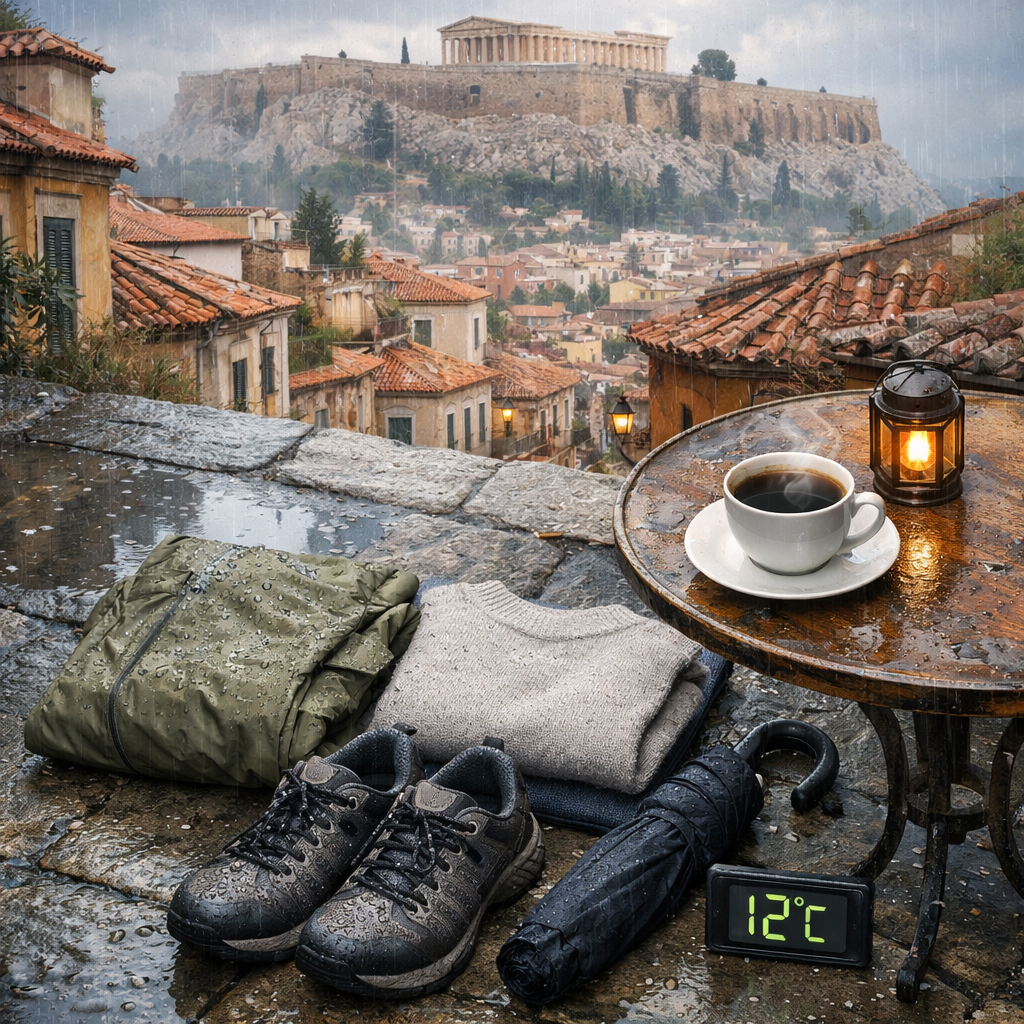
January is usually the coolest month, with daytime temperatures around 12–14°C and colder evenings near 7°C. Rain is possible, but Athens does not stay cold and wet every day. You can still enjoy museums, neighborhoods, and outdoor cafés between showers.
February follows a similar pattern, often with brighter afternoons and the first signs of spring. Pack a waterproof jacket, closed shoes, and a warm layer rather than a heavy winter wardrobe.
March and April
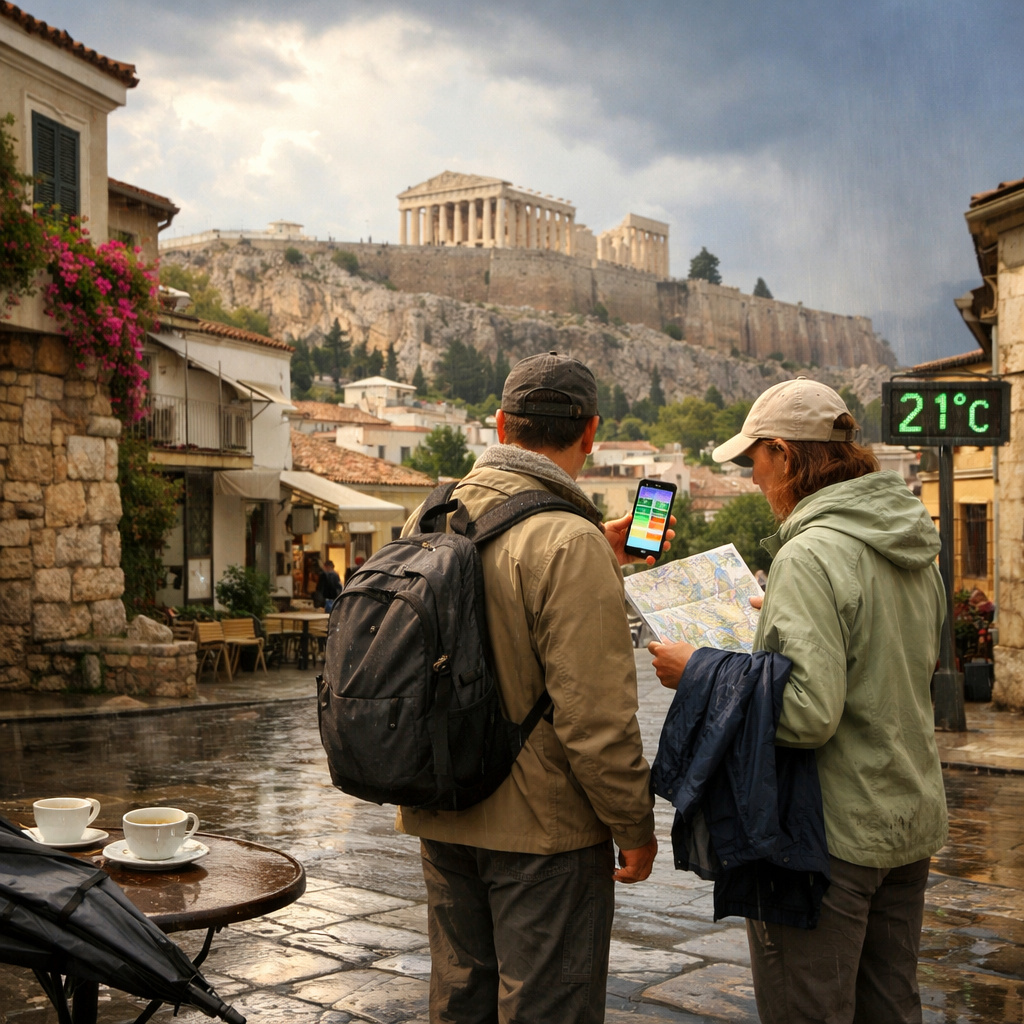
March brings daytime temperatures near 16–18°C, although cool mornings and rain showers still occur. By April, afternoons often reach about 20–22°C, making long walks around Plaka, the Roman Agora, and the Acropolis more comfortable.
April is one of my strongest recommendations for first-time visitors. You get enough warmth for outdoor sightseeing without the exhausting midday heat that arrives later in the year.
May through August
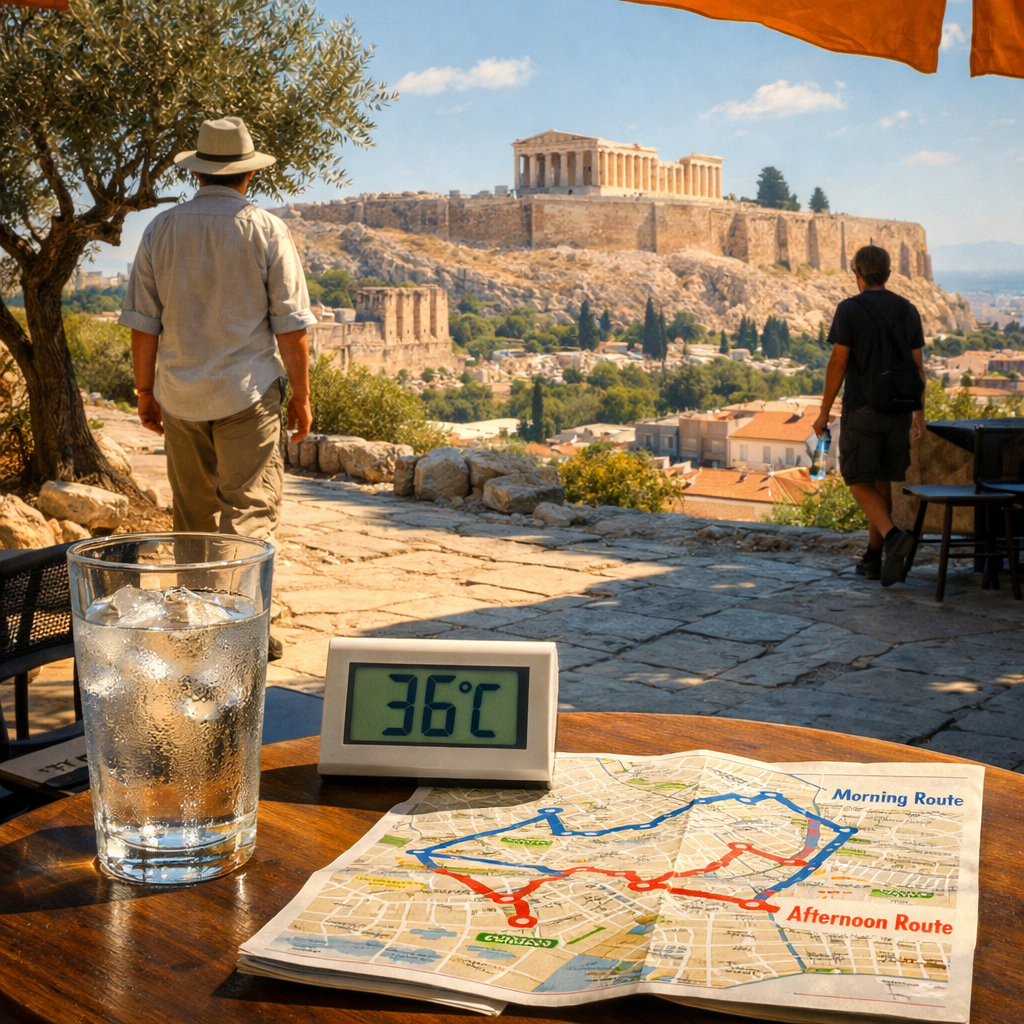
May usually reaches about 25°C during the day and has many dry, sunny periods. June becomes hot, with highs commonly around 29–31°C, while July and August often reach 33°C or more in the afternoon.
These figures describe typical conditions, not a promise for every day. During a heatwave, the real temperature can feel much higher on exposed stone paths, especially around the Acropolis, where shade is limited.
September through December
September stays warm, often near 29–30°C, and the sea remains inviting. October usually drops to around 23–25°C, while November moves closer to 18–20°C with more changeable skies.
December is mild compared with much of Europe, with daytime temperatures often around 14–16°C. Rain becomes more likely, but clear days still make outdoor meals and city walks enjoyable.
Which Months Are Best for Visiting Athens?
The best months for Athens depend on your priority, but May, early June, late September, and October are the strongest all-round choices. They combine comfortable sightseeing temperatures with good daylight, open attractions, and warmer conditions than winter.
Best months for archaeological walks
Choose April, May, early June, late September, or October if the Acropolis, Ancient Agora, and Temple of Olympian Zeus are central to your trip. These months reduce the risk of spending your best sightseeing hours hiding from extreme heat.
A practical schedule matters even in spring. Start outdoor attractions before 10:00, take lunch indoors or in shade, and return to walking areas after 16:00 when the stone and streets feel less intense.
Best months for lower prices
November through March generally gives you more choice among hotels and flights, especially outside Christmas and New Year. The trade-off is greater rain risk and shorter daylight, not constant bad weather.
Shoulder season often offers the better value decision. You avoid the peak summer rush while keeping enough warmth for rooftop dining, neighborhood walks, and a day trip to the coast.
Best months for swimming
For swimming near Athens, choose July, August, or September. Sea temperatures are generally warmest then, often around 24–26°C, although wind can change how comfortable the water feels.
June can work for confident swimmers, and October may still offer pleasant water early in the month. Do not choose April solely for swimming; it is a sightseeing month first.
For most first-time visitors, I recommend late September. You can swim, walk through historic areas, and eat outside without building the whole day around avoiding the sun.
Athens Rainfall and Winter Conditions
Athens gets most of its rain from October through March, while July and August are usually very dry. Winter rainfall often arrives in short, heavy spells rather than weeks of continuous drizzle, so a rainy forecast does not automatically ruin your plans.
What winter days feel like
January and February can deliver bright afternoons after a wet morning. A day that begins at 8°C may feel comfortable in the sun by midday, especially when the wind is light.
Winter evenings are different. Outdoor seating becomes less appealing after sunset, and older buildings may feel chilly indoors because heating varies by property. Choose a hotel with clear heating information rather than assuming mild outdoor temperatures mean a warm room.
Rain planning
Keep one flexible indoor block available. The Acropolis Museum, the National Archaeological Museum, the Benaki Museum, and covered cafés give you useful alternatives when rain crosses the city.
A compact umbrella and waterproof shoes are worth packing from November to March. Heavy showers can leave slick marble and stone surfaces around Monastiraki and the Acropolis, so sandals are a poor choice on wet sightseeing days.
Wind and sudden changes
Strong winds affect the walking experience and ferry connections more than temperature alone. Athens may feel cool on an exposed hill in March, even when the forecast shows 18°C.
Check the hourly forecast on the morning of your visit, not only the monthly average. Move hilltop sites into calmer hours and keep a light layer in your day bag.
Winter is not a reason to cancel Athens.
How Summer Heat Changes Your Athens Itinerary
Summer heat changes what you can comfortably do, particularly in July and August. You should plan major archaeological sites early, reserve shaded breaks, and avoid treating a 33°C afternoon like a normal walking day.
Sun exposure at historic sites
The Acropolis has exposed paths, pale stone, and limited shade. Wear a hat, sunglasses, breathable clothing, and shoes with firm grip. Carry water, but do not depend on finding shade exactly when you need it.
The same rule applies to the Ancient Agora and Philopappos Hill. These places reward slow exploration, yet slow exploration becomes unpleasant when you arrive at 13:00 in full sun.
A workable summer schedule
Use this order for a hot July day:
Visit the Acropolis between opening time and 10:00.
Eat breakfast or lunch indoors during the hottest hours.
Visit a museum or rest at your hotel after midday.
Walk through Plaka or Syntagma after 17:00.
Book a coastal swim or sunset meal in the evening.
This plan protects your energy without removing the parts of Athens you came to see. It also leaves room for delays, which matter when transport and queues take longer than expected.
Heat, humidity, and clothing
Athens summer air is often dry, but humidity can rise near the coast and before a weather change. Loose cotton or linen clothing, comfortable walking shoes, and a refillable water bottle work better than heavy outfits designed only for beach time.
Do not pack only shorts and sandals. Religious sites, evening restaurants, air-conditioned museums, and cooler ferry decks all call for at least one shirt with sleeves and one light layer.
July and August are poor choices for travelers who want long archaeological walks at midday. They remain excellent for beach time, late dinners, and an early-start itinerary.
What to Pack for Athens Weather
Pack for walking first, then add beach items if your trip includes the coast. Athens streets mix smooth pavements, uneven historic surfaces, steep routes, and marble steps, so footwear affects your day more than an extra outfit.
Spring and autumn packing
For April, May, October, and early November, take comfortable trainers, trousers or light dresses, a light jumper, and a thin waterproof layer. May and October can feel warm in the afternoon but cool after sunset.
A scarf is useful on windy evenings, while a small day bag keeps water and sun protection close. This approach handles changing conditions without filling your luggage with winter clothing.
Summer packing
From June through September, pack breathable clothes, a hat, sunglasses, sunscreen, and shoes that stay secure on uneven ground. A light long-sleeved shirt protects your shoulders during extended outdoor visits.
Bring swimwear if you plan to visit beaches around the Athenian Riviera, but do not let beachwear dominate your luggage. Museums, churches, restaurants, and evening walks need something more practical.
Winter packing
From November through March, use layers: a warm jumper, waterproof jacket, long trousers, and closed shoes. A compact umbrella fits easily in a day bag and is more useful than a bulky coat on most Athens days.
If you stay in a small apartment, confirm whether heating and hot water are included before booking. That detail matters more during a rainy January weekend than a five-degree difference in the forecast.
The best packing test is simple: could you walk for two hours, enter a museum, and eat outdoors after sunset?
Planning Athens Activities Around the Forecast
A good Athens itinerary gives every day a weather role. Put exposed landmarks on the clearest, coolest mornings, reserve museums for heat or rain, and keep coastal plans flexible when wind is strong.
Sightseeing and neighborhoods
The Acropolis, Ancient Agora, Plaka, Monastiraki, and Syntagma work well together in cooler months. In summer, separate them across different parts of the day instead of walking between every site at noon.
Use the National Garden as a short shaded break near Syntagma Square. In warmer weather, combine one major outdoor site with one indoor attraction rather than filling the schedule with four exposed locations.
Beaches and the Athenian Riviera
The coast south of central Athens offers swimming, waterfront dining, and sunset views. Vouliagmeni is a well-known option, while tram and bus connections make several coastal areas reachable without a rental car.
Allow extra time for traffic, particularly on summer weekends. If the forecast shows strong wind, choose a sheltered beach or replace swimming with a museum and late dinner in the center.
Day trips
Weather matters more outside the city. A clear spring day suits Cape Sounion, while a hot July afternoon may make the Temple of Poseidon uncomfortable without shade. Start early and carry water.
Do not assume Athens conditions match every Greek island. The Cyclades can be much windier, Crete can feel warmer, and northern destinations can have cooler or wetter patterns during the same week.
When comparing flights, hotels, airport transfers, and activities, mygreekpath.com can help you check the wider trip cost before you commit to dates. Weather should guide the booking, but it should not be the only factor.
A Simple Weather-Based Booking Strategy
Book around your main activity, not a generic idea of Greek summer. If historic sites are your priority, choose a shoulder month and pay for a well-located hotel; if swimming is the priority, accept hotter afternoons and plan around the water.
Match the month to your travel style
Choose April or May for walking, museums, and comfortable outdoor meals. Choose June or September for a balanced city-and-coast trip. Choose July or August for reliably hot beach weather, late evenings, and an early sightseeing routine.
Choose November through March for quieter museums, lower seasonal demand, and flexible indoor plans. Christmas and New Year are exceptions, when demand and opening hours change.
Match the hotel to the forecast
In summer, prioritize air conditioning, blackout curtains, and a location close to a metro station. A central room reduces long walks in the hottest part of the day.
In winter, check heating, window quality, and cancellation terms. A cheap room that becomes uncomfortable during a rainy evening is not good value.
Check the forecast before final planning
Use a reputable hourly weather service 48 hours before each major activity. Monthly averages help choose the trip, while the hourly forecast decides whether you visit the Acropolis at 08:00 or 17:00.
Leave one unbooked period during a week-long stay. That spare half-day absorbs rain, fatigue, transport delays, or a spontaneous decision to stay by the sea.
Conclusion
Choose late September or May if you want the strongest balance of warm weather, manageable walking, and outdoor dining. Choose July or August for swimming and hot evenings, but schedule historic sites before 10:00. For a winter trip, pack layers and build your plan around museums. Check the hourly forecast two days before each major outing, then reserve the most exposed activity for the coolest clear morning.
Frequently Asked Questions
What is the hottest month in Athens?
August is usually among the hottest months in Athens, with daytime highs around 33°C and occasional hotter spells. July is similarly hot, so plan exposed sightseeing early and keep the afternoon for museums, rest, or swimming.
Does Athens get snow?
Snow is rare in central Athens, but it can occur during unusual cold spells, especially in northern suburbs and on nearby mountains. Winter visitors should prepare for rain and cool evenings rather than expect regular snow.
Can I swim in Athens in October?
You can often swim in early October, when sea temperatures may remain around 23–24°C. Water and air become less predictable later in the month, so keep museums and city walks as backup plans.
Is Athens rainy in December?
December is one of Athens’ wetter months, but rain usually comes in changing spells rather than every day. Pack waterproof shoes and a jacket, then use clear intervals for outdoor sites and rainy periods for museums.