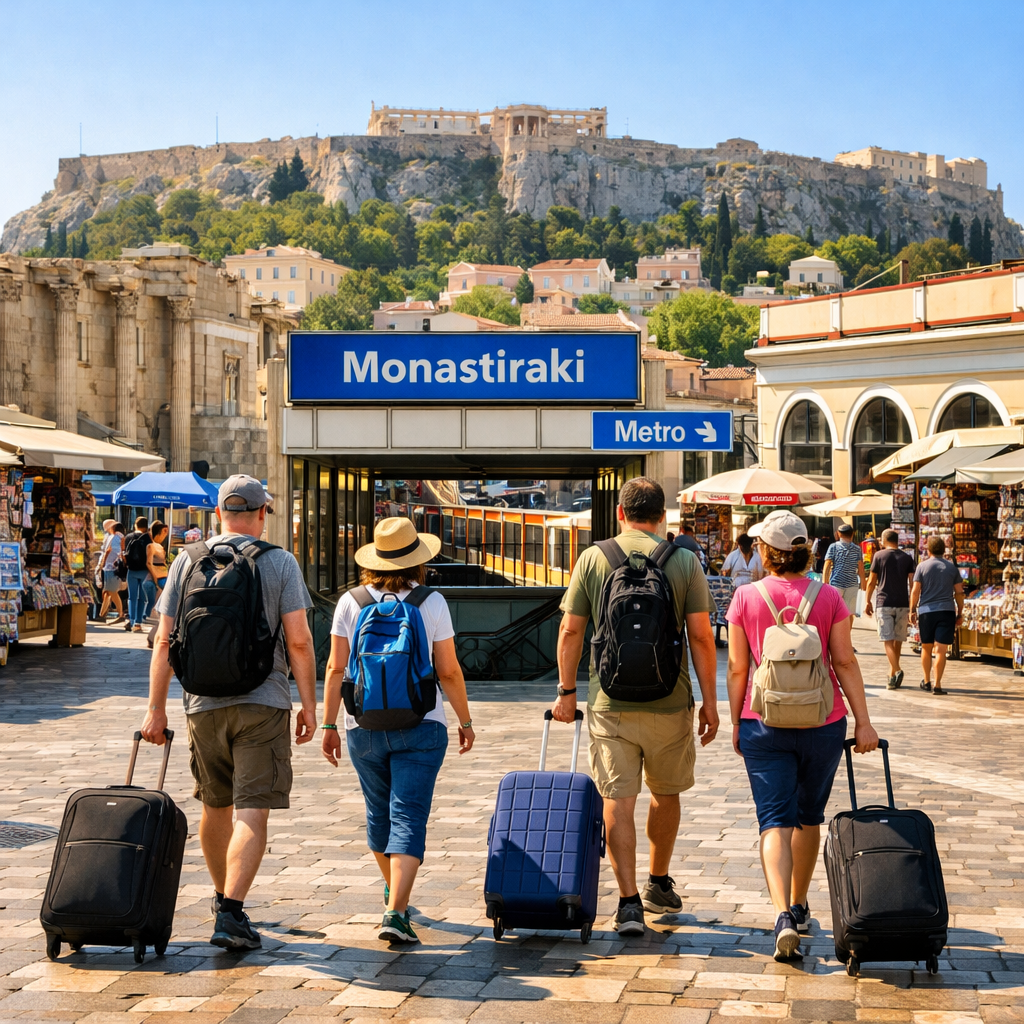
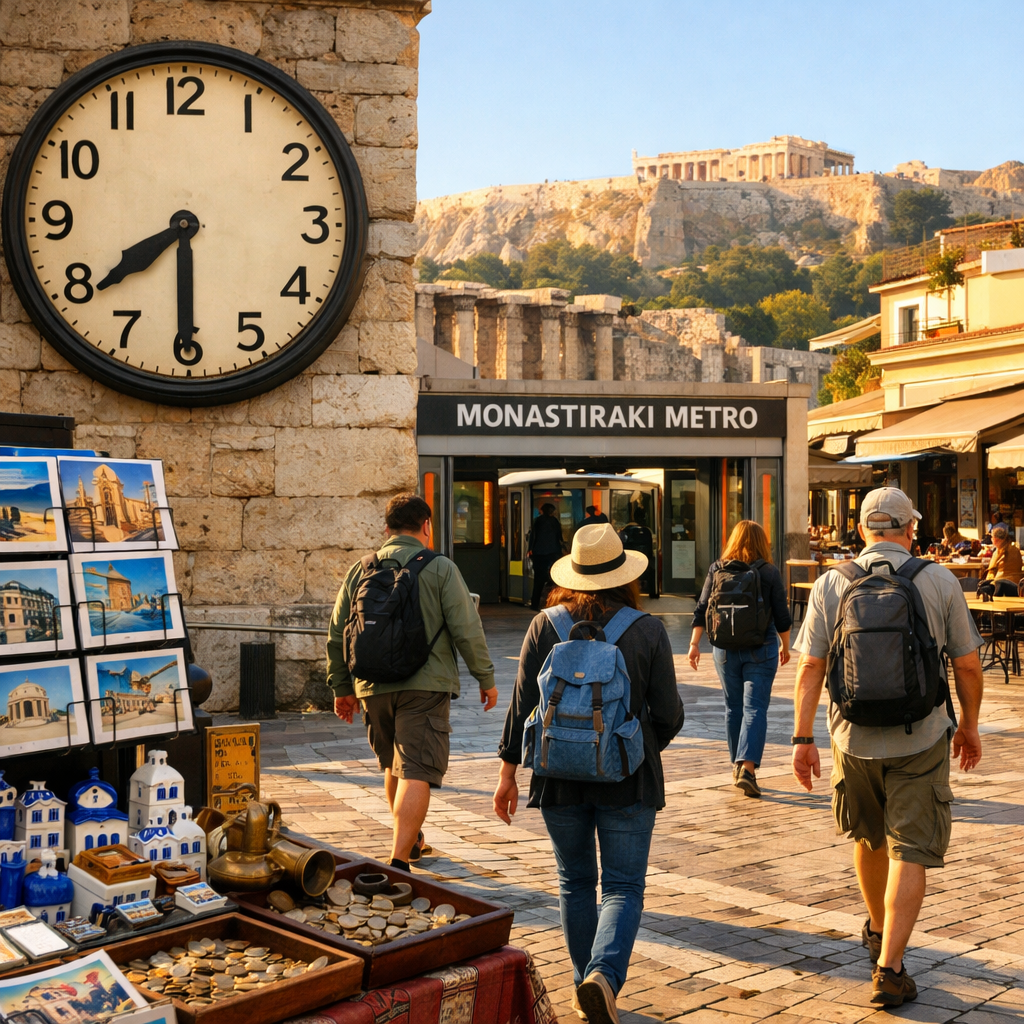
2 metro lines meet at Monastiraki, putting Athens’ historic center, the Acropolis and major food streets within easy reach. That makes athens monastiraki far more than a busy square or souvenir stop.
You can use the area as a walking hub, a dining base or a practical place to stay. Visit the market early, allow time for Hadrian’s Library and the Ancient Agora, and keep your valuables close on crowded streets and public transit.
Key Takeaways
Two metro lines connect Monastiraki with central Athens and Piraeus
Sunday morning brings the liveliest flea-market atmosphere
Hadrian’s Library and the Ancient Agora sit within walking distance
Psyrri is better for nightlife and late dining
Plaka offers quieter lanes and a more polished feel
Rooftop views vary; check the exact sightline before booking
Why Monastiraki Works as an Athens Base
Monastiraki is one of the best bases for a first Athens visit because you can reach the Acropolis, Plaka, Psyrri and the Ancient Agora on foot. Monastiraki Metro Station also connects Line 1 and Line 3, giving you a direct route toward Piraeus, Syntagma and Athens International Airport.
The location saves time every day. From Monastiraki Square, the Acropolis entrance area is roughly a 15-minute walk, while Hadrian’s Library is only a short walk across the square. The Ancient Agora begins near the western edge of the neighborhood, so you can build a full sightseeing morning without arranging a taxi.
There is also a practical advantage after dark. Restaurants, bakeries, bars and small shops stay active around Ermou Street, Athinas Street and Psyrri. You are not returning to an isolated hotel district after dinner, although busy streets require the same care you would use around any major transport station.
A Monastiraki hotel suits travelers who want short walking distances and quick public transport. It is less suitable if you need silence, large rooms or a beach-style atmosphere. Traffic, music and late-night footfall are part of the deal, especially on lower floors facing the square.
I recommend staying on a side street rather than directly above Monastiraki Square. You keep the location while reducing noise, and you can still reach the metro in a few minutes with your luggage.
Monastiraki, Plaka and Psyrri Are Different Areas
Monastiraki centers on the square, metro station, flea-market streets and archaeological sites. Plaka climbs toward the Acropolis with narrow lanes, neoclassical buildings and souvenir shops. Psyrri sits northwest of the square and is stronger for bars, small restaurants and evening energy.
Choose Plaka when atmosphere and quiet walking matter most. Choose Psyrri when dinner and nightlife matter more. Choose Monastiraki when you want the widest mix and the simplest transport.
The Best Time to Arrive
Arrive around 08:30 if you want cooler streets and clearer photographs near the Acropolis. Sunday is the strongest day for the flea-market atmosphere, but the market is not equally active every day, so a weekday visit may feel more like ordinary shopping streets than a full street market.
Summer heat changes the plan. Sightsee early, eat a late lunch indoors or under shade, then return to the square after sunset when the stone and pavement feel more comfortable.
What to See Around Monastiraki Square
Start at Monastiraki Square, but do not stop there. The square gives you a useful orientation point, yet the strongest sights are spread across the surrounding streets and archaeological grounds.
From the square, look for Hadrian’s Library on the northern side. Built in AD 132 under Emperor Hadrian, it is a compact archaeological site with visible columns and walls. Even if you do not enter, the ruins explain why this busy shopping district has such a deep historical layer.
The Roman Agora is nearby, with the Tower of the Winds as its best-known feature. The Ancient Agora of Athens then takes you west toward the hill of the Areopagus and the Acropolis. These sites work well together because each adds a different view of ancient civic life.
A Practical Walking Sequence
Use this order for a half-day route:
Begin at Monastiraki Metro Station before 09:00.
Walk through Hadrian’s Library and the Roman Agora area.
Continue to the Ancient Agora of Athens.
Climb toward the Acropolis viewpoints and Areopagus Hill.
Finish with lunch in Psyrri or along Athinas Street.
The sequence avoids unnecessary backtracking and places the steepest walking before the hottest part of the day. Check official opening hours before setting out, since archaeological sites can change schedules by season or special closure.
The Acropolis appears from many parts of Monastiraki, but the view is not identical from every rooftop. Buildings, signs and nearby structures often block part of the rock. A restaurant that advertises an Acropolis view may offer a narrow angle from one terrace, not a completely open panorama.
Better Viewpoints Than the Square
For a broad city view, walk uphill toward the Acropolis rather than relying only on the square. Areopagus Hill offers a memorable outlook, but its uneven rock needs firm shoes, especially after dark.
Rooftop restaurants around Monastiraki can be excellent for an evening drink or meal. Book for the terrace, ask which direction the table faces, and treat the view as a bonus rather than the only reason to choose the restaurant.
The Ancient Agora deserves at least 60 to 90 minutes if you want more than a quick photograph. The Temple of Hephaestus is one of its clearest highlights, and the open paths give you a calmer break from the market streets.
Do not rush from the metro to the Acropolis and ignore the smaller sites. Hadrian’s Library, the Roman Agora and the Ancient Agora show how the modern neighborhood grew around several different periods of Athens’ history.
Shopping at the Monastiraki Flea Market
The Monastiraki Flea Market spreads through pedestrian streets around the square, especially toward Avissinias Square. You will find clothing, leather goods, sandals, records, household objects, antiques and tourist items, but the selection changes from shop to shop.
Sunday morning is the strongest choice for the classic flea-market experience. Avissinias Square becomes the visual center, with stalls and secondhand goods creating a busier atmosphere than a normal weekday. On other days, many stores remain open, but the street may feel more like a permanent shopping district.
Go early if you want room to browse. By late morning, narrow streets fill with visitors, and stopping to inspect objects becomes harder. If you are carrying a backpack, wear it in front in the densest crowds.
What Is Worth Buying
Look for small Greek-made items with a clear use, such as leather sandals, woven textiles, ceramic pieces and packaged food from reputable shops. Ask about materials and care instructions before buying anything that will travel in checked luggage.
Antique-looking objects need extra attention. A low price does not prove authenticity, and some items may have restrictions on export or cultural-property status. Keep receipts and avoid buying archaeological objects, old coins or artifacts unless the seller provides proper legal documentation.
The market is better for browsing than for a fixed shopping list. Prices vary widely, and bargaining may be possible in some independent stalls, but it is not a rule for every store. Start by asking the final price politely, then decide whether the item still suits your budget.
A Safer Market Routine
Keep your phone and wallet in closed front pockets, especially near Monastiraki Metro Station and on crowded trains. Never leave a bag on the ground while you examine merchandise, and do not place valuables on a café chair beside a busy walkway.
Check size, condition and payment details before handing over money. For ceramics or fragile purchases, ask how the shop will pack them. A few minutes of care prevents damage during the rest of your trip.
Street sellers and shopkeepers create a lively scene, but you do not need to buy immediately. Walk the same lane twice, compare two prices and leave space in your luggage for the item you actually want.
The market works best as part of a morning that includes the archaeological sites. If you visit only to shop, you miss the neighborhood’s strongest contrast: modern bargaining streets beside remains from ancient Athens.
Where to Eat Greek Food Near Monastiraki
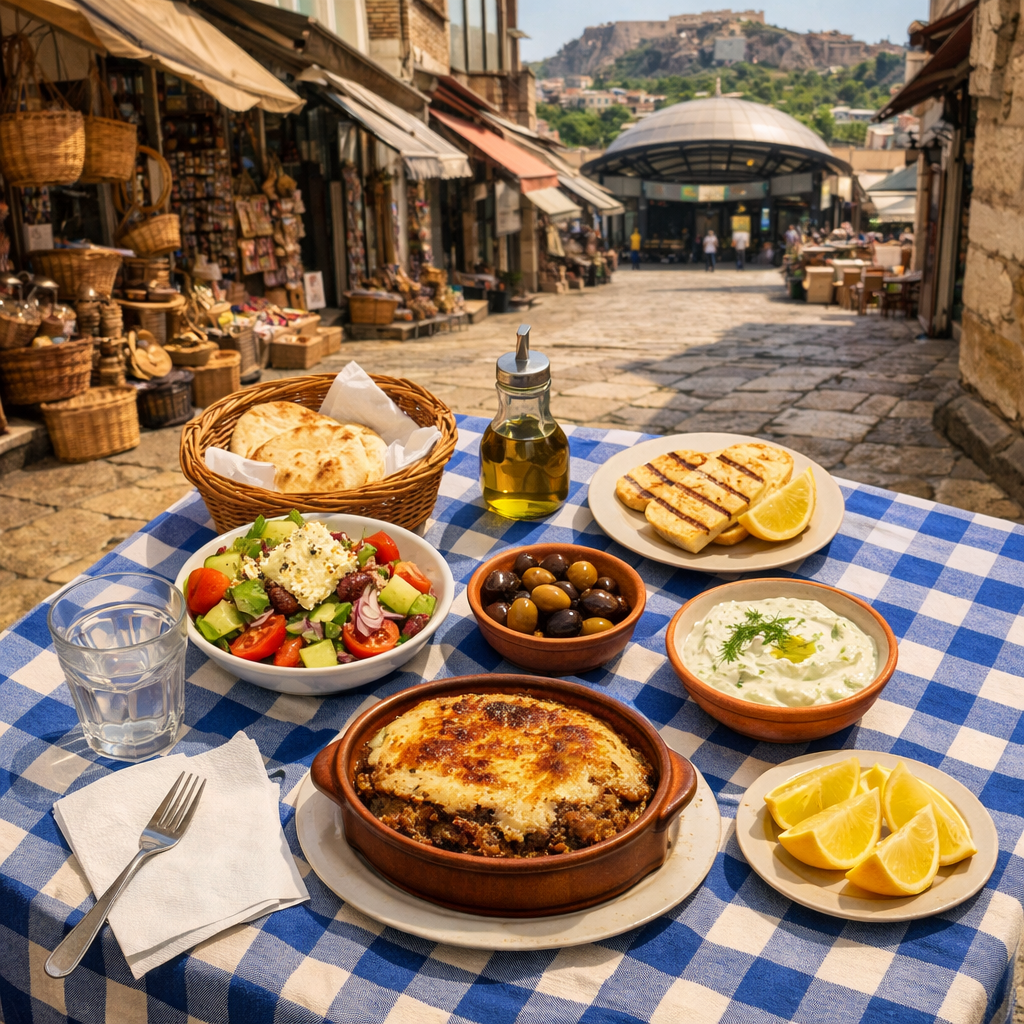
Monastiraki is a strong place to eat Greek street food because you can move between quick snacks, traditional tavernas and modern restaurants within a few blocks. Start with a simple meal and save a rooftop dinner for later, when the area becomes more atmospheric.
For a fast stop, look for souvlaki, gyros, koulouri, bougatsa or a spinach-and-feta pie. These foods suit a sightseeing schedule because they are filling without requiring a long table service. Athinas Street and the streets toward Psyrri offer many practical choices.
Athens Central Market, also called Varvakios Agora, is on Athinas Street north of Monastiraki. It is a working food market rather than a decorative attraction, with meat, fish and produce businesses serving local trade. Visit during daytime opening hours and expect a more practical atmosphere than the flea market.
What to Order for a Quick Meal
Choose gyros or souvlaki when you want the fastest option. Add a Greek salad or potatoes if you are sitting down, and expect the meal to work better as a casual lunch than as a formal dining experience.
Koulouri is useful for an early breakfast or a snack between sites. For dessert, look for loukoumades or galaktoboureko, but ask whether the portion is made for one person or designed for sharing.
Vegetarian choices are easy to find, including spanakopita, gigantes, fava, grilled vegetables and Greek salad. If you avoid dairy or meat, state it clearly because feta, yogurt and butter appear in many dishes that look vegetable-based.
Psyrri or Monastiraki for Dinner?
Stay near Monastiraki for a rooftop setting and a convenient view toward the Acropolis. Move into Psyrri for a denser restaurant and bar scene, with more late-evening choices and less focus on landmark views.
A rooftop does not guarantee an unobstructed Acropolis view. Ask whether the terrace is open, whether your table faces the Acropolis and whether nearby buildings block the lower part of the sightline.
Plaka is the better dinner choice when you want a slower walk through historic lanes. Its restaurants often feel more scenic, while Monastiraki gives you stronger transport links after the meal.
Do not judge a restaurant only by the view. Look at the menu, seating arrangement and service pace first. A good meal on a side street is a better choice than an average meal at a table that happens to show the Acropolis.
Getting There and Moving Around Efficiently
Monastiraki Metro Station is the neighborhood’s main transport advantage. Line 1 runs through central Athens toward Piraeus, while Line 3 connects with Syntagma and Athens International Airport. Check current ticket rules and service updates before travel because airport services and ticket products can change.
From Syntagma Square, walking to Monastiraki is simple and usually takes around 15 to 20 minutes, depending on your route and stops. The walk along Ermou Street adds shopping and keeps you above ground, while the metro is better with heavy luggage or midday heat.
Taxis can drop you near the neighborhood, but vehicle access is limited on pedestrian streets. Ask for a nearby accessible road rather than giving only “Monastiraki Square” to the driver, particularly when arriving with suitcases.
Airport and Port Planning
The airport connection is one reason Monastiraki works well before or after a Greek island trip. Allow extra time for the airport journey, ticket checks and platform changes, and do not plan a last-minute connection based on an unverified timetable.
For Piraeus, Line 1 offers a direct rail connection from Monastiraki. Ferry passengers should still leave a generous buffer for boarding time, luggage and possible service disruption. A hotel near the station helps, but it does not remove the need to check your ferry departure details.
Walking Distances You Can Use
The area is compact, but the Acropolis route includes slopes and uneven paving. Comfortable shoes matter more than fashionable footwear, especially if you combine the Ancient Agora with Areopagus Hill and Plaka.
Use this simple rule: walk downhill or across the center in the afternoon, and save uphill routes for the cooler morning. In July or August, carry water and pause indoors rather than trying to complete every sight in one stretch.
Public transit gets crowded around commuter hours and popular sightseeing periods. Hold your phone securely, keep luggage in front of you and avoid placing a wallet in an open back pocket.
Choosing a Hotel: Monastiraki, Plaka or Psyrri
Choose Monastiraki for transport, central sightseeing and a lively street scene. Choose Plaka for a more picturesque stay near the Acropolis. Choose Psyrri for food, bars and a later evening, with the understanding that weekend noise can carry into nearby rooms.
Room location matters as much as neighborhood. A room facing a main square or bar street will usually hear more activity than one facing an interior courtyard or side road. Ask the hotel about soundproofing and request a higher-floor room away from lifts if sleep is a priority.
Families often prefer the edge of Plaka or a quieter Monastiraki side street. Couples who plan rooftop dinners and late walks may enjoy the center more, while solo travelers should prioritize a well-lit entrance and easy route from the metro.
What to Check Before Booking
Check the walking route from Monastiraki Metro Station, not only the straight-line distance shown on a map. Cobblestones, stairs and pedestrian barriers affect the real arrival experience.
Confirm whether breakfast, luggage storage and late check-in are available. These details matter when your flight arrives early or your ferry leaves after you check out.
Review the exact room view. “Acropolis view” might mean a partial glimpse from a balcony, while a rooftop terrace may provide the better sightline. If the view matters, request written confirmation before paying a non-refundable rate.
My Greek Path can help you compare Athens hotels, transfers and activities when you want to keep the transport plan beside the accommodation search. Use the comparison step to check location first, then compare the room and cancellation terms.
The Main Drawback
Monastiraki is not the quietest Athens base. The metro, nightlife, tour groups and market crowds create noise and movement, especially on Friday and Saturday nights.
That drawback is easy to manage if you choose a side street and book the right room. It is harder to manage if you select the cheapest room directly over a busy bar, so location within the neighborhood deserves part of your budget.
A One-Day Plan That Uses Monastiraki Well
A well-planned day begins before the crowds and finishes with food, not with another rushed landmark. Start around 08:30 at Monastiraki Metro Station, then walk toward Hadrian’s Library and the Ancient Agora before the strongest afternoon heat.
Spend the late morning around the Acropolis and Areopagus Hill. If you have timed entry for the Acropolis, build the rest of the route around that appointment rather than assuming you can arrive whenever you like.
After lunch, return to the shopping streets. This is the right time for clothing, sandals, records or small gifts because you already know what will fit in your luggage and you do not need to carry purchases through the archaeological sites.
Take a break before dinner. A hotel room, café or shaded indoor space gives you more energy than forcing a full day without rest, particularly in July and August.
Sample Timing
At 08:30, begin with the library and Roman Agora area. From about 09:30 to 11:30, visit the Ancient Agora or continue toward the Acropolis according to your ticket time.
Eat lunch between 12:00 and 13:30, then rest until roughly 16:00. Browse Avissinias Square and the flea-market lanes later in the day, when the streets feel more relaxed than during the late-morning rush.
Finish with dinner in Monastiraki, Psyrri or Plaka. Pick Psyrri for a lively evening, Plaka for atmosphere, and a rooftop near Monastiraki for a landmark view after checking the terrace details.
Who Should Change the Plan?
Travelers with children should shorten the archaeological route and add a long meal break. The market streets are stimulating but crowded, so keep children close near the station and avoid letting them carry valuables in open pockets.
Travelers with limited mobility should check slopes, stairs and accessible entrances before choosing the route. The metro station and old paving do not offer the same easy movement as a modern shopping center.
Photographers should arrive early for quieter square photographs and return after sunset for lights around the Acropolis. Carry only the equipment you need, since crowded public transit is a poor place to manage loose bags.
Conclusion
Use Monastiraki as your Athens launch point, not a quick shopping stop. Book a quiet side-street hotel, visit the archaeological sites before noon, explore the market on Sunday if possible, and choose Psyrri or Plaka according to your evening mood. Start by checking your hotel’s real walking route from Monastiraki Metro Station, then build your sightseeing times around the Acropolis entry.
Frequently Asked Questions
Is Monastiraki a good area to stay in Athens?
Yes, Monastiraki is a strong choice for first-time visitors who value central walking routes and metro access. Choose a side-street room if you need sleep, because the square and nearby nightlife remain active after dinner.
What day is best for the Monastiraki Flea Market?
Sunday morning is the best time for the fullest flea-market atmosphere, especially around Avissinias Square. Weekdays still offer shops and market-style streets, but the number of outdoor stalls and the overall buzz vary.
How far is the Acropolis from Monastiraki?
The Acropolis entrance area is roughly a 15-minute walk from Monastiraki Square, depending on your route and pace. The climb includes uneven surfaces, so wear shoes with a firm sole and allow extra time in summer.
Is Monastiraki safe at night?
Monastiraki is busy at night, but crowded streets and metro trains require normal city precautions. Keep your phone and wallet in closed front pockets, avoid unattended bags, and use a well-lit route back to your hotel.