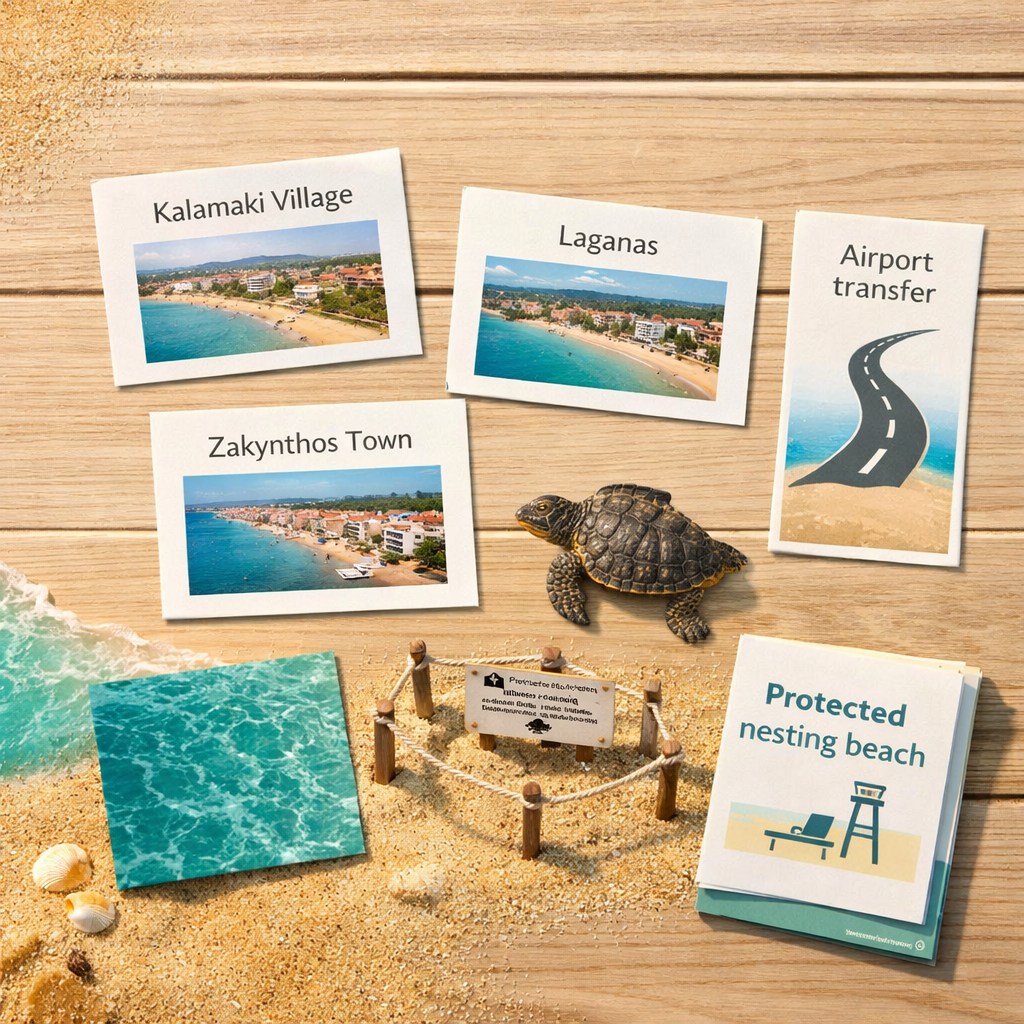
3 km from Zakynthos International Airport, zante kalamaki beach gives you one of the island’s easiest arrivals and a protected coastline where Caretta caretta turtles nest. That short transfer saves time, but it also means you must follow beach-access rules that do not apply to an ordinary resort beach.
You get shallow water, soft sand, nearby accommodation, and quick access to Laganas without staying in its busiest centre. The best experience comes from treating Kalamaki as a conservation-first beach, then planning your visit around seasonal facilities and turtle protection.
Key Takeaways
Airport is roughly 3 km from Kalamaki village
Caretta caretta nesting rules shape beach access
Shallow water suits families and relaxed swimming
Sunbeds and services operate mainly in summer
Kalamaki is calmer than central Laganas
Book transfers and rooms before July and August
Why Kalamaki Beach Is Different from a Standard Resort Beach
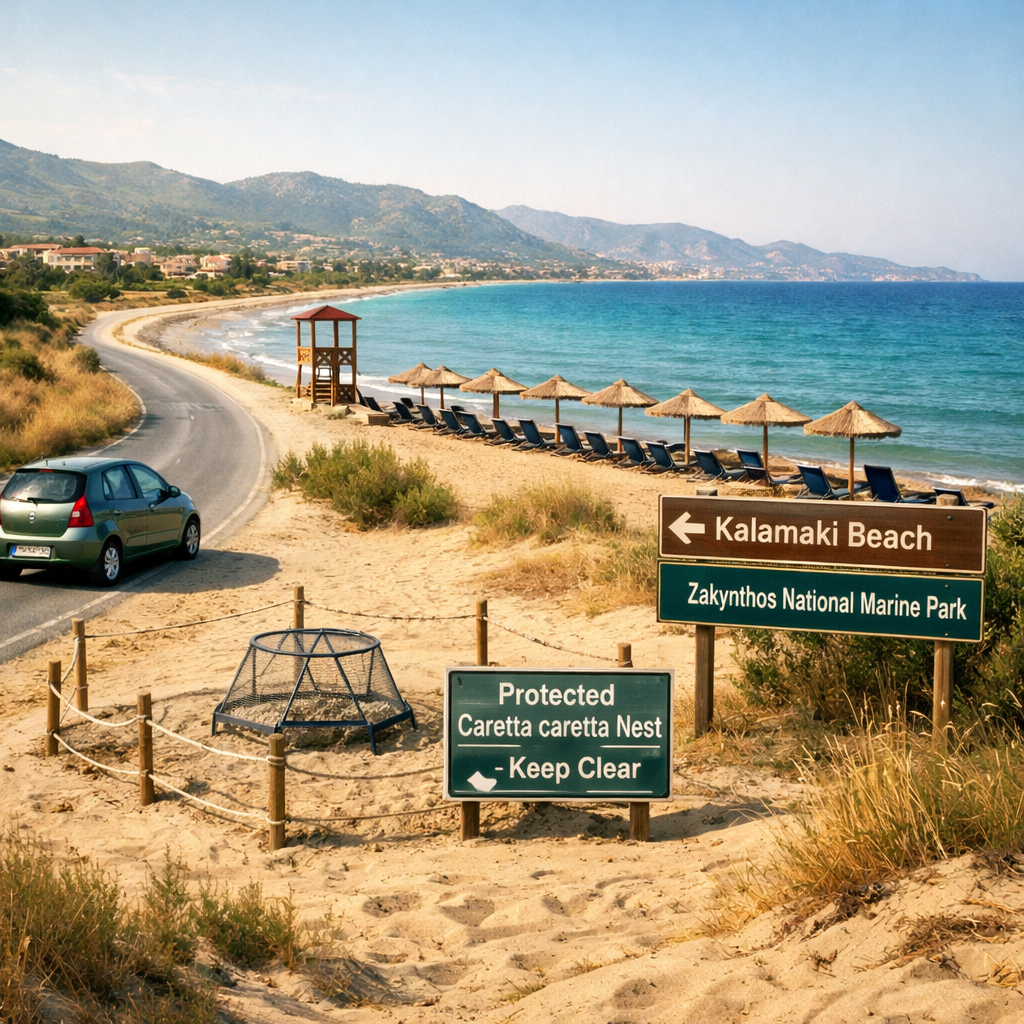
Kalamaki Beach is part of the protected coastal area of the Zakynthos National Marine Park. The beach is known for Caretta caretta loggerhead turtles, which come ashore to lay eggs during the nesting season. Your visit therefore depends on wildlife rules as much as on weather, swimming conditions, and available facilities.
The main practical difference is simple: you cannot use every part of the sand and sea in any way you want. Marked nests must remain undisturbed, beach furniture must stay in approved areas, and seasonal access restrictions can apply, especially during the nesting period.
Turtle protection changes your routine
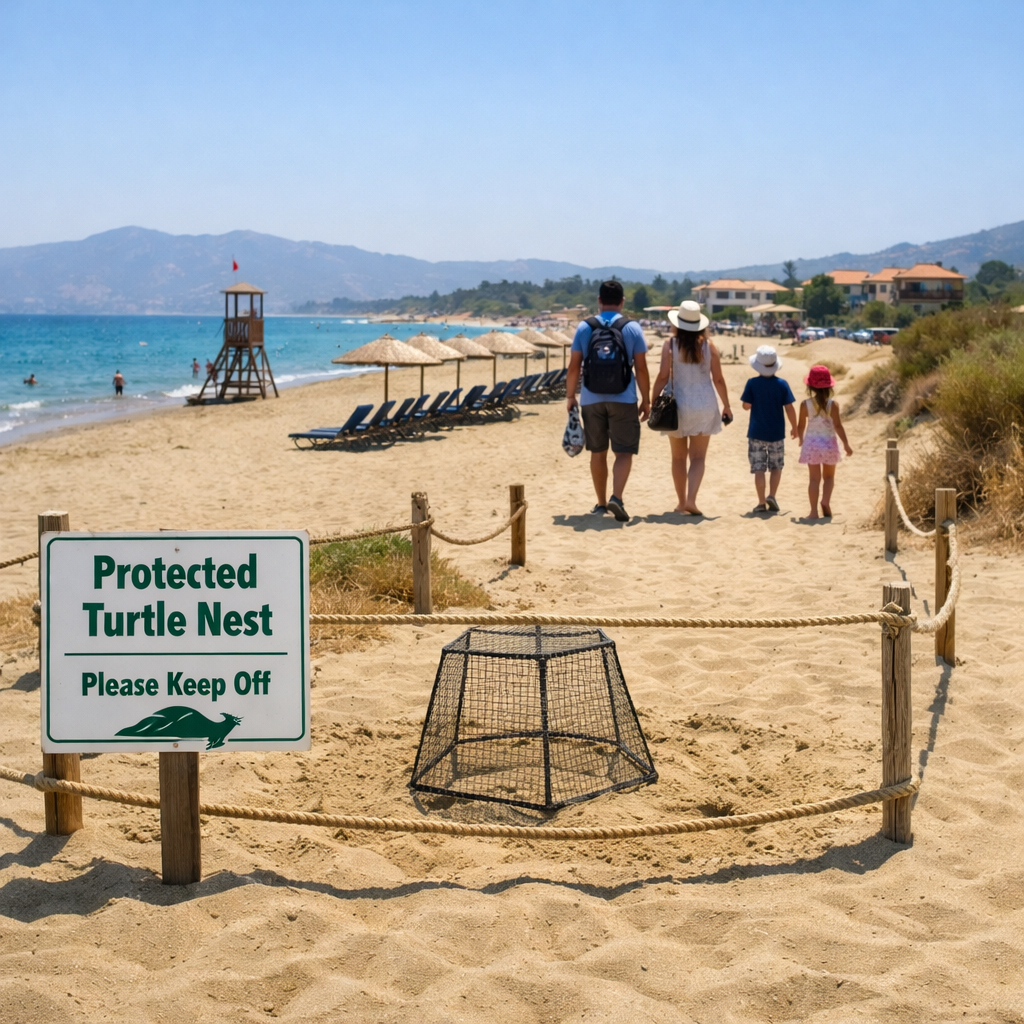
Do not walk over marked nests, move protective cages, or place towels directly beside them. Keep noise low near nesting areas, avoid bright lights after dark, and never use a flash when watching turtles or walking near the shore at night.
Beach access can be restricted at certain hours or in specific zones. Follow the signs, ropes, and instructions from park staff or lifeguards even when the beach looks open and quiet. The rules protect eggs and hatchlings that visitors may not see beneath the sand.
The biggest mistake is assuming that Kalamaki is simply a quieter version of Laganas.
It is quieter in many areas, but conservation comes first. Extensive motorised water sports are not the main attraction here because turtle protection limits activity close to the nesting coast. Choose Kalamaki for swimming, beach time, and nature, not for a full programme of noisy water sports.
The Zakynthos National Marine Park also covers important marine areas around the island. Keep plastic, cigarette ends, and food packaging out of the sand, and take rubbish with you when bins are full or unavailable. A careless beach habit creates a real problem in a protected habitat.
If you want a traditional beach day with no restrictions, choose another part of Zakynthos. If you want a beautiful, accessible beach where your choices support wildlife, Kalamaki is the stronger option.
What Is Swimming at Kalamaki Beach Like?
Kalamaki Beach is a strong choice for easy swimming because the water is usually shallow near the shore and the sandy seabed makes entry comfortable. Families with children often prefer the gradual depth, while adults can enjoy a long, calm swim when the wind and waves are mild.
The shallow area also means the water can feel warmer near the beach, particularly on sunny summer afternoons. Enter slowly, check the conditions, and watch children closely because shallow water does not remove the risk of currents, waves, or slippery sections.
Best conditions for swimming
Early morning is the best time for a quieter swim and softer light. Between June and September, arriving before 10:00 gives you more space and makes it easier to choose a spot away from marked nesting areas.
In July and August, the beach becomes busier from late morning. The water may still be calm, but the sand, access paths, and nearby roads feel more crowded. If you prefer a relaxed swim, go before breakfast or after 17:00, while respecting any evening restrictions.
What to bring
Bring water, a hat, reef-safe sun protection, and footwear for the walk from your accommodation. A small beach bag is more useful than bulky equipment because the beach layout and turtle rules limit where you can place belongings.
Do not bring loud speakers, drones, or bright lights for night visits. These items disturb other visitors and wildlife, and drones are especially unsuitable near a nesting beach.
Kalamaki is better for simple swimming than for an equipment-heavy beach day.
The sandy shore is comfortable, but the lack of extensive water-sport infrastructure is part of the area’s character. You will find fewer high-energy activities than at busier organised beaches, and that is a benefit if you want calm water and an unhurried afternoon.
Check local warnings before entering the sea. Strong winds can change the swimming experience quickly, and lifeguard coverage may vary by season and operating hours. Never assume that a quiet beach has no hazards.
For a first visit, swim close to the main serviced area, keep children within arm’s reach, and leave enough distance from protected sections. That gives you comfort without treating the beach like an unrestricted pool.
Facilities, Sunbeds, and the Best Time to Visit
Kalamaki Beach has practical facilities during the main summer season, including organised sunbeds in permitted areas, nearby cafés, tavernas, toilets, and small shops in the village. Services are not identical along the entire coast, and they do not all operate year-round.
The safest planning approach is to treat June through September as the main beach-service period. Outside those months, you may still enjoy the sand and sea, but fewer businesses may be open and some organised facilities may be removed or reduced.
Sunbeds and shade
Sunbeds are available in designated sections when beach operators are working. Do not drag them toward a marked nest or rearrange the layout to create more private space. Turtle-protection zones must remain clear.
Natural shade is limited on the open sand. Arrive early if you want a particular location, or choose accommodation with a shaded pool and return to the beach for swimming. Carrying a large umbrella can be awkward, and placing it in the wrong area creates a conservation problem.
Ask about the day’s operating rules before settling in. Local instructions can change with nesting activity, weather, or park requirements.
Food and basic supplies
Kalamaki village has restaurants, cafés, mini-markets, and takeaway options within walking distance of much of the beach. You do not need to return to Zakynthos Town for a cold drink or simple lunch, although opening hours vary outside the high season.
Expect the widest choice in July and August. In May, October, or during a cooler spell, a restaurant may open later or close for the day. Buy water and snacks before your beach walk if you are visiting early or late in the season.
A reusable bottle is a smart choice. It reduces waste and saves repeated purchases during a long beach day.
When the beach feels best
June combines warm weather with a more manageable pace than August. September is also an excellent choice, with warm sea temperatures and fewer peak-season crowds, although evening services may reduce toward the end of the month.
July and August suit travellers who want the full range of open restaurants and active holiday services. They also bring the greatest demand for rooms, airport transfers, and rental cars, so last-minute planning becomes harder.
The beach is not a place to ignore the calendar. A visit in April can be beautiful, but you should expect a quieter village and limited services rather than a full summer setup.
Where to Stay: Kalamaki Village, Laganas, or Zakynthos Town?
Stay in Kalamaki village if you want to walk to the beach, eat nearby, and sleep away from the loudest nightlife. Choose Laganas if late-night entertainment is your main priority, and choose Zakynthos Town if you want urban services, ferry connections, and a wider choice of shops.
Kalamaki gives you the best balance for a first beach-focused visit. Accommodation ranges from family-run rooms and apartments to larger hotels with pools, and the village is close enough to the airport for a short arrival transfer.
Kalamaki village
A room near the main road or beach access saves you from arranging transport for every swim. This matters in July and August, when a short drive can become frustrating because of traffic and limited parking.
Check what the room rate includes before booking. Air conditioning, a refrigerator, breakfast, pool access, and late check-in affect your comfort more than a decorative hotel feature when temperatures stay high.
Look at the exact walking route, not only the distance shown on a booking page. A property listed near Kalamaki may still sit on a road without a comfortable pedestrian path.
Laganas
Laganas is close to Kalamaki and offers more nightlife, bars, and late-opening food options. It is also busier and louder, particularly around the central entertainment strip during July and August.
You can stay in a quieter part of Laganas and visit Kalamaki by taxi, rental car, or organised transfer. That works for travellers who want nightlife but still want beach time, although transport costs and late-night noise can reduce the benefit.
Do not book central Laganas expecting Kalamaki’s atmosphere. The two areas are near each other, but they serve different holiday styles.
Zakynthos Town
Zakynthos Town is a better base for visitors who want museums, the port, shopping, and access to other parts of the island. It is less convenient for daily Kalamaki beach time because you will depend on transport rather than a short walk.
For a seven-night holiday, a split stay can work: several nights in Kalamaki followed by time in Zakynthos Town. For a shorter break, stay in one area and avoid losing hours to hotel changes.
When comparing hotels, check transfer distance, parking, cancellation terms, and recent operating information. My Greek Path can help you compare accommodation and airport-transfer options in one planning step, which is useful when July availability starts to disappear.
Getting to Kalamaki from the Airport and Around Zakynthos
Zakynthos International Airport is roughly 3 km from Kalamaki village, making Kalamaki one of the easiest beach bases after landing. A pre-booked private transfer is the most comfortable option for families, late arrivals, or travellers carrying heavy luggage.
A taxi is practical when available, but demand rises around flight arrivals. The journey is short, yet waiting time can be longer than the drive during busy periods. Confirm the meeting point and total fare before leaving the terminal.
Your main arrival choices
You have four realistic options:
Pre-book a private airport transfer.
Take a taxi from the airport.
Rent a car at Zakynthos International Airport.
Arrange a hotel transfer if the property offers one.
A private transfer is the simplest choice for one direct journey. A rental car makes more sense when you plan to visit beaches such as Gerakas, Dafni, Alykanas, or the west-coast viewpoints during several days.
Public transport may not match every flight arrival or accommodation location. Confirm the current timetable before relying on it, especially outside July and August.
Is a rental car worth it?
Rent a car if you want to explore beyond the south coast. Zakynthos has beaches and villages that are difficult to combine efficiently without your own vehicle, and taxis become expensive when used repeatedly for full-day sightseeing.
You do not need a car for a beach-only stay in Kalamaki. The village is walkable, the airport is nearby, and Laganas is close enough for an occasional taxi or short organised trip.
Book a small vehicle rather than choosing a larger car by default. Narrow village roads, tight parking areas, and busy summer streets make compact cars easier to manage.
Driving and parking details
Drive defensively on rural roads, particularly after dark. Motor scooters, pedestrians, uneven edges, and sharp bends appear quickly, while road surfaces can vary between main routes and smaller coastal lanes.
Ask the accommodation about private parking before collecting the vehicle. A listing that says parking is available may mean street parking rather than a reserved space.
Never park across beach access routes or near protected zones. Emergency access and turtle-protection work both depend on clear paths, and a convenient stopping place can create a serious obstruction.
Plan your return journey around your flight rather than the short distance alone. Allow time for refuelling, vehicle return, and airport queues during August, when a three-kilometre transfer does not guarantee a three-minute departure.
A Practical One-Day Plan for Kalamaki Beach
Start with an early swim, spend the middle of the day in shade or at your accommodation, and return to the beach later if conditions and access rules allow. This schedule avoids the strongest midday heat and reduces pressure on the busiest beach hours.
A successful day does not require a packed activity list. Kalamaki rewards a slower plan built around swimming, food, and respect for the protected coast.
Morning: beach first
Arrive around 08:00 or 09:00, when the sand is cooler and the beach is quieter. Walk only on marked access routes, choose an approved area, and check signs before placing your towel or using a sunbed.
Swim close to the shore and avoid touching floating markers or entering restricted water zones. Even if you see other people ignoring a rule, follow the posted instructions.
Have breakfast in Kalamaki village or at your accommodation before the beach becomes busy. A slow start also leaves time for a later trip to another part of Zakynthos.
Midday: leave the sand
Between roughly 12:00 and 16:00, take a break from direct sun. Eat at a local taverna, return to your room, or use a hotel pool if one is available.
This is the best time to deal with practical tasks such as confirming a transfer, collecting a rental car, or buying supplies for the next day. You avoid wasting the hottest hours in a crowded parking area.
Children need extra protection during this period. Use shade, water, and regular breaks instead of relying only on sunscreen.
Afternoon and evening: choose carefully
Return after 17:00 for a second swim if beach access remains open and turtle rules allow it. The light is softer, the heat is easier, and the village feels more comfortable for dinner.
Do not treat sunset as permission to stay anywhere on the sand. Some protected beaches restrict access after certain hours to protect nesting turtles and hatchlings. Check the current signs that day.
For dinner, walk back into Kalamaki rather than driving short distances. This reduces parking pressure and lets you enjoy the village without adding unnecessary traffic near the beach.
A second beach day should include a change of scenery. Visit nearby Laganas for its busier atmosphere, or drive farther south to see another protected coastal area, while checking access conditions before setting out.
Common Mistakes That Reduce Your Kalamaki Experience
The most common mistake is booking Kalamaki for unrestricted entertainment. Visitors expecting jet skis, loud beach clubs, and constant activity often misunderstand why this coast feels different from central Laganas.
Choose Kalamaki when the protected setting is part of the appeal. You will enjoy the beach more once you stop measuring it against a party resort.
Another mistake is assuming every month has the same services. A taverna, sunbed area, or transfer provider that operates in August may not operate in April or late October.
Confirm opening periods directly with your accommodation and transport provider. This single check prevents avoidable problems with breakfast, airport pickup, and late-night arrivals.
Visitors also underestimate the sun. A shallow beach encourages long swims, but you can still burn quickly in Greece between 11:00 and 16:00, especially when reflected light comes off the water and pale sand.
Carry water and take a midday break. A beach day becomes uncomfortable when you wait until you feel thirsty or tired.
Do not confuse Kalamaki in Zakynthos with Kalamaki beaches in other Greek destinations. When searching for directions, accommodation, or transport, include “Zakynthos” or “Zante” so your results point to the correct island.
Finally, do not assume turtle rules are optional because the beach looks busy. Marked nests, ropes, signs, and restricted sections exist for a reason, and ignoring them can damage eggs or disturb nesting turtles.
Conclusion
Choose Kalamaki if you want shallow swimming, a short airport transfer, village accommodation, and a protected beach experience. Book a room near the shore, confirm seasonal services, and check the day’s turtle-access rules before you arrive. For nightlife, stay in Laganas; for easy beach days with a conservation-first setting, Kalamaki is the better base.
Frequently Asked Questions
Is Kalamaki Beach suitable for young children?
Yes, its sandy shore and gradual entry usually suit families, but children still need close supervision because shallow water can have waves and currents. Stay within the permitted swimming area and keep away from marked turtle nests.
Can you visit Kalamaki Beach at night?
Night access may be restricted during the turtle-nesting season, so check the signs and current local instructions before staying after sunset. Never use bright lights or flash photography near nesting areas or hatchlings.
How far is Kalamaki Beach from Zakynthos Airport?
Kalamaki village is roughly 3 km from Zakynthos International Airport. The drive is short, but allow extra time for taxi queues, luggage collection, and summer traffic around flight arrivals.
Is Kalamaki quieter than Laganas?
Kalamaki is generally quieter than central Laganas, especially at night, although the beach and village become busy in July and August. It is the better choice for swimming and relaxed accommodation rather than late-night entertainment.