The Best Time to Visit the Greek Islands (Month-by-Month Guide)
A sea temperature of about 24–26°C in August explains why peak summer attracts beach lovers, but it does not make July and August the best time to visit greek islands for everyone. You also face stronger winds, packed ferries, higher room rates, and crowded waterfronts.
The right month depends on your priority. May and June suit comfortable sightseeing, September gives you warm water with fewer visitors, and October works well for a slower trip when you choose an island with year-round life.
The best time to visit Greek islands depends on your travel priority
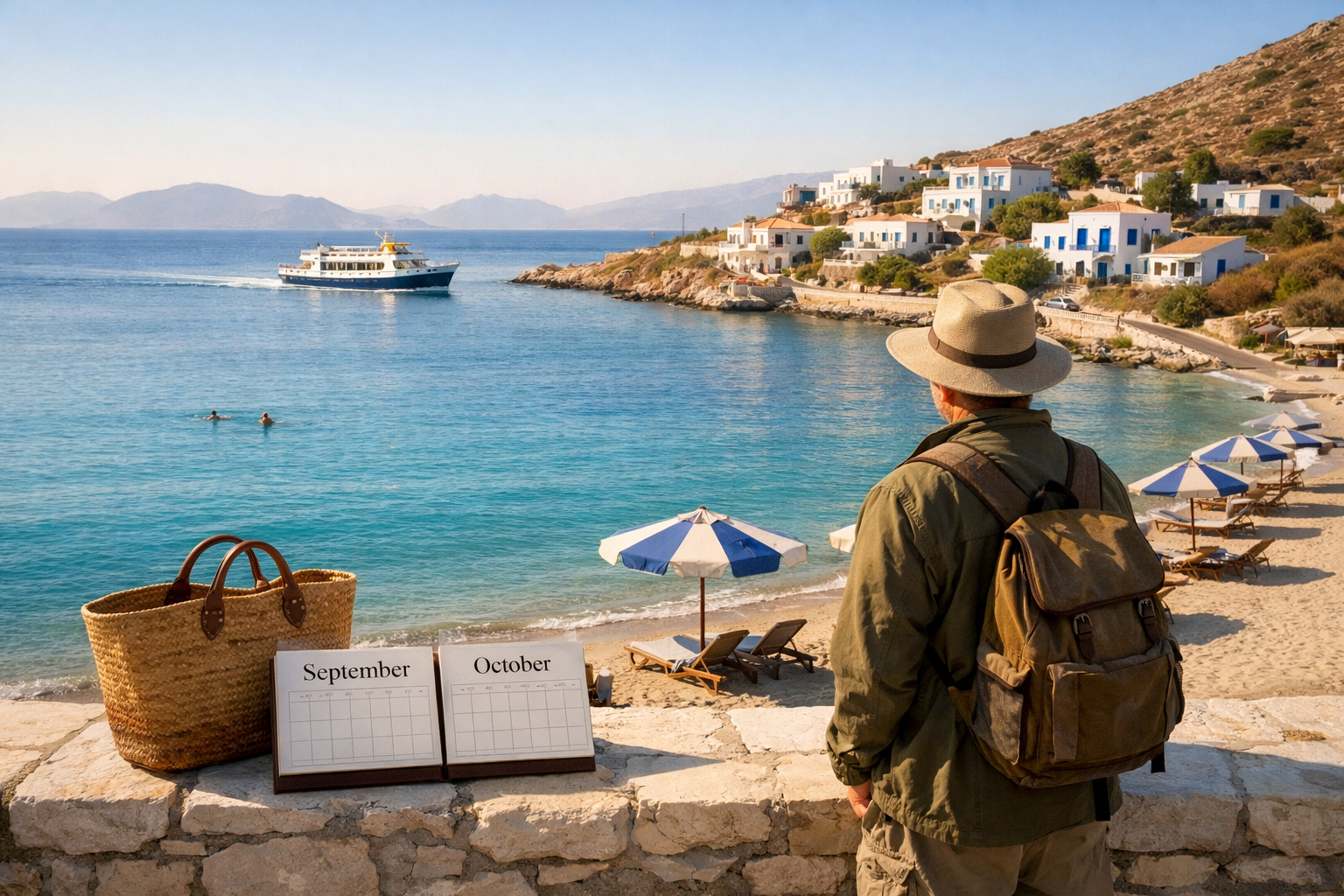
For most travellers, late May to June and September offer the best balance of weather, swimming, prices, and open services. September is my top choice for a beach holiday because the sea has stored summer warmth, the midday heat is easier, and many visitors have already left.
Peak season still wins for nightlife. Mykonos and Ios have their fullest club schedules in July and August, while popular beach bars and boat tours run at maximum frequency. If you want a quiet village, those same months create the most pressure on roads, beaches, restaurants, and ferries.
May is stronger for walking, ancient sites, and road trips than for early swimming. The air can feel warm in the sun, but the Aegean Sea often remains cool, especially during the first half of the month. Pack a light jacket for evenings and check the forecast for meltemi, the seasonal north wind.
September is the safest all-round recommendation.
The table below shows how the main travel factors change during the island season. These are practical planning ranges, not guarantees for every island or every year.
Month
Typical daytime feel
Sea and swimming
Crowds and prices
Ferry and business availability
April
Mild, changeable
Cool; limited swimming
Low, many offers
Reduced routes and opening hours
May
Warm, fresh evenings
Cool to pleasant late month
Moderate, lower rates
Expanding schedules
June
Hot and settled
Comfortable and warming
Rising, less crowded than peak
Strong availability
July
Hot, often windy
Warm
High prices and crowds
Full network, book ahead
August
Hottest period
Warmest conditions
Highest demand
Full network, busiest ferries
September
Warm, calmer evenings
Warm and comfortable
Falling after mid-month
Good, with some reductions late month
October
Mild, occasional rain
Pleasant early, cooler later
Low, many seasonal closures
Reduced routes and services
The main objection is simple: peak summer feels safer because everything is open. That is true for remote islands and party resorts, but full availability comes with the highest demand. On a small island, August ferry seats, rental cars, and good rooms disappear quickly.
April and May: green scenery, low prices, and cool water
April and May are the best months for travellers who value space, outdoor exploring, and lower accommodation costs over guaranteed beach days. Spring brings green hills, wildflowers, and comfortable conditions for walking through places such as Naxos, Corfu, and Crete.
April rewards flexible travellers
April is not a dependable swimming month. Days can be pleasant, yet evenings feel cool and rain remains possible. Seasonal hotels, beach clubs, and small tavernas may still be closed, particularly on islands that rely heavily on summer tourism.
Ferry travel needs more planning in April. The main routes between Athens and large islands continue, but high-speed services and local connections run less often than in July. Build in extra time when changing islands, because a missed connection can force an overnight stay.
May is better for sightseeing than sunbathing
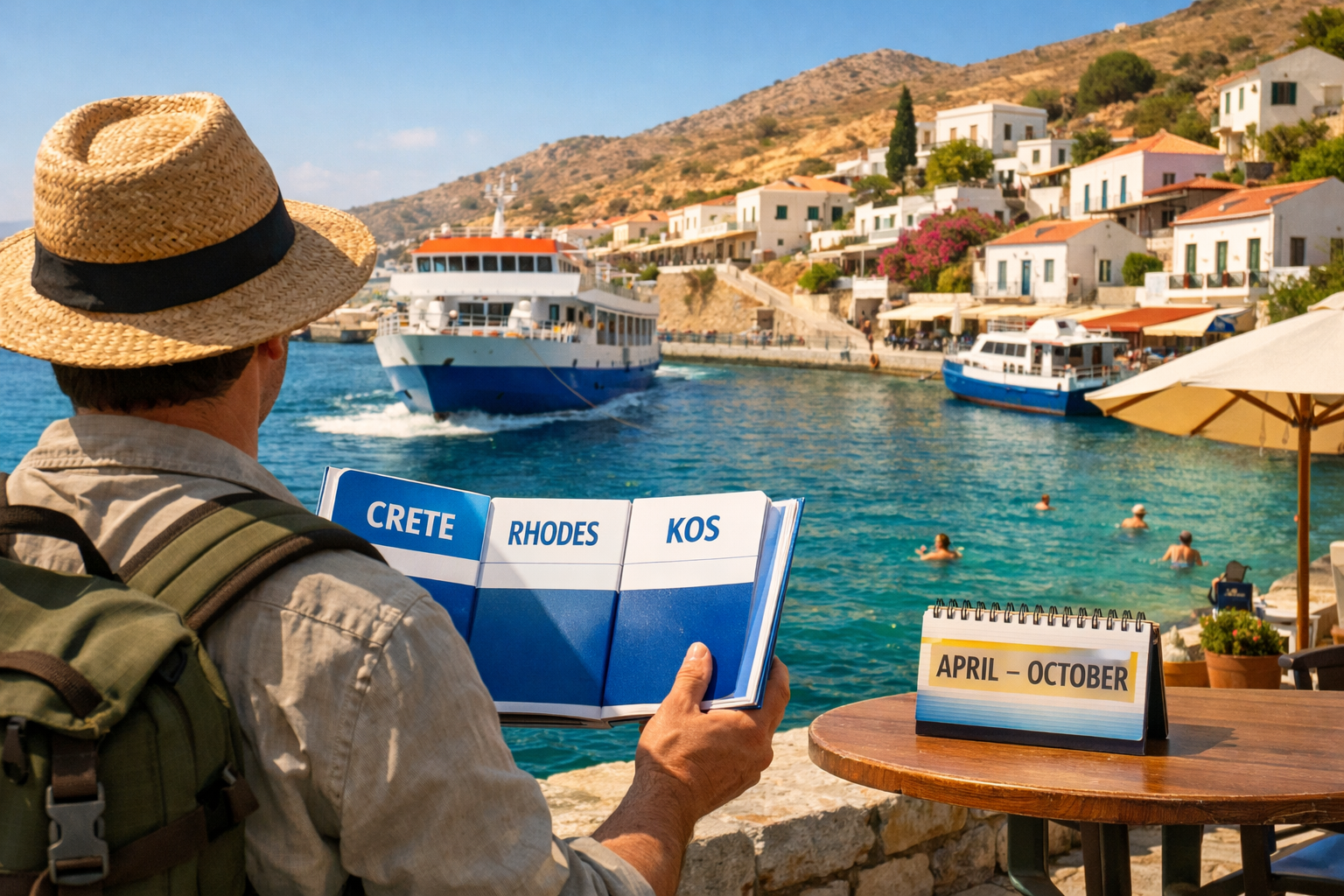
By May, more businesses reopen and transport choices improve. Crete, Rhodes, Corfu, and Kos usually give you more dependable services than a tiny Cycladic island, while Athens-linked islands such as Aegina and Hydra work well for a short break.
Sea temperatures remain the catch. A sunny afternoon can tempt you into the water, but do not book May only for warm swimming. Choose a hotel with a pool if bathing matters, and place archaeological sites, villages, food tours, and boat trips at the centre of the plan.
Who should choose spring?
Spring suits couples, hikers, photographers, and families with school-age children who prefer mild sightseeing weather. A rental car is useful on larger islands, where you can move between beaches and inland villages without depending on infrequent buses.
Corfu looks especially attractive in spring because its vegetation is lush, while the Cyclades offer bright light and quieter lanes. The trade-off is clear: a beach restaurant in Paros or Milos might not open every day, even when the weather looks perfect.
June: the strongest all-round month for most travellers
June is the month I recommend when you want warm swimming, long daylight, active ferry routes, and fewer crowds than the heart of August. By mid-June, most tourism services are operating, and the sea feels much more inviting than it does in May.
Early June or late June?
Early June gives you better value and softer heat, especially for sightseeing in Rhodes or Crete. Late June brings warmer water and a busier atmosphere, but it still avoids the most intense August demand in many resorts.
The Cyclades require one extra check: wind. A hot forecast does not tell you whether a beach day will feel comfortable. The meltemi can make exposed beaches rough and cool, while a sheltered bay remains calm a few kilometres away.
June works well for island hopping
Ferry schedules become much more useful in June, with regular links among destinations such as Mykonos, Paros, Naxos, and Santorini. Even so, never build a same-day international flight connection around a ferry. Stay overnight in Athens before an early departure from Eleftherios Venizelos Airport.
A sensible June route uses two or three islands rather than five. For example, seven nights split between Naxos and Paros gives you beach time and village evenings without turning the holiday into a timetable exercise.
What does June cost?
June rates sit between spring bargains and August peaks. Exact prices change by island, room type, and booking date, so compare the full stay rather than the nightly headline rate. A cheaper room far from the port may cost more after transfers and daily taxis.
You can compare flights, hotels, transfers, and car hire through mygreekpath.com, then check the final terms directly with the external provider before paying. Pay close attention to cancellation rules, luggage charges, and whether port transfers are included.
June gives you the best margin for mistakes.
July and August: reliable services, hot days, and peak pressure
July and August are the best months for guaranteed activity, nightlife, and warm sea temperatures. They are also the hardest months for travellers chasing quiet beaches, flexible ferry seats, or low accommodation rates.
July suits nightlife and first-time visitors
July brings long, hot days and a full programme of boat tours, beach clubs, restaurants, and island connections. Mykonos, Ios, Santorini, and parts of Paros are at their liveliest, which is exactly what many younger travellers want.
The downside is cost and crowding. Reserve accommodation and inter-island ferries before arrival, especially for weekends and the first half of August. Waiting until you reach the port can leave you with an inconvenient sailing or a much higher room rate.
August is not automatically the best choice
August is Greece’s busiest holiday month, including the period around 15 August. Greek residents travel too, so ferries, village squares, beaches, and popular restaurants become noticeably fuller. On small islands, a full car park can change the entire day’s plan.
Heat also affects your schedule. Plan archaeological sites before 10:00 or after 17:00, carry water, and avoid assuming that an exposed beach will feel pleasant during a strong north wind. A shaded harbour lunch can be more enjoyable than forcing a midday excursion.
Where should you avoid in peak summer?
Avoid Santorini’s most famous viewpoints at sunset if crowds make you uncomfortable; arrive early, choose a less central village, or watch the light from a booked terrace. Avoid Mykonos if your main goal is a low-cost, quiet beach holiday. Choose Naxos, Syros, or a less famous part of Crete instead.
July and August make sense when nightlife, full transport, and warm swimming matter more than price. They are poor choices for a relaxed village stay unless you book well ahead and accept that popular beaches will not feel private.
September and October: warm water and a calmer island experience
September is the best time to visit Greek islands for most beach travellers who can avoid school-holiday dates. The sea remains warm after August, the light stays strong, and the pressure on hotels and ferries drops as the month progresses.
Why September beats August for swimming
Early September often gives you August-like beach conditions without the same level of crowding. The water is usually at its most comfortable after months of heating, while evenings become easier for walking through Chora or dining outdoors.
The first half of September still feels active on Mykonos, Paros, Santorini, and Rhodes. After mid-month, prices and availability often improve, but compare dates carefully because a popular weekend can still fill rooms on a small island.
October needs the right island
October works best on larger or more populated islands, including Crete, Rhodes, Corfu, and Kos. These places have permanent residents, longer-running hotels, and more restaurants outside the main summer strip. Small resort islands can feel empty by the second half of the month.
Sea swimming is still possible in early October, especially on sheltered southern beaches. Weather becomes less predictable later, with shorter days and a greater chance of rain. Keep your itinerary flexible and avoid booking a non-refundable sequence of island transfers.
Ferry planning after summer
Ferries continue in October, but frequency reduces as demand falls. Some seasonal direct routes stop, which means a journey that was simple in August may require a connection through Piraeus or another hub.
Shoulder season is the period between peak summer demand and the quieter winter operating season. In Greece, it usually means May to June and September to October, but conditions vary by island.
October is a strong month for food, villages, and walking.
Island-by-island timing: choose the season that fits the destination
Greek islands do not share one calendar. Crete can support a useful holiday in April or October, while a tiny Cycladic resort may have limited services outside May through September. Match the island to the month before you compare hotels.
Cyclades: wind matters as much as heat
Santorini is most enjoyable in May, June, late September, and early October if you want space at viewpoints and easier restaurant bookings. July and August deliver the full experience, but the caldera paths and famous sunset areas feel crowded.
Naxos and Paros have broader appeal because they combine beaches, villages, food, and transport links. June and September are the best balance. Milos is also rewarding in May, June, and September, when boat trips are easier to enjoy without peak-season pressure.
Crete, Rhodes, and Kos offer longer seasons
Crete has the widest range of workable dates. Heraklion, Chania, Rethymno, and the south coast give you different weather and holiday styles, so April through October can all work with the right plan. Choose Crete for an October beach-and-food trip rather than a small seasonal island.
Rhodes and Kos stay active late into the year because their resorts, airports, and hotel stock support longer seasons. They suit September and early October particularly well, when swimming remains realistic and the worst heat has eased.
Ionian islands feel different
Corfu, Kefalonia, Zakynthos, and Lefkada are greener than the Cyclades and usually receive more rain outside summer. Their landscapes look beautiful in May, but wet weather remains a practical possibility. July and August bring dependable beach conditions, though popular bays become busy.
For quieter Ionian travel, choose late September or early October and stay near a year-round town. Check local transport before relying on buses, because routes to remote beaches may operate less often after the summer timetable ends.
Ferry schedules, accommodation, and weather pitfalls to avoid
Your island choice is only half the decision. A perfect weather forecast cannot fix a cancelled connection, a closed taverna, or a hotel located 12 kilometres from the port with no reliable transfer.
Ferry availability changes by season
In July and August, the main Aegean network has frequent departures, but demand is also highest. Book vehicle space separately when required, because a passenger ticket does not guarantee room for a rental car or scooter.
In April and late October, check the timetable close to departure. Weather can disrupt high-speed ferries, and a route shown on an older search result may no longer run daily. Conventional ferries are often slower but more comfortable in rough conditions.
Accommodation prices need context
A room advertised at a low rate may exclude port transfers, breakfast, cleaning charges, or a required minimum stay. Compare the complete booking total for the same dates, then check whether the property is open throughout your travel period.
For August, choose a refundable booking when possible and secure it early. For May or October, flexibility often matters more than booking the absolute lowest rate because a seasonal closure can force a last-minute change.
Wind and water can change the day
The Aegean’s north wind affects exposed beaches, boat excursions, and small craft. On a windy day, travel to a sheltered beach rather than cancelling the entire holiday. South-facing coasts and protected bays often provide a better swimming experience.
Sunshine alone is a poor measure. Check wind direction, sea conditions, and the return ferry, especially when your beach plan depends on a boat trip. A calm morning can turn into an uncomfortable afternoon on an exposed deck.
Build a practical booking plan
Book your international flight, first-night accommodation, and any time-sensitive ferry before adding optional island stops. Keep the final night near your departure airport or Piraeus if your flight leaves early.
A seven-night holiday usually handles two islands comfortably. Add a third only when ferry times are strong and you are happy to lose travel hours. More movement does not create more holiday; it often replaces beach time with luggage and port queues.