
Last Updated: February 2026
Picture this: you’re standing on a sun-drenched beach with crystal-clear turquoise waters lapping at your feet, ancient Minoan ruins whisper stories from 4,000 years ago just a short drive away, and tonight you’ll feast on some of the Mediterranean’s finest cuisine. Welcome to Crete – Greece’s largest island and a destination that effortlessly blends stunning natural beauty, rich history, and authentic culture.
Whether you’re seeking hidden coves, dramatic mountain gorges, or charming Venetian towns, Crete delivers an experience unlike any other Greek island. This comprehensive guide will help you discover everything you need to know about visiting this Mediterranean gem.
Contents
- 1 Why Visit Crete?
- 2 Best Time to Visit Crete
- 3 Getting to Crete
- 4 Where to Stay in Crete
- 5 Must-See Attractions in Crete
- 6 Hidden Gems & Off-the-Beaten-Path
- 7 What to Eat in Crete
- 8 Getting Around Crete
- 9 Practical Tips for Visiting Crete
- 10 Sample Itineraries
- 11 Day Trips from Crete
- 12 Final Thoughts
- 13 FAQ About Visiting Crete
Why Visit Crete?
Crete stands apart from other Greek islands in several remarkable ways. As the birthplace of the Minoan civilization – Europe’s first advanced society – the island offers archaeological sites that rival those found anywhere in Greece. Beyond history, Crete boasts diverse landscapes ranging from the pink sand beaches of Elafonisi to the rugged Samaria Gorge, one of Europe’s longest canyons.
The island’s size means you’re never rushed. Unlike smaller islands you can “complete” in a few days, Crete rewards longer stays with constantly surprising discoveries. The Cretan people maintain strong traditions, from their distinctive music and dance to their renowned hospitality, making cultural immersion genuinely authentic rather than performed for tourists.
Best Time to Visit Crete
Peak Season (June-August)
Summer brings guaranteed sunshine and warm seas perfect for swimming, but also crowds and higher prices. Temperatures often exceed 30°C (86°F), and popular sites like Knossos Palace can feel overwhelming with tour groups.
Shoulder Season (April-May, September-October)
These months offer the sweet spot for most travelers. Weather remains excellent – warm enough for beach days but comfortable for hiking and exploring. Accommodation prices drop significantly, and attractions feel manageable. Late April through May showcases wildflowers carpeting the countryside, while September maintains summer warmth with fewer visitors.
Low Season (November-March)
Winter brings rain and cooler temperatures, but also dramatic landscapes, snow-capped mountains, and rock-bottom prices. Many beach resorts close, but cities like Chania and Heraklion maintain their energy. This is prime time for hiking, cultural exploration, and experiencing authentic Cretan life without tourist influence.
Best overall time: Late April-early June or September-early October
Getting to Crete
By Air
Crete has two international airports:
Heraklion Airport (HER) – The island’s main gateway, serving numerous European cities with direct flights. Located 5km from Heraklion city center, it’s ideal if you’re exploring central and eastern Crete.
Chania Airport (CHQ) – Smaller but convenient for western Crete, with good European connections especially during summer months.
Direct flights operate from major European hubs including London, Berlin, Rome, and Paris. From Athens, multiple daily flights take just 50 minutes and often cost €40-80 when booked in advance.
By Ferry
Ferry connections run from Piraeus (Athens port) to Heraklion and Chania. The journey takes 8-9 hours overnight, offering a romantic alternative to flying. Prices start around €35 for deck seats, with cabin options available. Companies like Minoan Lines and ANEK operate modern, comfortable vessels.
Where to Stay in Crete
Crete’s size means location matters significantly. Here’s a breakdown by region:
Heraklion & Central Crete
Best for: First-time visitors, history enthusiasts, convenient access to Knossos
The island’s capital offers urban energy, excellent museums, and proximity to major archaeological sites. Heraklion city itself isn’t the prettiest, but makes a practical base. Nearby Hersonissos and Malia cater to resort-seekers, though they lean heavily toward package tourism.
Accommodation range: €30-150 per night
Chania & West Crete
Best for: Romantic getaways, photography, authentic atmosphere
Many consider Chania Crete’s most beautiful city, with its stunning Venetian harbor, winding old town lanes, and mountain backdrop. The west offers spectacular beaches like Balos and Elafonisi, plus charming villages like Paleochora. This region feels more relaxed and less developed than the north coast.
Accommodation range: €40-200 per night
Rethymno
Best for: Balanced experience, beach + culture
Rethymno splits the difference between Heraklion and Chania – smaller and more manageable than Heraklion but with similar historical appeal, prettier than Heraklion but less polished than Chania. The long beach and atmospheric old town make it ideal for travelers wanting both relaxation and exploration.
Accommodation range: €35-180 per night
Agios Nikolaos & East Crete
Best for: Peaceful beaches, avoiding crowds, authentic villages
Eastern Crete sees fewer international tourists, offering a more local experience. Agios Nikolaos provides a relaxed coastal town vibe, while nearby Elounda attracts luxury travelers. The Lasithi Plateau and palm forest of Vai deliver unique landscapes.
Accommodation range: €30-250+ per night (luxury resorts in Elounda)
South Coast
Best for: Escaping tourism, hiking, dramatic scenery
The rugged south coast remains Crete’s wild frontier. Villages like Loutro (accessible only by boat), Sougia, and Paleochora offer slow-paced life and stunning natural settings. Infrastructure is simpler, but that’s precisely the appeal.
Accommodation range: €25-120 per night
Must-See Attractions in Crete
Knossos Palace
The crown jewel of Minoan civilization, Knossos offers a glimpse into Europe’s first advanced culture dating back to 2000 BCE. While the controversial reconstructions by Arthur Evans divide opinion among archaeologists, they help visitors visualize this once-magnificent palace complex.
Pro tip: Arrive right at opening (8 AM) or late afternoon to avoid cruise ship crowds. Consider hiring a guide – the site makes far more sense with proper context.
Cost: €15 entrance fee
Time needed: 2-3 hours
Samaria Gorge
One of Europe’s longest gorges, this 16km hike through a dramatic canyon delivers an unforgettable adventure. The path descends 1,200 meters through towering rock walls, sometimes narrowing to just 4 meters wide at the famous “Iron Gates.”
Important: The gorge operates May-October only. Start early (7-8 AM) as the hike takes 5-7 hours. Boats from the endpoint (Agia Roumeli) return hikers to civilization. Wear proper hiking shoes – the rocky terrain punishes flip-flops.
Cost: €5 entrance fee
Difficulty: Moderate (downhill, but long and rocky)
Balos Lagoon
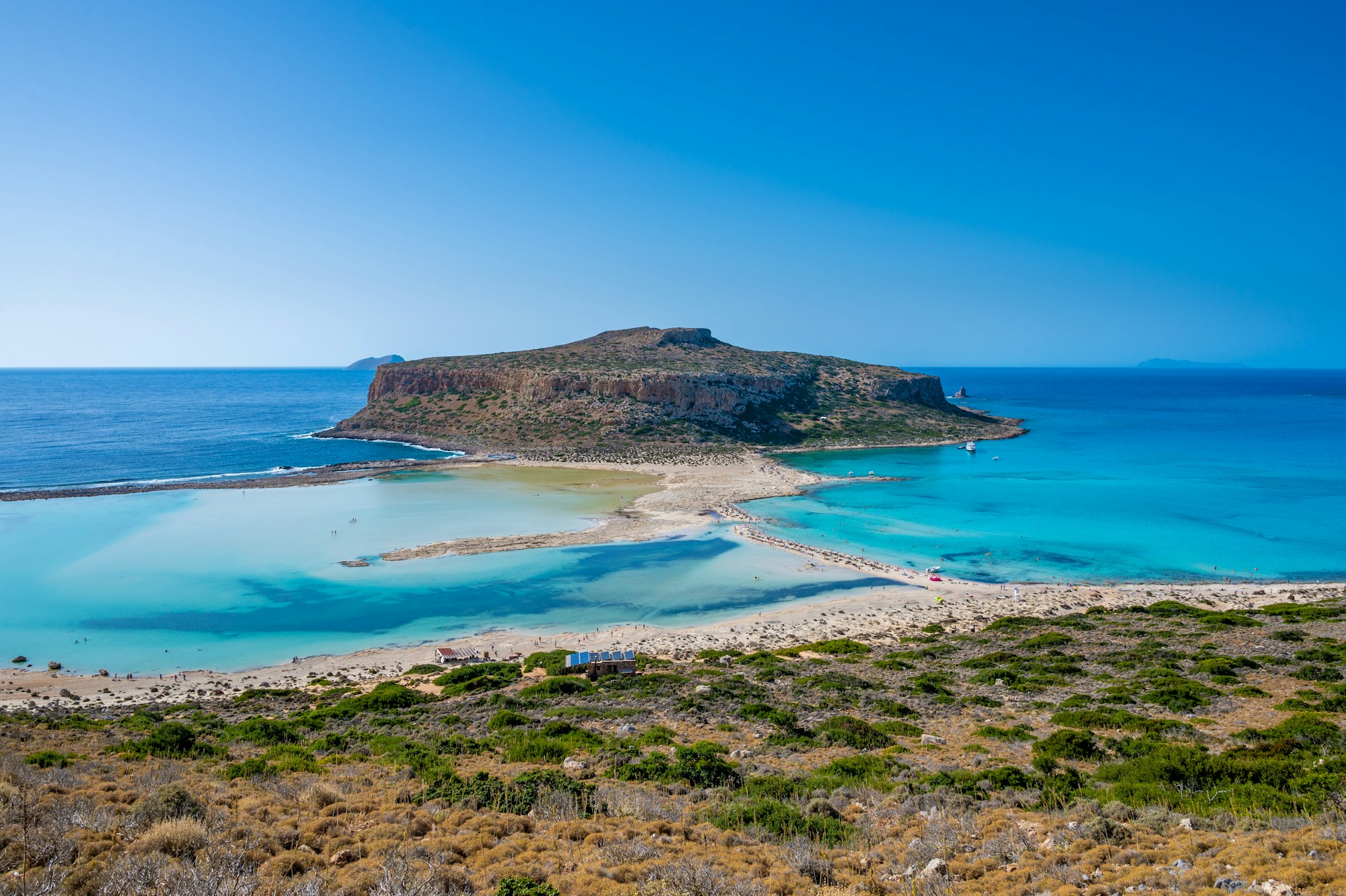
Arguably Crete’s most photographed spot, Balos delivers on its postcard promise. The shallow turquoise lagoon, white sand beach, and exotic island setting create a Caribbean-like scene – except it’s in Greece.
Access requires either a boat trip from Kissamos (easier, more expensive) or driving to a parking area followed by a 20-minute steep descent (and return climb). The boat option lets you also visit Gramvousa Island’s Venetian fortress.
Cost: Boat trip €27-30, parking €1
Best time: Early morning or late afternoon for fewer crowds
Elafonisi Beach
This pink-sand beach in southwestern Crete ranks among Greece’s finest. The shallow, warm waters and soft sand appeal to families, while the unique pink hue (from crushed shells) attracts photographers. The beach actually sits on a small island connected to Crete by a sandbar you can wade across.
Getting there: 75km from Chania (1.5 hours drive) or organized bus tours
Cost: Free (parking €2)
Tip: Stay overnight in nearby Paleochora to visit early before day-trippers arrive
Spinalonga Island
This small island off Crete’s northeast coast served as a leper colony from 1903-1957, the last active leper colony in Europe. Today, the abandoned village and Venetian fortress create a haunting yet fascinating destination. The island gained international fame through Victoria Hislop’s novel “The Island.”
Access: Short boat trips from Elounda or Agios Nikolaos
Cost: €8 entrance + €10-15 boat
Time needed: 2-3 hours including boat ride
Chania Old Town
Chania’s Venetian harbor and maze-like old town need no specific “attraction” – wandering is the activity. Pastel-colored buildings, waterfront restaurants, the Maritime Museum, and countless photogenic corners make this one of Greece’s most beautiful towns.
Don’t miss the covered market (Agora), the leather lane (Skrydlof Street), and sunset at the lighthouse. The nearby Akrotiri Peninsula offers beaches and monasteries worth exploring.
Cost: Free to explore
Time needed: Full day minimum
Archaeological Museum of Heraklion
If you visit any Minoan site, this museum provides essential context. Housing the world’s finest Minoan collection, including frescoes from Knossos, the Phaistos Disc, and exquisite jewelry, the museum recently underwent a major renovation making it more accessible and engaging.
Cost: €12 (€20 combo with Knossos)
Time needed: 2-3 hours
Tip: Visit before Knossos for better understanding
Hidden Gems & Off-the-Beaten-Path
Seitan Limania Beach
This dramatic cove with turquoise water wedged between towering cliffs near Chania looks like it was carved by gods. The steep descent (135 steps) keeps crowds manageable, though the secret is spreading.
Preveli Beach & Palm Forest
A river flowing through a palm forest to the sea creates an unexpected tropical setting on Crete’s south coast. One of the island’s most unique beaches, it requires a 20-minute downhill walk or boat access.
Loutro
This tiny fishing village on the south coast has no road access – only boats and hiking trails connect it to the outside world. The isolation preserves its authenticity, making it perfect for travelers seeking tranquility.
Venetian Fortresses
Beyond the famous sites, Crete harbors numerous impressive Venetian fortresses: Rethymno’s Fortezza, Frangokastello (dramatically positioned on a lonely beach), and the fortress at Gramvousa Island all offer atmospheric exploration with far fewer visitors than major attractions.
Richtis Gorge
A shorter alternative to Samaria, this 3km gorge near Sitia features a beautiful waterfall and lush vegetation. The moderate hike takes 2-3 hours and ends at a quiet beach.
What to Eat in Crete
Cretan cuisine deserves its reputation as among the Mediterranean’s healthiest and most delicious. The island’s isolation helped preserve traditional recipes, while the climate produces exceptional ingredients.
Must-Try Dishes
Dakos – The quintessential Cretan appetizer: barley rusk topped with chopped tomatoes, mizithra cheese, olive oil, and oregano. Simple perfection.
Kalitsounia – Small cheese or herb pies, either sweet or savory, varying by region. Perfect for breakfast or snacks.
Lamb with Stamnagathi – Wild greens unique to Crete paired with slow-cooked lamb represents traditional mountain cooking.
Boureki – A pie-like dish layering zucchini, potatoes, and mizithra cheese.
Fresh Seafood – Coastal tavernas serve whatever was caught that morning. Try red mullet, sea bream, or octopus grilled with just olive oil and lemon.
Snails (Chochlioi) – Don’t dismiss this delicacy. Prepared with rosemary or in tomato sauce, Cretan snails taste entirely different from the French version.
Raki/Tsikoudia – The local firewater, offered complimentary after meals. Stronger than ouzo, it’s Crete’s social lubricant.
Where to Eat
Look for tavernas full of locals, especially away from prime tourist areas. Family-run establishments in villages almost always outperform waterfront tourist traps. Don’t hesitate to ask what’s good today – many traditional places don’t even have written menus.
Budget: €8-12 per person
Mid-range: €15-25 per person
Splurge: €35+ per person
Getting Around Crete
Rental Car
The best way to explore Crete independently. Roads are generally good, though mountain routes can be winding and narrow. International companies operate at airports, while local companies often offer better rates (€25-40 per day).
Important: Greeks drive assertively. Take your time, expect some aggressive passing, and avoid driving at night on mountain roads.
Public Bus (KTEL)
Crete’s bus network connects major towns reliably and cheaply. The main north coast route (Kissamos-Chania-Rethymno-Heraklion-Agios Nikolaos-Sitia) runs frequently. South coast and mountain villages see fewer services.
Cost: €2-15 depending on distance
Pro: Very economical
Con: Limits flexibility and access to remote beaches
Organized Tours
Day tours from major towns visit popular sites like Samaria Gorge, Balos, and Knossos. These remove logistics stress but operate on fixed schedules.
Cost: €25-60 per tour
Motorcycle/Scooter
Popular for shorter distances and offers fuel economy. Be aware that rental insurance often excludes scooters, and medical facilities may be distant in remote areas.
Practical Tips for Visiting Crete
Budget Planning
Budget traveler: €40-60 per day (hostel/cheap hotels, tavernas, public transport, free beaches)
Mid-range: €80-150 per day (nice hotels, rental car, mix of restaurants, paid attractions)
Luxury: €200+ per day (excellent hotels, car, fine dining, activities)
What to Pack
- Comfortable walking shoes (many sites involve uneven terrain)
- Sun protection (hat, sunscreen, sunglasses) – Cretan sun is intense
- Light layers (evenings can cool, especially in mountains)
- Swimwear and beach towel
- Modest clothing for monastery visits
- Reusable water bottle (tap water is safe)
Cultural Considerations
Cretans are famously hospitable but appreciate respect for traditions:
- Dress modestly when visiting churches and monasteries
- Learn a few Greek phrases – even basic attempts are warmly received
- Don’t refuse offered raki/tsikoudia – it’s considered rude
- Siesta time (2-5 PM) is sacred – many shops close
- Tipping 5-10% is appreciated but not obligatory
Safety
Crete is very safe. Petty theft exists in tourist areas but remains uncommon. The main dangers are:
- Sun exposure (use sunscreen, stay hydrated)
- Swimming in rough conditions (respect warning flags)
- Driving mountain roads (take your time, watch for goats)
- Hiking without preparation (proper shoes, water, sun protection)
Language
English is widely spoken in tourist areas, less so in remote villages. Greek basics help:
- Kalimera (good morning)
- Efharisto (thank you)
- Parakalo (please/you’re welcome)
- Yasas (hello – formal)
- Signomi (excuse me)
Money
- ATMs are widespread in towns, scarce in remote areas
- Credit cards accepted in most restaurants and hotels
- Cash needed for small tavernas, parking, beach umbrellas
- Tipping 5-10% appreciated in restaurants
Sample Itineraries
5-Day Crete Itinerary
Day 1: Arrive Heraklion, visit Archaeological Museum, explore city, overnight Heraklion
Day 2: Morning at Knossos Palace, afternoon drive to Rethymno, explore old town, overnight Rethymno
Day 3: Full day trip to Preveli Beach or Chania, overnight Rethymno or Chania
Day 4: Boat trip to Balos Lagoon and Gramvousa, afternoon in Chania old town, overnight Chania
Day 5: Morning in Chania, afternoon drive to Elafonisi Beach, return to airport
7-Day Crete Itinerary
Follow the 5-day plan, then add:
Day 6: Samaria Gorge hike (full day), overnight south coast village
Day 7: Leisurely morning on south coast beach, drive back to departure airport
10-Day Crete Itinerary
Follow the 7-day plan, then add:
Day 8: Drive to Agios Nikolaos, visit Spinalonga Island, overnight Agios Nikolaos
Day 9: Explore east coast (Vai Palm Forest, Toplou Monastery, Zakros Palace), overnight Sitia area
Day 10: Richtis Gorge hike or beach day, return to airport
Day Trips from Crete
While Crete deserves your full attention, the island serves as a potential base for visiting:
Santorini – Fast ferries run April-October (2 hours, €60-80). Stunning but extremely touristy.
Other Cycladic Islands – Summer connections reach Mykonos, Paros, and Naxos, though travel time makes day trips impractical. Consider these only if you have 10+ days in the region.
Gavdos – Europe’s southernmost point, this tiny island off Crete’s south coast offers extreme isolation and beautiful beaches. Ferries run from Paleochora (budget 2-3 days minimum).
Final Thoughts
Crete rewards those who take time to explore beyond the beaches. While a week gives you a good taste, two weeks allows deeper immersion, and even that barely scratches the surface. The island’s authentic culture, combined with spectacular nature and 4,000 years of history, creates a destination you’ll want to return to repeatedly.
Unlike smaller Greek islands that reveal themselves quickly, Crete constantly surprises. Every mountain road leads to unexpected views, every village taverna serves something delicious, and every conversation with locals adds to your understanding of this remarkable place.
Whether you’re hiking Europe’s longest gorge, swimming in Caribbean-colored lagoons, exploring ancient palaces, or simply savoring fresh seafood as the sun sets over a Venetian harbor, Crete delivers experiences that define the best of Mediterranean travel.
Start planning your Cretan adventure – this island doesn’t just meet expectations, it transforms them.
FAQ About Visiting Crete
How many days do you need in Crete?
Minimum 5 days to see highlights, 7-10 days for a comprehensive visit, 2+ weeks to truly explore the island at a relaxed pace.
Is Crete expensive?
Moderate compared to other European destinations. Budget travelers manage on €40-60 daily, while mid-range tourists spend €80-150 per day.
Do I need a car in Crete?
Not essential but highly recommended. Public buses serve major routes, but a car provides freedom to explore beaches, mountain villages, and archaeological sites at your own pace.
What’s better – Chania or Heraklion?
Chania is prettier and more atmospheric; Heraklion is more practical with better museum access and flight connections. Many visitors prefer staying in Chania for beauty while day-tripping to Heraklion’s attractions.
Is Crete safe for solo travelers?
Extremely safe. Cretans are welcoming to solo travelers, and the island’s traditional hospitality culture means you’ll never feel truly alone.
Can you swim in Crete year-round?
Swimming season runs May-October. Brave souls swim November-April, but water temperatures drop to 16-19°C (60-66°F).
What’s the best beach in Crete?
Subjective, but top contenders include Elafonisi (pink sand, shallow water), Balos (dramatic lagoon), Vai (palm forest backdrop), and Preveli (river meets sea).
Have you visited Crete? Share your favorite experiences in the comments below! For more Greek travel guides, explore our other articles on hidden gems throughout Greece.
Pin this guide for your Crete trip planning!