
Last Updated: February 2026
Athens, the cradle of Western civilization, pulses with an energy that seamlessly blends 2,500 years of history with contemporary Mediterranean vitality. Stand where Socrates once walked. Gaze at monuments that inspired democracy. Then dive into a vibrant modern city with rooftop bars, cutting-edge museums, and exciting Mediterranean food.
This complete guide will help you explore all that Athens offers. It covers the Acropolis and hidden neighborhoods. It also includes ancient agoras and modern street art. You will find budget souvlaki spots and Michelin-starred restaurants.
Contents
- 1 Why Visit Athens?
- 2 Best Time to Visit Athens
- 3 Getting to Athens
- 4 Where to Stay in Athens
- 5 Must-See Attractions in Athens
- 6 Hidden Gems & Local Favorites
- 7 What to Eat in Athens
- 8 Getting Around Athens
- 9 Day Trips from Athens
- 10 Practical Tips for Visiting Athens
- 11 Sample Athens Itineraries
- 12 Final Thoughts
- 13 FAQ About Visiting Athens
Why Visit Athens?
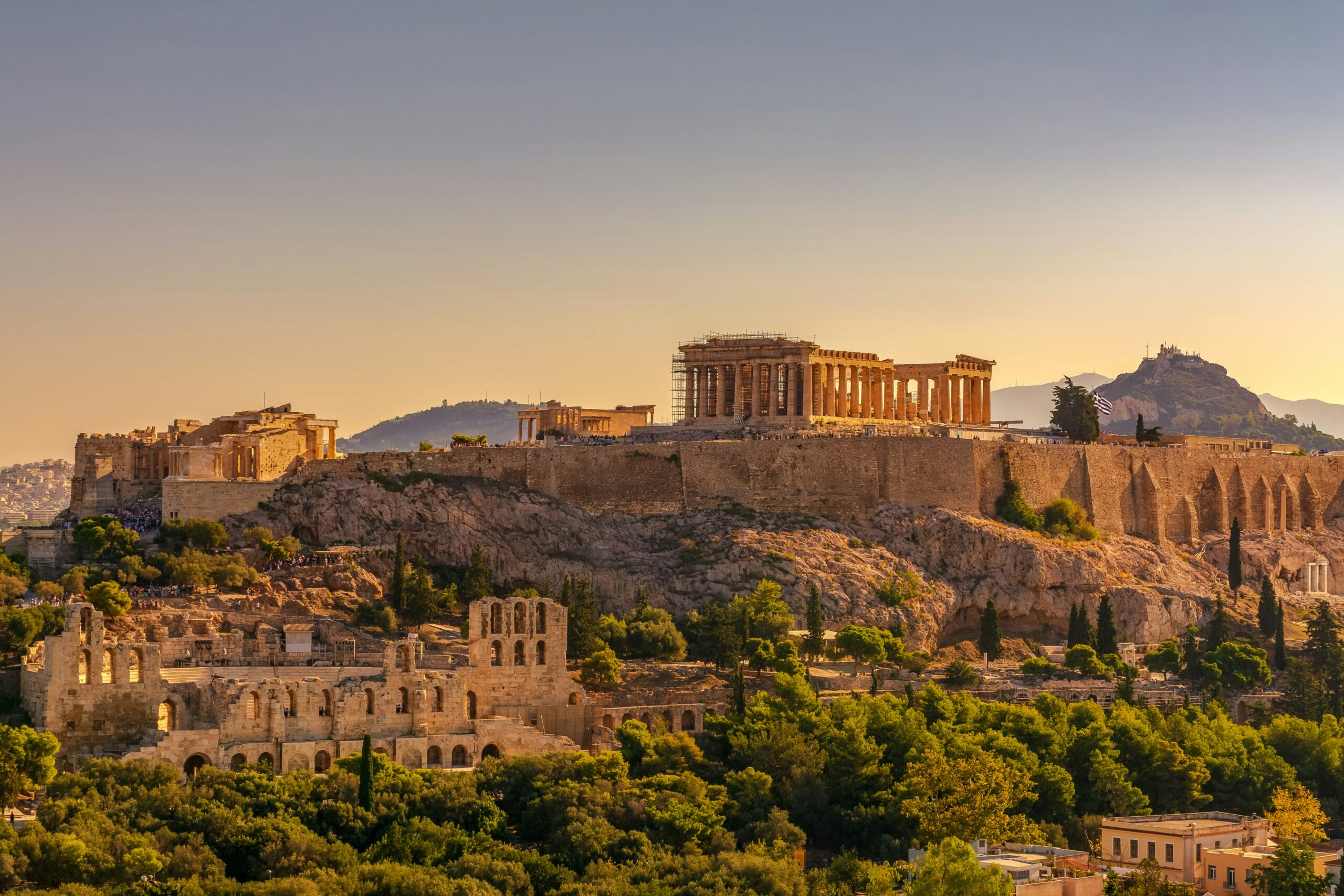
Athens offers something increasingly rare in Europe: a major capital where ancient history isn’t just preserved in museums but remains woven into daily life. The Parthenon dominates the skyline from almost every neighborhood. Ruins emerge unexpectedly on street corners. The city that gave birth to philosophy, theater, and democracy still celebrates these foundations through its museums, performances, and passionate cafe debates.
Beyond history, Athens has undergone a remarkable transformation over the past decade. What was once dismissed as a mere stopover to the islands now stands as a destination in its own right. The city’s neighborhoods—from bohemian Exarchia to upscale Kolonaki, from hip Psyrri to authentic Pangrati—each tell their own story. The Athens Riviera provides beach escapes within a 30-minute tram ride. Street food culture rivals anywhere in the Mediterranean. And the cost of experiencing all this? Significantly lower than comparable European capitals.
Best Time to Visit Athens
Spring (March-May)
Spring offers Athens at its most pleasant. Temperatures range from 15-25°C (59-77°F), perfect for exploring archaeological sites without the punishing summer heat. Easter celebrations, if they fall in April, provide remarkable cultural experiences—midnight services, candlelit processions, traditional feast. Wildflowers bloom across the hills surrounding the city.
Pros: Perfect weather, fewer crowds than summer, lower prices, festivals
Cons: Occasional rain (especially March), some beach clubs not yet open
Summer (June-August)
Athens in summer means bright sunshine and lots of culture. Enjoy outdoor movies, concerts in ancient venues, and lively rooftop bars. However, temperatures frequently exceed 35°C (95°F), making midday sightseeing uncomfortable. This is peak tourist season with corresponding crowds and prices.
Pros: Beach season, outdoor culture, long days, lively atmosphere
Cons: Extreme heat, crowds at major sites, higher prices, locals flee the city
Autumn (September-October)
Many consider autumn the sweet spot for visiting Athens. Early September maintains summer warmth with fewer tourists. October brings comfortable temperatures ideal for walking the city. The sea remains warm enough for swimming through mid-October.
Pros: Excellent weather, fewer crowds, lower prices, locals return
Cons: Shorter days (especially late October), some venues reduce hours
Winter (November-February)
Winter in Athens is mild by northern European standards—rarely below 5°C (41°F)—though rain is common. This is low season, offering rock-bottom prices and authentic local life. Museums are empty. Restaurants cater to Athenians rather than tourists. A different Athens emerges.
Pros: Lowest prices, no crowds, authentic atmosphere, cozy cafes
Cons: Cooler weather, rain, beach season over, shorter days
Best overall time: Late April-early June or September-early October
Getting to Athens
By Air
Athens International Airport (ATH) serves as Greece’s main gateway, located 20km southeast of the city center. The airport connects to over 150 destinations worldwide, with particularly strong European connections.
Getting from Airport to City:
- Metro (Line 3): €9 one-way, 40 minutes to Syntagma Square. Runs 5:30 AM-midnight. Most economical option.
- Express Bus (X95): €5.50, runs 24/7 to Syntagma Square. Takes 60-90 minutes depending on traffic. Cheapest option.
- Taxi: €38 flat rate to central Athens (€54 midnight-5 AM). 30-60 minutes depending on traffic. Most convenient.
- Private Transfer: Pre-booked transfers start around €40-50. Worth it for groups or if arriving with heavy luggage.
By Ferry
Athens’ port of Piraeus serves as the gateway to the Greek islands. The port is well-connected to the city center via Metro (Line 1) or taxi. Most ferries to the Cyclades, Dodecanese, and other island groups depart from here.
By Train or Bus
International trains connect Athens to Thessaloniki and select Balkan cities, though routes are limited. Long-distance KTEL buses connect Athens to destinations across Greece.
They depart from two main terminals: Kifissos for western and northern Greece, and Liosion for eastern Greece and Evia.
Where to Stay in Athens
Athens offers accommodation across all budgets, with location making a significant difference to your experience.
Plaka & Monastiraki (Best for First-Time Visitors)
The most tourist-centric areas, located directly below the Acropolis with maximum historical atmosphere. Everything is walkable, though streets can feel crowded. Perfect for short visits when you want convenience above all.
Pros: Walking distance to major sites, atmospheric, safe, excellent restaurants
Cons: Can feel touristy, higher prices, pedestrian streets mean taxi access limited
Budget: €50-250 per night
Syntagma & Kolonaki (Best for Business & Upscale)
Syntagma centers on the Parliament and connects to everything via metro. Kolonaki, Athens’ most upscale neighborhood, offers designer shopping, high-end dining, and museum proximity. Both areas feel more business-oriented than bohemian.
Pros: Central metro connections, upscale dining/shopping, safe, organized
Cons: Less character than older neighborhoods, expensive, limited nightlife
Budget: €70-300+ per night
Psyrri & Gazi (Best for Nightlife & Urban Edge)
These formerly working-class neighborhoods have transformed into Athens’ trendiest districts. Psyrri offers narrow streets packed with bars and tavernas. Gazi, centered around a converted gasworks, delivers industrial-chic clubs and restaurants. Both come alive after midnight.
Pros: Vibrant nightlife, authentic tavernas, artistic vibe, reasonable prices
Cons: Can be noisy at night, grittier aesthetic, some areas sketchy very late
Budget: €40-150 per night
Koukaki & Makrygianni (Best for Authentic Neighborhood Feel)
These residential areas south of the Acropolis offer the best of both worlds—walking distance to major sites but with genuine neighborhood character. Locals outnumber tourists. Excellent tavernas serve residents rather than sightseers.
Pros: Authentic, excellent value, great local food, quiet at night
Cons: Fewer hotels/guesthouses, slightly further from some attractions
Budget: €35-120 per night
Exarchia (Best for Bohemian/Alternative Scene)
Athens’ anarchist neighborhood sounds intimidating but actually provides a fascinating window into the city’s alternative culture. Graffiti-covered walls, political bookshops, student tavernas, and a fiercely local atmosphere. Not everyone’s taste, but uniquely Athens.
Pros: Rock-bottom prices, authentic, intellectual atmosphere, great nightlife
Cons: Grittier aesthetic, can feel intimidating to some, limited tourist infrastructure
Budget: €25-80 per night
Must-See Attractions in Athens
The Acropolis & Parthenon
No visit to Athens makes sense without ascending the Acropolis. This ancient citadel, crowned by the Parthenon temple dedicated to Athena, represents Western civilization’s most iconic monument. The structure’s mathematical precision—every column slightly curves, spacing creates optical illusions of perfect straightness—showcases ancient engineering genius.
Essential Tips:
- Arrive at opening (8 AM summer, 8:30 AM winter) to avoid crowds and heat
- Wear comfortable shoes—marble becomes slippery
- Combined ticket (€30, valid 5 days) includes Acropolis plus Ancient Agora, Roman Agora, Hadrian’s Library, Kerameikos, Temple of Olympian Zeus
- Skip the on-site “guides” who aren’t official—book through official channels or use audio guide
- Allow 2-3 hours for thorough exploration
Cost: €20 standalone, €30 combined ticket
Free entry: First Sunday of month (November-March), plus select national holidays
Acropolis Museum
This architectural masterpiece, opened in 2009, houses treasures from the Acropolis in a stunning modern setting. The glass floor reveals ongoing archaeological excavations beneath the building. The top floor gallery recreates the Parthenon’s exact dimensions, displaying surviving sculptures with plaster casts filling gaps (originals controversially held in British Museum).
Must-see exhibits: Caryatids (original columns), Parthenon frieze, archaic korai
Pro tip: Visit in late afternoon (the restaurant serves excellent food with Acropolis views), then explore the museum
Cost: €15 (€10 reduced)
Time needed: 2-3 hours
Ancient Agora
The marketplace and civic center of ancient Athens, where Socrates taught and democracy was practiced. The remarkably preserved Temple of Hephaestus overlooks the site. The reconstructed Stoa of Attalos houses an excellent museum explaining daily life in ancient Athens.
Why visit: Less crowded than Acropolis, more intimate, tree-shaded paths, fascinating museum
Cost: Free with combined ticket, €10 standalone
Time needed: 1.5-2 hours
National Archaeological Museum
One of the world’s finest archaeological museums houses treasures spanning 5,000 years of Greek civilization. The Mycenaean gold collection, including the famous “Mask of Agamemnon,” astounds. The bronze sculpture galleries showcase works of unmatched artistry.
Essential galleries: Mycenaean, Cycladic, Bronze Sculpture, Egyptian
Pro tip: This museum deserves a full morning or afternoon—don’t rush
Cost: €12 (€6 reduced)
Time needed: 3-4 hours minimum
Plaka Neighborhood
Athens’ oldest neighborhood spreads below the Acropolis in a maze of narrow pedestrian streets, neoclassical houses, and small Byzantine churches. Over-touristy in parts (especially Adrianou Street), but wander off main paths and genuine charm emerges. The Anafiotika section, built by island craftsmen, feels transplanted from the Cyclades.
What to do: Get lost, photograph neoclassical architecture, discover hidden chapels, people-watch from cafes
Cost: Free to explore
Time needed: Half day
Temple of Olympian Zeus
Once Greece’s largest temple, this colossal structure took 700 years to complete. Only 15 of the original 104 Corinthian columns survive, but these soaring giants (17 meters high) convey the temple’s former grandeur. Hadrian’s Arch stands nearby.
Best time: Golden hour (hour before sunset) for photography
Cost: Free with combined ticket, €6 standalone
Time needed: 30-45 minutes
Mount Lycabettus
Athens’ highest point (277m) offers panoramic city views, especially spectacular at sunset. Reach the summit via funicular railway (€7.50 round-trip) or hike the winding path (30-40 minutes). The whitewashed Chapel of St. George crowns the peak. Several restaurants serve drinks with the view.
Pro tip: Take funicular up, walk down for best experience
Best time: Sunset, though summer sunsets draw crowds
Cost: Funicular €7.50 round-trip, hiking free
Panathenaic Stadium
The world’s only stadium built entirely of marble, originally constructed in 330 BCE and rebuilt for the first modern Olympics (1896). You can run on the track where Olympic athletes competed. An audio guide (included) narrates the history.
Unique factor: One of few ancient sites you can physically interact with
Cost: €10 (includes audio guide)
Time needed: 1 hour
Benaki Museum
This world-class museum presents Greek culture from prehistory to modern times. Unlike the archaeological museums, this collection extends through Byzantine, Ottoman, and contemporary periods. The building itself, a neoclassical mansion, charms. The rooftop restaurant overlooks the National Gardens.
What makes it special: Comprehensive Greek cultural journey, beautiful setting, less crowded
Cost: €12 (€9 reduced)
Time needed: 2-3 hours
Hidden Gems & Local Favorites
Central Market (Varvakios Agora)
Athens’ main food market explodes with energy—fishmongers shouting, butchers wielding cleavers, spice merchants offering samples. Surrounding streets house specialty shops: nuts, olive oil, cheese. Hidden tavernas inside the market serve workers and in-the-know visitors.
When to visit: Morning (7-11 AM) for maximum energy
What to do: Wander, photograph, eat breakfast at a market taverna
Location: Athinas Street, near Monastiraki
First Cemetery of Athens
This surprisingly beautiful cemetery showcases 19th-century sculpture and architecture. Famous Greeks rest here, their tombs ranging from simple to grandiose. Peaceful, shaded paths offer respite from city chaos. Locals visit regularly.
Why visit: Sculpture garden atmosphere, historical interest, peaceful escape
Cost: Free
Best time: Weekday mornings
Philopappou Hill
Less touristy than Lycabettus, this hill south of the Acropolis offers equally impressive views without funicular costs. Pine-covered paths wind past the Philopappos Monument. Local families picnic here. Sunset draws fewer crowds than other viewpoints.
Bonus: Great Acropolis photography angles
Cost: Free
Time needed: 1-2 hours including walk
Athens Street Art
Athens explodes with street art—entire buildings covered in murals, political graffiti, stencil art. Psyrri, Metaxourgio, and Exarchia showcase the best work. Walking tours focus on street art (€15-25), or explore independently.
Best areas: Psyrri (around Agia Irini Square), Metaxourgio (Keramikos area)
When: Daytime for photography, though most visible 24/7
National Gardens
This 38-acre green oasis in the city center offers shaded paths, duck ponds, ancient ruins, a small zoo, and playground. Athenians escape here during summer heat. The Zappeion building provides architectural interest.
Perfect for: Picnic lunch, afternoon rest, children’s break from museums
Cost: Free
Adjacent: Presidential Guard changing ceremony at Parliament (hourly)
Stavros Niarchos Foundation Cultural Center
This modern architectural marvel houses the National Library and Greek National Opera in a stunning sustainable building. Free entrance to the park, library, and exhibition spaces. Multiple restaurants and cafes. Events calendar includes free concerts and performances.
Why visit: Contemporary Athens, beautiful design, free cultural programming
Location: 4km south of center (tram accessible)
Cost: Free (except special performances)
What to Eat in Athens
Athens’ food scene deserves as much attention as its ancient sites. The city offers everything from €3 souvlaki to Michelin-starred innovation, all built on exceptional ingredients and thousands of years of culinary tradition.
Must-Try Dishes
Souvlaki/Gyros – Athens’ essential street food. Pork or chicken grilled on skewers (souvlaki) or vertical spit (gyros), wrapped in pita with tomatoes, onions, fries, and tzatziki. Standards include Kostas (Plaka), O Thanasis (Monastiraki), and Bairaktaris.
Moussaka – Layers of eggplant, meat sauce, and béchamel, baked to golden perfection. Every taverna serves it; quality varies dramatically. Best versions found in traditional tavernas in Koukaki and Pangrati.
Horiatiki (Greek Salad) – Nothing like what passes for “Greek salad” abroad. Tomatoes, cucumbers, onions, peppers, olives, and feta (in one large slab, not cubed), dressed only with olive oil and oregano. No lettuce ever.
Pastitsio – Greek lasagna with tubular pasta, meat sauce, and thick béchamel topping. Comfort food perfection.
Spanakopita – Spinach and feta wrapped in phyllo pastry. Eaten for breakfast, snacks, or light lunch. Bakeries fresh-bake these throughout the day.
Mezze Spreads – Tzatziki (yogurt-cucumber), melitzanosalata (eggplant), taramasalata (fish roe), tyrokafteri (spicy cheese). Order several to share with bread.
Baklava – Layers of phyllo, nuts, and honey syrup. Athens claims some of Greece’s finest producers. Try Kosmikon or Takis for traditional versions.
Greek Coffee – Thick, strong, traditionally prepared in a briki. Ordered by sweetness level: sketo (no sugar), metrio (medium), or glyko (sweet). Sip slowly; grounds settle at bottom.
Loukoumades – Fried dough balls drizzled with honey and cinnamon. Ancient Athens’ dessert, still popular today. Krinos and Lukumades specialize in these treats.
Where to Eat by Budget
Budget (€5-12 per person)
- Souvlaki joints: Kostas, O Thanasis, Bairaktaris
- Bakeries: Ariston, Takis
- Tavernas in Exarchia and Pangrati
- Central Market tavernas
Mid-Range (€15-30 per person)
- Traditional tavernas: To Kati Allo (Psyrri), Diporto (hidden gem), Ta Karamanlidika tou Fani (mezze)
- Modern Greek: Mani Mani, Oineas
- Psyrri and Koukaki neighborhoods
Splurge (€40+ per person)
- Michelin-starred: Spondi, Hytra
- Rooftop restaurants: Tudor Hall (King George Hotel), Sense (AthensWas)
- Contemporary Greek: Nolan, Cookoovaya
Eating Like a Local
- Timing: Lunch 2-4 PM, dinner rarely before 9 PM (10-11 PM is normal)
- Portions: Greek portions are generous—mezze plates are designed for sharing
- Bread & Water: Automatically served, usually charged €1-2 per person
- Tipping: 5-10% appreciated but not obligatory; round up for good service
- Avoid: Tourist trap restaurants on main Plaka squares (Monastiraki, Adrianou)—look for tavernas where locals outnumber tourists
Getting Around Athens
Metro
Athens Metro is efficient, modern, and covers major attractions. Three lines operate 5:30 AM-midnight (extended to 2 AM Friday-Saturday). The airport line runs 5:30 AM-midnight daily.
Cost: €1.20 per trip (90 minutes with transfers), €4.10 daily pass, €9 5-day pass
Pro tip: Museum-quality displays of artifacts found during construction at Syntagma and Acropolis stations
Bus & Trolleybus
Extensive network covers areas metro doesn’t reach, though traffic makes buses slower than metro. Express airport buses (X95, X96) run 24/7.
Cost: Same as metro
Useful routes: X95 (airport-Syntagma), 040 (Syntagma-Piraeus port)
Tram
Connects city center to coastal suburbs and Athens Riviera beaches. Particularly useful for beach access.
Cost: €1.20 per trip
Useful route: Line to Glyfada beaches
Walking
Central Athens is highly walkable. Most major sites cluster within Plaka, Monastiraki, and Syntagma areas. Walking between these neighborhoods is pleasant and offers unexpected discoveries.
Best for: Exploring Plaka, Psyrri, Monastiraki, Kolonaki
Note: Summer heat (June-August) makes midday walking uncomfortable
Taxi & Ride-Sharing
Taxis are abundant and relatively inexpensive. Standard yellow taxis use meters (insist on it). Uber and Beat (local app) operate in Athens, sometimes more expensive than regular taxis but more reliable.
Typical fares: Airport-center €38, Syntagma-Piraeus €15-20, within center €5-8
Tip: Download Beat app for most reliable service
Car Rental
Unnecessary for Athens itself (traffic is terrible, parking difficult), but useful for day trips to Delphi, Sounion, or other nearby destinations.
Cost: €25-50 per day
Note: Central Athens driving is chaotic; only rent if planning excursions
Day Trips from Athens
Temple of Poseidon at Sounion
This dramatically positioned temple perches on a cliff 70 meters above the Aegean Sea. Sunset views are legendary (arrive 1-2 hours before sunset). Lord Byron carved his name on a column (don’t follow his example—it’s now illegal).
Distance: 70km southeast
Time: 1.5 hours by car, 2+ hours by bus
Cost: €8 entrance, €6-15 bus/organized tour €30-45
Best time: Sunset (extremely crowded), or late morning for fewer crowds
Delphi
Once considered the center of the ancient world, Delphi’s ruins spread across a mountainside with stunning views over olive groves to the Gulf of Corinth. The Oracle of Delphi guided ancient Greek decisions here. The archaeological museum houses treasures including the Charioteer bronze.
Distance: 180km northwest
Time: 2.5 hours by car, 3 hours by bus
Cost: €12 entrance, KTEL bus €15-17 each way, organized tour €60-90
Time needed: Full day (leave early morning, return evening)
Hydra Island
This car-free island (donkeys provide “taxi” service) charms with its preserved architecture and bohemian atmosphere. No beach resort scene—instead, swimming from rocks and harbourside cafes. Popular with artists and weekenders from Athens.
Distance: 37km southwest (by sea)
Time: 1.5-2 hours by ferry from Piraeus
Cost: Ferry €30-35 round-trip, €8-10 island entrance tax
Time needed: Full day (or overnight stay recommended)
Ancient Corinth
The ruins of this once-powerful city include the Temple of Apollo and extensive Roman remains. The mountaintop Acrocorinth fortress offers spectacular views. The small archaeological museum is excellent.
Distance: 80km west
Time: 1 hour by car, 1.5 hours by train
Cost: €8 entrance, train €5-10, organized tour €50-70
Combine with: Canal of Corinth viewpoint, Nafplio (additional 50km)
Marathon & Battlefield
Run where the ancient Athenians defeated the Persians in 490 BCE, giving birth to the marathon race. The battlefield, tumulus (burial mound), and small museum tell the story. Relatively uncrowded compared to major sites.
Distance: 42km northeast (exactly one marathon!)
Time: 45 minutes by car, 1.5 hours by bus
Cost: €6 entrance, bus €5-7
Best for: History enthusiasts, runners
Practical Tips for Visiting Athens
Budget Planning
Budget traveler: €40-70 per day
- Hostel/budget hotel: €20-35
- Street food/cheap tavernas: €12-18
- Metro pass: €4-5
- One major site: €10-15
- Occasional drink/coffee: €5-8
Mid-range traveler: €80-150 per day
- Mid-range hotel: €50-80
- Mix of tavernas/restaurants: €25-40
- Transport: €5-10
- Multiple sites: €15-25
- Drinks/entertainment: €15-25
Luxury traveler: €200+ per day
- Upscale hotel: €120-200+
- Fine dining: €50-100
- Taxis: €20-40
- Sites, tours, experiences: €30-50
- Cocktails, entertainment: €30-50
What to Pack
- Spring/Autumn: Light layers, comfortable walking shoes, light jacket for evenings, sun protection
- Summer: Lightweight breathable clothing, hat, sunscreen, sunglasses, water bottle, comfortable walking shoes (sandals okay but not for extensive site touring)
- Winter: Layers, waterproof jacket, comfortable shoes, umbrella
- Year-round: Modest clothing for churches/monasteries, comfortable walking shoes (Athens involves extensive walking on uneven ancient stones)
Cultural Considerations
- Modest dress for churches and monasteries (covered shoulders and knees)
- Afternoon siesta (2-5 PM) means many small shops close—plan accordingly
- Late dining is normal—restaurants don’t fill until 9-10 PM
- Smoking is technically banned indoors but enforcement is lax
- Tipping 5-10% is appreciated; round up for taxis and coffee
- Greek phrases appreciated: kalimera (good morning), efharisto (thank you), parakalo (please/you’re welcome), yassas (hello/goodbye-formal)
Safety
Athens is generally very safe. Standard urban precautions apply:
- Pickpockets operate in crowded tourist areas (Monastiraki, metro, especially Line 1)—keep valuables secure
- Demonstrations occur regularly, especially around Syntagma and Exarchia—usually peaceful but avoid during police presence
- Aggressive begging in tourist areas—polite refusal is acceptable
- Taxi scams are rare but possible—insist on meter or use apps (Beat, Uber)
- Traffic is chaotic—watch for motorcycles on sidewalks, cross carefully
Emergency numbers: 112 (general), 100 (police), 166 (ambulance)
Money & Banking
- Currency: Euro (€)
- ATMs: Widespread in tourist areas and neighborhoods
- Credit cards: Widely accepted in restaurants, shops, hotels; cash still preferred in small tavernas and markets
- Tipping: 5-10% in restaurants, round up for taxis and coffee
- VAT refund: Available for non-EU residents on purchases over €50
Language
English is widely spoken in tourist areas, hotels, and restaurants. Basic Greek phrases go a long way in showing respect:
- Kalimera (kah-lee-MEH-rah): Good morning
- Kalispera (kah-lee-SPEH-rah): Good evening
- Efharisto (ef-hah-ree-STOH): Thank you
- Parakalo (pah-rah-kah-LOH): Please/You’re welcome
- Ne/Ohi (neh/OH-hee): Yes/No
- Signomi (see-GNOH-mee): Excuse me
- Yassas (YAH-sahs): Hello/Goodbye (formal)
- Yassou (YAH-soo): Hello/Goodbye (informal)
Sample Athens Itineraries
3-Day Athens Itinerary
Day 1: Ancient Athens
- Morning: Acropolis (arrive at opening)
- Late morning: Acropolis Museum
- Lunch: Souvlaki in Monastiraki
- Afternoon: Ancient Agora or Roman Agora
- Evening: Dinner in Plaka, walk through Anafiotika
Day 2: Museums & Neighborhoods
- Morning: National Archaeological Museum
- Lunch: Central Market area
- Afternoon: Explore Plaka and Monastiraki shopping
- Late afternoon: Temple of Olympian Zeus, Panathenaic Stadium
- Evening: Psyrri for dinner and nightlife
Day 3: Local Athens
- Morning: Mount Lycabettus (funicular up, walk down)
- Lunch: Koukaki taverna
- Afternoon: National Gardens, Parliament guard change
- Late afternoon: Benaki Museum
- Evening: Rooftop restaurant with Acropolis views
5-Day Athens Itinerary
Days 1-3: Follow 3-day itinerary above
Day 4: Day Trip
- Full day to Delphi or Sounion
- Or Hydra island
Day 5: Alternative Athens
- Morning: First Cemetery and Kaisariani Monastery
- Lunch: Pangrati neighborhood
- Afternoon: Stavros Niarchos Cultural Center
- Beach time at Athens Riviera (summer only)
- Evening: Gazi for dinner and nightlife
7-Day Athens Itinerary
Days 1-5: Follow 5-day itinerary
Day 6: Second Day Trip
- Ancient Corinth and Nafplio
- Or Marathon battlefield and coast
Day 7: Leisure & Shopping
- Morning: Late breakfast, Monastiraki flea market (if Sunday)
- Afternoon: Kolonaki shopping, café culture
- Evening: Farewell dinner at a Michelin-starred restaurant or favorite taverna
Final Thoughts
Athens rewards those who venture beyond the postcard monuments. Yes, the Acropolis astounds and the museums overflow with treasures. But the real Athens emerges in neighborhood tavernas where octogenarians debate politics over coffee, in street markets where vendors bellow in Greek, in rooftop bars where ancient and modern Athens spread out before you.
The city possesses an energy unlike anywhere else in Greece—more cosmopolitan than the islands, grittier than resort towns, yet with that Mediterranean ease that makes even crossing a chaotic street feel like an adventure rather than a chore. Give Athens time. Spend at least three days, ideally five or more. Let the city reveal itself through unexpected discoveries: a Byzantine church tucked between modern buildings, a street art masterpiece on a crumbling wall, a taverna where the owner insists you try his family’s recipe.
Athens doesn’t compete with Santorini’s sunsets or Mykonos’ beaches—and that’s precisely the point. This city offers something richer: the chance to walk through the birthplace of Western civilization while experiencing a vibrant, complex, thoroughly contemporary Mediterranean capital.
FAQ About Visiting Athens
How many days do you need in Athens?
Minimum 2-3 days to see major highlights, 4-5 days for a thorough visit including museums and neighborhoods, 7+ days to explore thoroughly with day trips. Most visitors spend 3-4 days.
Is Athens safe for tourists?
Yes, Athens is very safe by major city standards. Petty theft occurs in tourist areas, but violent crime against tourists is rare. Standard urban precautions apply.
Is Athens expensive?
Athens is more affordable than most Western European capitals. Budget travelers can manage on €40-70 daily, mid-range on €80-150. Accommodation and dining offer good value compared to northern Europe.
Do I need a car in Athens?
No, Athens has excellent public transport and most attractions are walkable. A car is actually a liability due to traffic and parking difficulties. Only rent for day trips outside the city.
What should I not miss in Athens?
Acropolis and Acropolis Museum are essential. Beyond these: Ancient Agora, National Archaeological Museum, Plaka wandering, sunset view (Lycabettus or Philopappou), and authentic taverna meal.
Can you visit Athens and the islands in one trip?
Absolutely. Athens makes an excellent gateway for island hopping. Allocate 2-3 days for Athens, then ferry or fly to the islands. Ferries to Cyclades islands depart from Piraeus port.
What’s the best neighborhood to stay in Athens?
For first-timers: Plaka or Monastiraki for maximum convenience. For better value with local character: Koukaki or Makrygianni. For nightlife: Psyrri or Gazi. For quiet charm: Pangrati.
Is Athens too hot in summer?
July-August can be uncomfortably hot (35-40°C / 95-104°F). Visit major sites early morning or late afternoon. Many Athenians escape to islands during August. June and September offer better conditions.
Planning your Athens adventure? Explore our other Greece guides for complete trip planning, including island guides, best times to visit, and practical travel tips throughout Greece.
Pin this guide for your Athens trip!